
Free Fire Reanimation Jutsu: How Revival Coffins Work
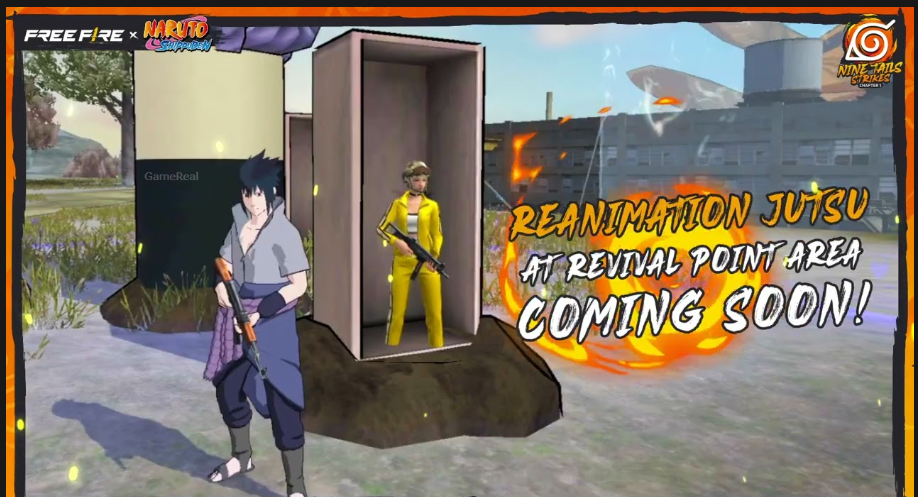
The Free Fire OB55 update, which rolled out on September 16, 2026, brought back the Naruto Shippuden collaboration and with it a thematic upgrade to one of the most important team mechanics in Battle Royale: the Revival Point. Garena reimagined the standard revive system through the lens of Reanimation Jutsu, the iconic technique from the anime. Instead of teammates simply parachuting back into the match, stone coffins now rise from the ground and deliver fallen allies directly onto the battlefield.
This change is more than a visual flair. It alters timing, positioning, and the risk-reward calculation of every revive attempt. Understanding exactly how the Revival Coffins work can mean the difference between a successful comeback and a wipe.
What the Reanimation Revival Points Actually Do
In the official OB55 patch notes, Garena describes the system clearly:
“Revival Points receive a brand-new Reanimation Jutsu makeover. While a Revival Point is being captured, stone coffins will rise from the ground, allowing eliminated teammates to return to the battlefield.”
Once the capture is complete, eliminated teammates no longer drop from the sky with parachutes. They emerge from the stone coffins that have risen during the capture process. Revived players still receive the usual brief protection period and the standard revival supplies (weapons, ammo, and healing items), but the way they re-enter the fight has changed.
The coffins are purely visual and thematic during the capture phase. They do not function as cover or destructible objects. Their purpose is to signal that a revive is in progress and to deliver the returning player in a more grounded, cinematic fashion once the point is secured.
Step-by-Step: How to Use the New Revival System
- Locate a Revival Point on the map. These appear as the familiar blue icons and can now be seen more clearly even while still in the cabin thanks to map optimizations in OB55.
- Move your squad into the capture zone. One or more living teammates must stay inside the area to begin and maintain the capture progress.
- Watch the stone coffins rise. As the capture bar fills, the Reanimation Jutsu visual plays out: stone coffins emerge from the ground around the point. This is pure presentation, but it also acts as a clear signal to both your team and any nearby enemies that a revive is underway.
- Complete the capture. When the progress reaches 100 percent, the coffins open and your eliminated teammates step out onto the battlefield instead of parachuting in.
- Provide cover. The revived players receive a short invulnerability window and basic supplies, but they are still vulnerable once that protection ends. The squad should be ready to support them immediately.
The process still requires the same fundamental commitment as before: you must hold the area long enough for the capture to finish. The new visual language simply makes the moment more dramatic and easier for enemies to spot from a distance.
Strategic Differences from the Old Parachute Revive
The old system had one major advantage and one major weakness. Parachuting teammates could choose their landing spot to some degree and often arrived with a height advantage. The downside was that they were highly visible in the sky and easy to track while descending.
The coffin system removes the aerial approach entirely. Revived players appear directly at the Revival Point. This has several practical consequences:
- Landing precision is higher. Your teammate appears exactly where the point is, so the squad can pre-aim and pre-position for their arrival.
- Visibility works both ways. Enemies no longer need to scan the sky; they simply watch the ground at the Revival Point. The rising coffins themselves act as a beacon.
- Timing feels tighter. Because there is no parachute descent, the moment of vulnerability is shorter but more concentrated. The revived player is on the ground and fighting (or dying) almost immediately after the capture completes.
- Third-party risk increases. Other squads can more easily camp the exact spawn location once they see the coffins rising.
Teams that used to rely on chaotic mid-air fights after a revive will need to adjust. Teams that prefer controlled, ground-based re-entries will find the new system more predictable and easier to support.
Tips for Successful Coffin Revives
Treat the rising coffins as a loud announcement. Once they appear, assume nearby enemies know exactly where you are and what you are doing. Assign at least one player to watch flanks and high ground while the capture is finishing.
Use smoke or Gloo Walls aggressively around the point in the final seconds of the capture. The brief protection the revived player receives is helpful, but it is not long enough to survive a coordinated third-party push without cover.
Communicate clearly. Call out when the coffins start rising and when the capture is about to finish so the revived player knows to expect immediate action rather than a long parachute ride.
If the zone is shifting or the circle is closing, weigh the value of the revive carefully. A successful coffin revive still costs time and exposes the living members of the squad. Sometimes rotating and leaving a teammate for a later opportunity is the smarter play.
Practice the new flow in lower-pressure matches first. The visual change is striking, and muscle memory from the parachute system can cause hesitation in the first few games.
How It Fits into the Larger Naruto Collaboration
The Reanimation Revival Points are part of the broader Free Fire x NARUTO SHIPPUDEN Chapter 1 return that launched with OB55. Alongside the coffins, players will encounter the Hidden Leaf Village as a default cabin, the new Ninja Academy building, Gamakichi Summoning for loot, returning and new Ninjutsu skills, and the ability to briefly control the Nine-Tails. The thematic consistency is strong: every major system that could receive a Naruto skin has been given one, and the revival mechanic is one of the most visible.
The collaboration runs from September 16 through October 15, 2026. During this window the Reanimation visual and coffin delivery method remain active. After the event ends, Revival Points are expected to return to their standard presentation, though the underlying capture rules will stay the same.
Common Mistakes to Avoid
Do not stand in the open while the coffins are rising. The visual is impressive, but it also marks your exact location for every squad in the area.
Do not assume the revived player will have full gear. They still receive only the standard revival kit. Be ready to share weapons and ammo immediately.
Do not ignore the map markers. OB55 improved the visibility of Revival Points while players are still in the cabin. Use that information to plan drops and early rotations around potential revive locations.
Do not treat every Revival Point as mandatory. Sometimes the safer play is to leave a teammate down and focus on winning the current fight or securing a better position for a later revive.
Final Thoughts
The Reanimation Jutsu makeover to Free Fire’s Revival Points is one of the more successful thematic integrations Garena has done. The stone coffins rising from the ground turn a routine capture into a cinematic moment, while the change from parachute to ground spawn forces teams to rethink positioning and timing. The system still rewards coordination and map awareness, but it removes the aerial chaos of the old method and replaces it with a more grounded, high-stakes re-entry.
Master the new flow, use the visual cues to your advantage, and treat every coffin revive as a committed team fight rather than a simple respawn. Done right, the Reanimation Jutsu can swing a losing match back in your favor. Done carelessly, it becomes a free invitation for third parties. Learn the difference, and the coffins will work for you instead of against you.