
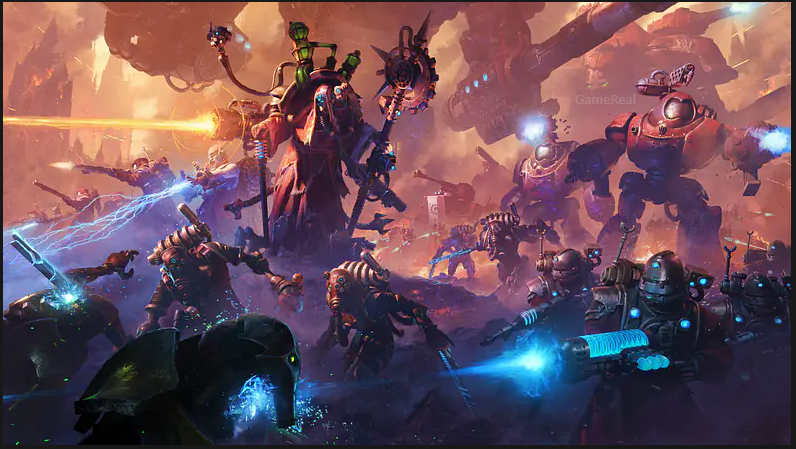
Warhammer 40,000: Dawn of War IV Beginner Guide & Tactics
Warhammer 40,000: Dawn of War IV marks a return to the classic real-time strategy roots of the series. Developed by KING Art Games and published by Deep Silver, the game is set on the planet Kronus and launches on December 3, 2026, for PC via Steam (Commander Edition players get early access from November 30). It features four playable factions at launch: Space Marines, Orks, Necrons, and the Adeptus Mechanicus in their series debut. Each faction has its own campaign, unique mechanics, and playstyle, while the core systems remain focused on capturing territory, building a base, managing resources, and fielding specialized armies.
This beginner guide covers the fundamental systems every new player needs to understand, practical early-game tactics, faction overviews, and simple principles that will help you win more matches while you learn the deeper layers of the game.
Core Systems You Must Understand
Dawn of War IV follows the classic formula established by the original games. Success depends on controlling the map rather than simply massing units in your base.
Resource System
There are two primary resources: Requisition and Power. Requisition comes from capturing Strategic Points scattered across the map. Building a Listening Post (or the faction equivalent) on a captured point significantly increases the income from that location. Power is generated by building generators, usually near your main base or secured positions. Without steady income from both, you cannot produce units, research upgrades, or use advanced abilities.
Territory Control
Map control is everything. The early game is about claiming nearby points quickly. The mid-game revolves around contesting key locations such as Relics and Critical Locations. Losing control of the map means falling behind in resources and eventually being overwhelmed.
Base Building and Expansion
You start with a headquarters building and expand outward. Most factions can construct additional strongholds or forward bases. Fortifications such as turrets and bunkers help hold captured points so your main army can keep moving.
Unit Management
Squads can be reinforced in the field, and many units gain experience and become stronger the longer they survive. Keeping experienced squads alive is often more valuable than constantly producing new ones. The expanded Sync Kill system adds detailed melee animations, but the tactical principles remain the same: position your units carefully and support them properly.
Cover and Positioning
Units take less damage when placed in cover (sandbags, ruins, or natural terrain). Good positioning can let a smaller force hold against a larger one. Pathfinding has been improved so squads align properly behind cover instead of scattering.
Stratagems
These are powerful faction-specific abilities that cost Command Points earned through combat. Examples include orbital bombardments for Space Marines or free-to-use abilities for Orks. Using Stratagems at the right moment can swing a fight or break a fortified position.
Basic Match Flow for Beginners
Think of every match in three phases.
Opening (first few minutes)
Send a fast unit or your Commander to capture the nearest Strategic Points. Build your first production building and start producing core infantry. Secure at least two points and upgrade one with a Listening Post as soon as possible. Keep a small force near your base for defense while you expand.
Mid-Game
Contest additional points and look for Relics if available. Specialize a few squads with better weapons. Start researching key upgrades. Use cover and fortifications to hold ground while your main force probes the enemy. Watch your opponent’s army composition and adjust.
Late Game
Bring out heavier units and vehicles. Use Stratagems to break stalemates. Push toward the enemy base while protecting your own economy. If you have fallen behind, focus on raiding their resource points rather than fighting a direct army battle you cannot win.
Faction Overview for New Players
Space Marines
Elite and flexible. Individual squads are strong and can win most one-on-one fights. They rely on quality over quantity. Use Drop Pods or similar rapid deployment tools to reinforce quickly. Fortify captured points because you cannot be everywhere at once. Early aggression with your Commander and a couple of squads works well. Keep units alive so they can gain experience.
Orks
Horde and aggression. Orks thrive on numbers, speed, and constant pressure. Build multiple bases and Waaagh! Banners. Their buildings are often armed but relatively fragile. Stratagems are frequently free or low-cost, so use them often. Overwhelm the enemy with waves of Boyz supported by faster units like Squighog Riders or Stormboyz. Do not play passively.
Adeptus Mechanicus
Technology and firepower. Focus on building and expanding a strong Noosphere Network early. This unlocks important research and upgrades. Keep melee units away from your gun lines. Position carefully and use superior ranged firepower to control the battlefield. Protect your key structures and resource points.
Necrons
Resilient and methodical. Necrons reward careful play and strong positioning. Their units can be difficult to permanently remove. Focus on solid defensive lines and timed counter-attacks. Learn their unique resource or regeneration mechanics so you do not waste advantages.
Practical Beginner Tactics
- Always capture points early. Sitting in your base is a losing strategy.
- Upgrade Listening Posts. The extra income compounds quickly.
- Use cover. Even basic infantry become much harder to kill when properly positioned.
- Reinforce in the field. Do not wait until a squad is almost dead to add more models.
- Scout constantly. Knowing where the enemy army is lets you choose when and where to fight.
- Specialize a few squads. Give some anti-infantry weapons and others anti-vehicle options instead of making every squad identical.
- Do not ignore your Commander. Heroes are powerful early-game tools for capturing points and winning skirmishes.
- Retreat when necessary. A damaged but experienced squad is more valuable than a fresh one.
- Spend Stratagems. Holding them too long often means losing the fight that would have made them useful.
- Protect your economy. Raiding an opponent’s resource points can be more effective than fighting their main army head-on.
Common Mistakes to Avoid
- Building too many units before securing enough resource points.
- Leaving captured points undefended.
- Ignoring cover and fighting in the open.
- Letting experienced squads die instead of retreating them.
- Playing purely defensively and giving the opponent free map control.
- Forgetting to research upgrades while focusing only on unit production.
Modes to Practice In
Start with the single-player campaigns. Each faction has its own story missions that teach its unique mechanics in a controlled environment. Skirmish mode against the AI is excellent for testing build orders and army compositions without pressure. Last Stand offers a different challenge focused on surviving waves of enemies and leveling up characters. Multiplayer (1v1, 2v2, 3v3) is where the real test begins once you are comfortable with the basics.
Final Advice for New Commanders
Dawn of War IV rewards map awareness, steady expansion, and smart use of each faction’s strengths. Learn one faction thoroughly before jumping between all four. Watch how experienced players position their units and time their Stratagems. Most importantly, stay aggressive enough to claim territory while still protecting the economy that lets you sustain that aggression.
Master the fundamentals of capturing points, managing resources, using cover, and keeping key squads alive. Everything else builds from there. The grim darkness of the far future is unforgiving, but with solid basics you will soon be ready to wage war across Kronus with confidence.