
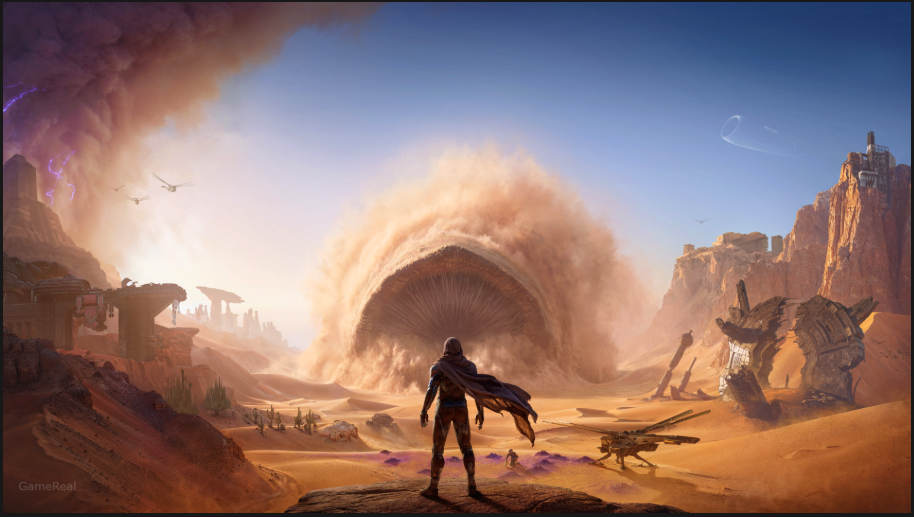
Dune Awakening 1.5: Single-Player Mode Explained
Dune: Awakening has always been a bold take on the open-world survival genre, dropping players onto the harsh sands of Arrakis where every decision matters, from managing water and heat to navigating political intrigue and the ever-present threat of sandworms. When the game launched, it leaned heavily into multiplayer systems, shared worlds, and the social dynamics of faction competition. Many players thrived in that environment. Others simply wanted to experience the full scope of Arrakis at their own pace, without competition for resources or the pressure of other humans.
Update 1.5 delivers exactly that. Released in mid-September 2026 alongside the console launch on PlayStation 5 and Xbox Series X|S, the patch introduces a complete single-player mode available across every platform. This is not a stripped-down side mode or a limited offline experiment. It is the entire game, reworked so one player can explore every storyline, every challenge, every reward, and the full map of Arrakis alone.
Why Single-Player Arrived Now
From the earliest days after launch, players asked for a proper solo experience. Funcom listened to that feedback and watched the data. A significant portion of the player base already preferred playing alone even on multiplayer servers. Console audiences, in particular, often favor solo or private experiences. Adding single-player at the same moment the game expanded to consoles made practical sense. The technical work required to support lower-spec hardware and more flexible play styles also improved the overall foundation of the game.
The developers shifted key systems from server authority to client-side logic. Databases that once needed to scale for thousands of concurrent players became lighter local solutions. Map streaming and world management were refined so a single machine could handle seamless transitions without the overhead of multiplayer networking. The result is a mode that feels native rather than bolted on.
How You Start and What Changes
When you launch the game after Update 1.5, you choose between single-player and multiplayer at the outset. Existing multiplayer characters cannot transfer into the single-player mode. The systems use separate databases, so you create a dedicated single-player character. That character stays exclusive to solo play. Multiplayer characters have more flexibility to move between official, private, and self-hosted servers under certain rules, but single-player characters remain in their own space.
Once you create your character, you face the first major customization choice. Three difficulty presets offer quick starting points for different survival intensities. Players who want finer control can open a detailed settings menu covering harvesting, combat, survival, and persistence categories. These options remain adjustable even after you begin playing, so you can fine-tune the experience as you learn what feels right on Arrakis.
Available adjustments include resource harvesting rates, crafting and building costs, loot and resource respawn speeds, damage dealt, enemy health and respawn rates, item durability, experience gains from multiple sources, dehydration and heat buildup rates, and building limits. You can enable or disable sandstorms and sandworms, control Coriolis storm behavior, decide what drops on death (including losses to sandworms), and set base decay rates. The degree of control is substantial. You can craft a hardcore survival simulation or a more relaxed exploration experience depending on your preference.
Life on Arrakis Without Other Players
The world itself remains largely the same. All the NPCs, contracts, story content, and environmental systems are present. The difference is the absence of other human players. There is no competition for nodes, no unexpected PvP encounters, and no shared economy pressure. The social hubs still exist and retain their atmosphere, but systems designed purely for player-to-player interaction receive practical adaptations.
The Exchange, previously a player marketplace, functions as a vendor with a broad selection of items available for purchase. This keeps the economy usable without requiring other people. The Landsraad, the political endgame system built around faction competition, runs locally. The game simulates the progress of Minor Houses in the background so the Atreides-Harkonnen rivalry continues to feel alive and consequential even when you are the only real participant. You still engage with the system and influence outcomes, but the larger conflict progresses around you rather than depending on real-time player activity.
The Deep Desert receives some of the most meaningful changes. In multiplayer, this region featured periodic resets that wiped player constructions and forced constant re-establishment of presence. In single-player the map does not reset. Your buildings stay. Progress persists. The Coriolis storm remains a dangerous weather event, yet it no longer instantly kills the player or completely clears the region. You can maintain a presence and recover from the storm’s effects instead of starting over. The Cartographer skill also gains an extended Fog of War reveal radius, making exploration of the vast desert more manageable alone.
These adjustments preserve the challenge and identity of Arrakis while removing the friction that made pure solo play frustrating on shared servers. The desert still demands respect. Sandworms still hunt. Heat and dehydration still punish carelessness. The difference is that the threats come from the world and its systems rather than from other players.
Technical Reality of Solo Play
An internet connection is required only when you start a single-player session to complete a handshake with the servers. After that, you can continue offline. This design respects the reality that not every player has constant connectivity while still allowing the game to validate the session and apply any necessary account-level checks.
Performance optimizations made for single-player and console also benefit the multiplayer side. World streaming, memory management, and client-side authority improvements create a smoother experience overall. The new character-centric main menu lets you browse all your characters and choose which one to load into which mode, making it easier to maintain both solo and multiplayer progressions if you wish.
What Single-Player Does Not Change
Multiplayer remains the core focus of Dune: Awakening. Funcom has been clear that the shared world, guild systems, and large-scale faction conflict continue to drive ongoing development. Single-player expands access and gives more people a way to enjoy the game on their own terms. It does not replace the multiplayer vision.
The full story content of Book One reaches its conclusion with this update. Whether you play solo or with others, you can experience the complete narrative arc. Combat received balance passes, especially melee systems. New weapons and encounter structures appear. The Landsraad itself shifted toward a more mission-driven framework that works for both solo and group play. These broader improvements enhance the single-player experience without being exclusive to it.
Who Benefits Most
Players who value immersion and narrative will find the mode particularly rewarding. The ability to explore at your own pace, build permanent bases in the Deep Desert, and engage with the political systems without competition creates a different relationship with Arrakis. Survival enthusiasts can dial the difficulty and environmental hazards up or down until the challenge matches their preferred intensity. Console players who prefer offline or private experiences gain full access to the same content available on PC.
Those who enjoy the social and competitive elements of multiplayer still have that path. The existence of single-player simply means the game no longer forces everyone into the same mold. You choose the version of Arrakis that suits you.
The Bigger Picture for Dune: Awakening
Update 1.5 represents more than the addition of one mode. It marks the moment the game became available on major consoles and completed its first major narrative cycle. The technical work required to support single-player and console hardware strengthened the foundation for future content. Performance, UI, and systems flexibility improved across the board.
Arrakis remains a dangerous, beautiful, and demanding place. The addition of single-player does not soften that fundamental identity. It simply removes the requirement that you share the desert with other humans. You still face the Maker, the storms, the heat, and the political machinery of the Imperium. The difference is that the story becomes yours alone to live.
For many players this was the missing piece. For others it is an optional path. Either way, Dune: Awakening in its 1.5 form offers a more complete set of ways to experience the world of Dune. Whether you prefer the shared struggle of multiplayer servers or the solitary journey across an empty yet fully realized Arrakis, the choice now belongs to you.
The desert is vast. With Update 1.5 it is also yours.