
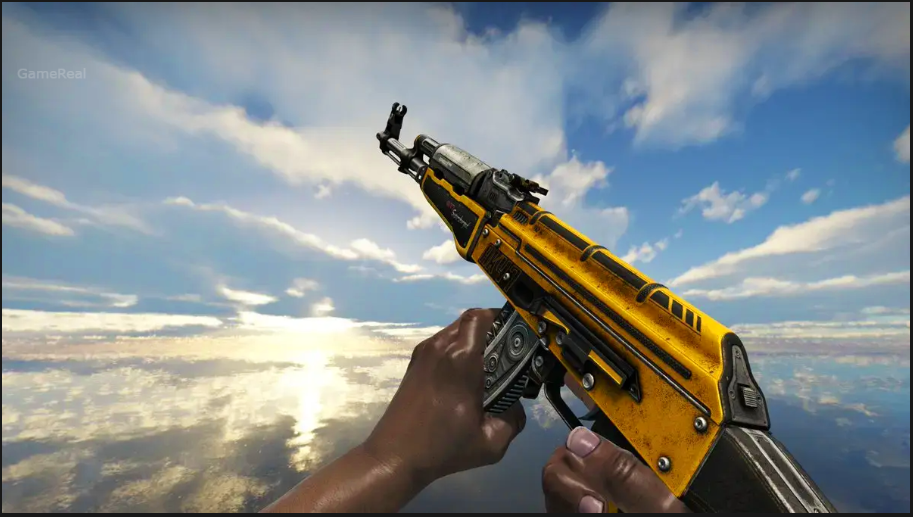
CS2 Rush Hour Update: Silent Reloads & New 3v3 Mode
Counter-Strike 2 has received a major gameplay update, and this one changes more than a few settings or fixes around the edges. Valve’s new Rush Hour update introduces silent reloading, a new 3v3 Rush game mode, a redesigned Premier map-selection system, silent sniper unscoping, returning Clan Tags and a substantial refresh to the crosshair system.
For a game where sound, timing and information are just as important as aim, some of these changes could have a noticeable effect on how players approach a round.
The biggest addition is arguably silent reloading. Players can now hold the reload key to reload without producing the usual reload sound, although the quieter option takes longer. That creates a direct trade-off between speed and information.
At the same time, Valve has introduced Rush, a fast-paced 3v3 mode built around randomly selected battle arenas. Instead of playing through a traditional full-size Counter-Strike match, teams move through a series of smaller encounters while trying to reach the opposing castle.
Here is everything important to know about the CS2 Rush Hour update and what has changed.
CS2 Rush Hour Update Explained
The Rush Hour update is one of the more gameplay-focused Counter-Strike 2 updates released recently. Rather than concentrating on a single map or cosmetic addition, Valve has changed several systems that affect normal matches.
The update covers four particularly important areas:
- A new silent reload mechanic
- The new 3v3 Rush mode
- A redesigned Premier map-selection process
- Additional audio, visual, social and interface improvements
Valve has also made several smaller changes involving gameplay settings, Workshop tools, scripting and map-related fixes.
For regular players, however, the most immediately noticeable changes are likely to be silent reloads, silent unscoping and Rush.
Silent Reloads Are Now Available in CS2
The most talked-about change is the new silent reload mechanic.
Previously, reloading could provide useful information to nearby opponents. If an enemy heard a reload, they could potentially use that information to decide whether to push, reposition or take advantage of a player temporarily being vulnerable.
The Rush Hour update gives players another option.
Players can now perform a silent reload by pressing and holding the reload key. The important part is the trade-off: the silent reload takes longer than a normal reload.
That means the mechanic is not simply a free upgrade.
A player has to decide whether hiding the reload sound is worth spending additional time without a ready weapon.
How Silent Reloading Works
The basic idea is straightforward:
- Start the reload action.
- Hold the reload key instead of simply tapping it.
- The weapon reloads without producing the normal reload sound.
- The reload takes longer than the standard version.
This creates a new decision during situations where sound information matters.
Imagine a player holding a tight angle after firing most of a magazine. A normal reload is faster, but the sound could tell an approaching opponent that the defender is temporarily occupied.
A silent reload takes longer, but it removes that particular audio clue.
That does not automatically make silent reloading the correct choice. If an opponent is already close enough to attack, spending extra time reloading can be dangerous.
The mechanic therefore fits into one of Counter-Strike’s familiar design principles: information comes with a cost, and players have to decide when that cost is acceptable.
Why Silent Reloads Could Matter in Competitive Matches
Counter-Strike is heavily dependent on information.
Players listen for footsteps, grenade sounds, weapon fire, movement and other audio cues to understand what may be happening outside their immediate vision.
Reloading is another piece of that information.
The new mechanic changes how reliable that particular cue is. Hearing a reload remains useful, but players can no longer assume that every reload produces an audible signal.
This could be particularly relevant in late-round situations.
A player hiding after taking damage might have enough time to use a silent reload. A player expecting an immediate fight probably has less room for the slower animation.
The mechanic may therefore be more useful in carefully chosen situations rather than something players use automatically.
It also introduces another layer to mind games. If a player expects an opponent to reload loudly, the absence of that sound no longer necessarily means the opponent is ready to fight.
It will take time for players to establish how frequently the mechanic becomes useful in high-level play.
CS2 Also Makes Sniper Unscoping Silent
Silent reloading is not the only new audio-related change.
Valve has also changed the sound produced when a player unscopes a sniper weapon.
Under the new update, unscoping a sniper weapon no longer produces a sound.
This is particularly relevant to players using weapons such as the AWP.
Before the change, an opponent could potentially use the sound of an unscoping sniper to gather information about what was happening around an angle. With the sound removed, that information is no longer available in the same way.
The change can be useful when a sniper wants to stop holding an angle without announcing that decision through audio.
Together, silent reloads and silent unscoping slightly change the information game surrounding weapon handling.
Neither change removes Counter-Strike’s reliance on sound. Instead, both give players more ways to control what information they reveal.
New CS2 3v3 Rush Mode
The other headline feature is Rush, a new queued 3v3 game mode.
Rush is designed around faster engagements and a series of randomly selected battle arenas.
Instead of taking place as a conventional match across one full-size bomb-defusal map, players move through a sequence of smaller combat areas.
The objective is to push through the arenas and eventually reach the opponent’s castle.
Valve describes Rush as a fast-paced mode where teams battle through a series of arenas. The arenas are randomly selected for each match, meaning players do not follow exactly the same sequence every time.
That randomness is an important part of the mode.
It means players cannot simply memorize one fixed route and expect every match to play out identically.
How Rush Works
Rush puts two teams of three against each other.
The match progresses through battle arenas, with teams attempting to advance toward the opposing castle.
Players must also manage a limited budget and the time available to complete each objective.
One of the key objectives involves controlling a tower.
A team can win the round by eliminating the opposing team or by controlling the tower when the relevant time expires.
The result is a more compact objective-driven experience than a standard Counter-Strike match.
Because the arenas are randomly selected, each Rush match can present a different combination of environments and engagements.
Valve has also added a Rush friends leaderboard, allowing players to keep track of their wins and compare results with friends.
Rush Is Different From Traditional CS2
Rush should not be viewed simply as traditional Counter-Strike with fewer players.
The smaller team size changes the amount of information available to each side. In a normal five-player team, losing one player does not immediately remove such a large percentage of the team’s total strength.
In 3v3, every player matters more.
Communication and positioning can therefore become especially important.
The mode also has a different rhythm because players are progressing through a sequence of battle arenas instead of spending an entire match around one conventional bombsite structure.
For players who enjoy shorter and more direct engagements, Rush provides another way to experience CS2 without replacing the game’s traditional competitive formats.
Premier Map Selection Has Changed
Valve has also made a significant change to Premier.
Previously, the map-selection process involved teams banning maps until one remained.
The Rush Hour update replaces that approach with a system that gives teams more opportunities to select maps they actually want to play.
The new process works as follows:
- Team 1 picks one map.
- Team 2 picks two maps.
- Team 1 picks one final map.
- Four maps remain in the selection pool.
- CS2 randomly selects one of those four maps for the match.
This is an important difference from the old elimination-style process.
Instead of repeatedly removing maps, both teams contribute maps to the final selection pool.
The final map is then determined randomly.
What the New Premier System Means
The main idea behind the change is to give players more opportunities to play maps they have invested time in learning.
A player can spend hours learning positions, utility lineups and strategies for a particular map, only for that map to disappear during a traditional veto.
The new process does not guarantee that a particular map will be played. It does, however, give selected maps a chance to reach the final pool.
There is also a new element of uncertainty because players do not know which of the four remaining maps will ultimately be selected.
That means teams may need to be prepared for more than one possible outcome.
For Premier players, this could encourage broader map preparation instead of relying heavily on a small group of familiar choices.
Clan Tags Return to CS2
The Rush Hour update also brings back Clan Tags.
Clan Tags are a familiar Counter-Strike feature that allows players associated with Steam Community Groups to display a group tag alongside their name.
Their return is primarily a social feature rather than a gameplay mechanic, but it is significant for longtime Counter-Strike players who remember the system from earlier versions of the game.
Players can select a Clan Tag through their player profile when they are part of a supported Steam Community Group.
It gives teams, communities and groups another way to identify themselves in-game.
Crosshair System Gets a Major Refresh
Valve has also redesigned CS2’s crosshair system.
Crosshairs have been updated to be resolution independent, and the settings interface has been expanded.
A dedicated Crosshair/Scopes settings tab has been added, giving players a more organized way to manage their aiming preferences.
The update also introduces additional crosshair styles and changes the default crosshair.
For players who spend considerable time tuning their crosshair, these changes provide more customization options.
The improvement is particularly useful because crosshair preference is highly personal in Counter-Strike. Players can have completely different preferences depending on their resolution, weapon choices and aiming style.
Bullet Impacts and Blood Are More Visible
The update also improves visual clarity.
Valve has increased the visibility and fidelity of bullet impact decals and made blood effects more visually apparent.
These changes are not simply cosmetic.
In a fast-moving match, visual information can help players understand what has happened around them.
Bullet impacts can provide additional clues about where shots are landing, while blood can make hits easier to recognize.
The goal is not to transform Counter-Strike into a visually different game, but to make certain combat information easier to read.
More Gameplay and Quality-of-Life Changes
The Rush Hour update contains several smaller changes alongside the headline features.
The grenade-limit setting has been adjusted so that it also enforces the total number of grenades a player can purchase during a round.
Valve has also corrected halftime scoreboard statistics so that they properly reflect the results of the previous round.
Another useful change allows players to adjust music volume separately for different game modes.
These are smaller additions, but they contribute to the overall usability of the game.
The update also fixes a case where players could avoid a kick ban, addressing an issue connected to the game’s player-management systems.
New Workshop and Scripting Tools
The update is not limited to players.
Valve has added new tools for Counter-Strike 2 Workshop creators and map developers.
New Workshop-related functionality includes tools for custom minimap images within specific areas, location-specific skybox rendering, constrained death-camera areas and camera-shake volumes.
The scripting side also receives new functionality, including additional entities and APIs that give creators more control over custom experiences.
These additions may not immediately matter to someone playing Premier, but they are important for the broader CS2 ecosystem.
Counter-Strike’s Workshop has long been an important part of the game’s community, and additional creator tools can eventually lead to new maps and custom experiences.
A New Music Kit Arrives
The update also adds a new Music Kit from Starjunk 95.
The kit is called “Industrial Sunset Memories” and is available in standard and StatTrak versions.
Music Kits do not change competitive gameplay, but they add another customization option for players who want to personalize their Counter-Strike experience.
It is one of several smaller additions included alongside the larger gameplay changes.
Why the Rush Hour Update Matters
The interesting part of this update is that Valve has changed several different types of player information at once.
Silent reloads change how players think about ammunition and sound.
Silent unscoping changes how sniper players reveal their actions.
The new Premier system changes how teams approach map preparation.
Rush creates an entirely different 3v3 format.
Clan Tags and crosshair improvements add customization and social features, while the visual changes improve combat readability.
None of these systems completely changes the identity of Counter-Strike 2 on its own.
Together, however, they give the September update a much broader impact than a typical collection of bug fixes.
What Players Should Try First
Players returning to CS2 after the update have several things worth checking.
First, try the silent reload in a low-pressure situation and compare it with the standard reload. The longer reload time is an important part of the mechanic, so understanding the timing matters before relying on it during an important round.
Next, test the new Rush mode with friends. Its 3v3 structure and random battle arenas make it substantially different from standard competitive play.
Premier players should also pay attention to the new map-selection sequence. Teams now need to think about which maps they want in the final four rather than focusing exclusively on which maps they want to eliminate.
Finally, players who use sniper rifles should test the new unscoping behaviour and revisit their crosshair settings after the interface changes.
Final Thoughts
The CS2 Rush Hour update is more than the addition of a new game mode.
Valve has introduced a new way to handle reloads, removed the sound from sniper unscoping, changed Premier map selection, added a new 3v3 experience and refreshed several long-standing interface and social features.
Silent reloading is particularly interesting because it introduces a clear risk-and-reward decision. Players can hide the reload sound, but they have to accept a slower reload in exchange.
Rush takes Counter-Strike in another direction by putting three-player teams into randomly selected battle arenas and asking them to fight their way toward the opposing castle.
Meanwhile, Premier players now have a completely different map-selection process, with four chosen maps entering a random final selection.
The update also shows that Valve is continuing to work on both the competitive and community sides of CS2. From Clan Tags and crosshair customization to Workshop and scripting improvements, the September update reaches beyond one particular type of player.
For anyone who has not opened CS2 since the update arrived, the best way to understand the changes is to experience them directly. The new mechanics are simple to describe, but their real effect will become clearer as players experiment with them and competitive strategies begin to adapt.
For now, one thing is certain: in CS2, hearing nothing during a reload no longer necessarily means nothing is happening.