
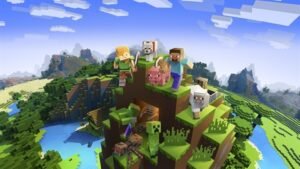
How to Play Minecraft: A Complete Beginner’s Guide
Minecraft is one of the most popular sandbox games in the world, offering players an enormous open world where they can explore, collect resources, craft items, build structures, fight dangerous creatures, and create almost anything they can imagine. Unlike many traditional games, Minecraft does not force you to follow one specific path. You decide what you want to do and how you want to play.
If you are completely new to Minecraft, the first few days can feel confusing. You may wonder what to collect, where to build your first house, how crafting works, how to find food, and how to survive the first night. This beginner-friendly guide explains how to play Minecraft step by step, from creating your first world to exploring caves, finding valuable resources, building a base, and preparing for more advanced adventures.
What Is Minecraft?
Minecraft is a sandbox video game built around exploration, creativity, survival, and construction. The game world is made from blocks representing materials such as dirt, stone, wood, sand, water, ores, and many other objects.
Players can break blocks, collect them, and use those resources to craft tools, weapons, buildings, farms, transportation systems, and countless other creations. Minecraft worlds are generated with different landscapes, including forests, mountains, deserts, oceans, plains, caves, villages, and other environments.
The game provides several ways to play. Survival Mode focuses on collecting resources and staying alive, while Creative Mode gives players unlimited resources and the ability to build freely.
Minecraft Game Modes
| Game Mode | Description | Best For |
|---|---|---|
| Survival | Collect resources, craft items, build a base, manage health and hunger, and survive enemies. | Beginners and adventure players |
| Creative | Access unlimited blocks and items with the freedom to build without normal survival restrictions. | Builders and beginners learning controls |
| Adventure | Designed mainly for custom maps and experiences where normal block-breaking rules can be restricted. | Custom maps and challenges |
| Spectator | Allows players to observe the world without normal interaction. | Exploration and observing builds |
How to Start Minecraft
To begin playing Minecraft, launch the game on your supported device and sign in with the account required by your edition or platform. From the main menu, you can create a new world or enter an existing one.
Create Your First World
If you are a beginner, start by selecting the option to create a new world. For your first experience, Survival Mode is a good choice because it teaches you the fundamental Minecraft mechanics.
Choose a world name that you can remember. You can then configure available world options according to your preferred experience. If you are completely new to the game, avoid changing too many advanced settings at first.
Once the world is created, you will spawn somewhere in the Minecraft environment. Your first objective should be simple: collect basic resources and prepare for nighttime.
Learn the Basic Controls
Before starting a major adventure, spend a few minutes learning how movement and interaction work. Controls vary depending on whether you are playing on PC, console, or mobile.
| Action | Common PC Control |
|---|---|
| Move Forward | W |
| Move Backward | S |
| Move Left | A |
| Move Right | D |
| Jump | Space |
| Inventory | E |
| Sneak | Shift |
| Drop Selected Item | Q |
| Attack / Break | Left Mouse Button |
| Use / Place | Right Mouse Button |
These are common PC controls, but the exact controls can be changed in the game’s settings. Console and mobile versions use different control layouts.
Your First Day in Minecraft
The first Minecraft day is extremely important because you need to prepare for the night. When darkness arrives, hostile creatures can appear in areas where the lighting is low.
Your first day should focus on collecting wood, creating basic tools, finding food, and building or finding a safe place to spend the night.
Step 1: Collect Wood
Look for trees and break their logs. Wood is one of the most useful early-game resources because it can be converted into planks and used to create crafting tables, sticks, tools, chests, doors, and many other items.
Collect several logs before moving to the next step. Having extra wood is useful because you will need it repeatedly during the early game.
Step 2: Make Wooden Planks
Open your inventory and convert the collected logs into wooden planks. Different types of wood can produce different plank appearances, allowing you to choose different building styles later.
Step 3: Create a Crafting Table
A crafting table is one of the first important items you should make. It provides access to a larger crafting grid, allowing you to create tools and many other useful items.
Place the crafting table somewhere safe and easily accessible. You will probably use it frequently during your first several hours of gameplay.
Step 4: Craft Basic Tools
Your first tools will normally include a pickaxe, axe, shovel, and possibly a sword. Wooden tools are useful for getting started, but stone tools are significantly more useful and durable.
After obtaining wooden tools, find exposed stone and collect enough cobblestone to upgrade your equipment.
Upgrade From Wooden Tools to Stone Tools
Stone tools are an important early-game upgrade. They allow you to collect resources more efficiently and provide better durability than wooden tools.
| Tool | Main Purpose |
|---|---|
| Pickaxe | Mining stone, ores and underground materials |
| Axe | Collecting wood and dealing melee damage |
| Shovel | Digging dirt, sand, gravel and similar blocks |
| Hoe | Preparing soil for farming |
| Sword | Fighting hostile creatures and other targets |
Find Food
Food is an important part of Survival Mode. Your hunger level affects your ability to survive and recover from damage, so you should collect food early.
You can obtain food through different methods. Depending on your surroundings, you may find animals, crops, villages, or other sources of food.
Early in the game, collecting food from animals can be useful. Later, you can create farms and establish a reliable food supply.
Build a Simple Farm
Once you have access to seeds and water, you can start a basic crop farm. Wheat is one of the easiest crops for beginners to understand.
Use a hoe to prepare suitable soil near water, plant seeds, and wait for the crops to grow. You can expand your farm as you gain more resources.
Build Your First Minecraft House
Your first house does not need to be impressive. The main purpose is to provide a safe location where you can store items, craft equipment, sleep, and prepare for your next adventure.
Choose a Good Location
Look for a relatively flat area with access to trees, water, stone, and food. Building close to useful resources can save you a lot of walking time.
Basic House Materials
| Material | Purpose |
|---|---|
| Wood | Walls, floors, roofs and decorative elements |
| Stone | Strong building material and foundation |
| Glass | Windows |
| Torches | Lighting |
| Door | Entrance and protection |
| Chest | Item storage |
| Bed | Sleeping and setting a respawn point |
A small rectangular house is perfectly acceptable for your first base. As you learn more about Minecraft, you can replace it with a larger and more creative structure.
Why You Need a Bed
A bed is extremely useful in Survival Mode. Sleeping can help you move through the night and provides a way to establish a respawn location.
To create a bed, you generally need wooden planks and wool. Wool can be obtained from sheep or through other methods depending on your gameplay.
Keep your bed inside your base and use it when appropriate. If you travel far from your home, consider preparing another safe sleeping location where possible.
How to Survive Your First Night
The first night can be challenging because hostile mobs may appear in dark areas. If you have not finished your house, do not panic. Your priority is simply to stay safe.
One option is to build a small enclosed shelter. Another is to temporarily dig into a hillside and block the entrance. Make sure the interior is properly lit.
Torches are particularly useful because they provide light and help make your base easier to navigate.
Common First-Night Mistakes
- Exploring too far away from the starting area.
- Entering deep caves without equipment.
- Ignoring food and hunger.
- Failing to create a safe shelter.
- Carrying all valuable resources while exploring.
- Not keeping spare tools.
How Mining Works in Minecraft
Mining is one of the most important activities in Minecraft. Underground areas contain many useful materials, including coal, iron, copper, redstone, gold, diamonds, and other resources depending on the game version.
Always bring a pickaxe when mining. It is also smart to carry food, torches, and extra tools.
Mining Safety Tips
- Always carry enough food.
- Bring several torches.
- Keep spare pickaxes.
- Do not dig straight down without understanding the risks.
- Mark your route so you can find your way back.
- Store valuable items before going on risky adventures.
Understanding Minecraft Ores
| Resource | Common Uses |
|---|---|
| Coal | Torches and fuel |
| Iron | Tools, weapons, armor, buckets and many useful items |
| Copper | Building, decoration and specialized crafting |
| Gold | Special crafting, equipment and trading-related uses |
| Redstone | Mechanisms, automation and technical builds |
| Diamond | High-quality tools, weapons and armor |
Ore generation can change between Minecraft versions, so the best mining strategy depends on the version you are playing.
How to Fight Enemies
Minecraft contains many hostile creatures. Combat becomes easier when you understand distance, movement, timing, armor, and your surroundings.
Early in the game, craft a sword and keep food available. A shield can also provide valuable protection when you have access to the required materials.
Common Hostile Mobs
| Mob | Basic Threat |
|---|---|
| Zombie | Close-range attack |
| Skeleton | Ranged attacks with a bow |
| Creeper | Explodes when close to the player |
| Spider | Fast close-range attacks and climbing ability |
| Enderman | Powerful close-range attacks and teleportation |
One of the most important beginner lessons is to avoid fighting multiple enemies at once when you are poorly equipped. Retreat to a safe area when necessary.
How Crafting Works
Crafting is the foundation of Minecraft progression. Almost every important stage of the game involves crafting something useful.
You combine resources according to crafting recipes to produce tools, weapons, armor, blocks, food-related items, transportation equipment, and many other objects.
Learn Recipes Naturally
You do not need to memorize every crafting recipe immediately. Use the recipe interface available in your edition of Minecraft to discover what can be crafted with the materials you have collected.
As you play regularly, you will naturally remember the recipes for frequently used items such as tools, torches, chests, furnaces, beds, and other equipment.
Use a Furnace
A furnace allows you to smelt and cook various materials and foods. It is one of the first important utility blocks you should create.
For example, you can use suitable fuel to smelt iron-related materials and cook food. Place a furnace near your crafting area so that it is easy to access.
Explore the Minecraft World
Once you have a safe base, food, tools, and basic armor, you can begin exploring more confidently.
Minecraft worlds can contain many different biomes. You may encounter forests, deserts, snowy regions, oceans, mountains, plains, swamps, caves, villages, and other environments.
Bring Essential Items When Exploring
| Item | Why Carry It? |
|---|---|
| Food | Restores hunger |
| Pickaxe | Collects stone and ores |
| Sword | Combat |
| Torches | Lighting caves and marking routes |
| Blocks | Building bridges, shelters and temporary structures |
| Map | Navigation where available and useful |
Find and Use Villages
Villages can be extremely useful for beginners. They may contain buildings, crops, beds, storage opportunities, and villagers with whom you can interact.
If you find a village early in your world, take time to understand its layout. You can build your own base nearby or use the village as a temporary starting point.
Trading With Villagers
Villagers can offer different trades depending on their profession. Trading can become an important part of progression because it can provide useful resources and items.
As you understand villager professions and trading mechanics, you can create more organized trading areas. However, beginners should first focus on learning basic survival before attempting complex trading systems.
How to Organize Your Inventory
Inventory management becomes increasingly important as you explore. Without organization, it is easy to lose valuable items or fill your inventory with unnecessary blocks.
Keep frequently used items in consistent hotbar positions. For example, you might keep your primary tool in one slot, food in another, and a weapon nearby.
Use chests to separate resources. One chest can contain building blocks, another can store ores, and another can contain farming materials.
Build a Better Base
After surviving the early game, start improving your base. You can add storage rooms, farms, animal areas, enchanting rooms, mine entrances, workshops, bedrooms, towers, bridges, and decorative gardens.
There is no single correct design for a Minecraft base. You can build a modern house, medieval castle, underground bunker, mountain base, village, futuristic city, or almost anything else you can imagine.
Farming in Minecraft
Farming provides a renewable source of food and materials. Start with simple crops and gradually expand your farm.
You can grow crops such as wheat and other available plants. Animal farms can also provide renewable food and useful materials.
Benefits of Farming
- Provides reliable food.
- Reduces dependence on exploration.
- Creates renewable resources.
- Allows you to breed animals.
- Supports larger long-term survival projects.
Enchanting and Advanced Equipment
Once you have progressed beyond the early game, enchanting becomes an important way to improve equipment. Enchantments can provide useful benefits to tools, weapons, armor, and other equipment.
Building an enchanting setup requires additional resources and preparation. Do not worry about advanced enchantments during your first few Minecraft days. Focus first on establishing a stable base and reliable resource supply.
Explore Caves Carefully
Caves can contain large amounts of resources, but they can also be dangerous. Darkness, hostile mobs, falling, lava, and getting lost are common risks.
Always carry enough supplies before entering a deep cave. Place torches consistently on one side of cave walls so that you can use them as navigation markers.
How to Avoid Losing Your Items
One of the most frustrating experiences for a beginner is dying far away from home and losing access to valuable equipment.
Before going on a dangerous expedition, consider leaving unnecessary valuables in your base. Carry only what you need for the trip.
When exploring unknown areas, mark important locations. You can also create temporary shelters or navigation markers to help you return safely.
How to Progress From Beginner to Advanced Player
| Stage | Main Goals |
|---|---|
| Beginner | Wood, stone tools, food and shelter |
| Early Survival | Iron equipment, farms and organized storage |
| Mid Game | Better armor, mining, exploration and enchanting |
| Advanced | Automation, large builds, advanced farms and major exploration |
| Expert | Complex redstone systems, massive projects and optimized gameplay |
Redstone and Automation
One of Minecraft’s most interesting features is redstone. Redstone allows players to create mechanisms and automated systems.
Beginners can start with simple doors, switches, automatic lighting, farms, item transportation systems, and other basic mechanisms.
As you learn how redstone components interact, you can build increasingly complex machines. Redstone is one of the reasons Minecraft can remain interesting even after hundreds or thousands of hours.
Creative Building Tips
If you enjoy building more than survival, Creative Mode is an excellent way to practice. You have access to a large selection of blocks and can experiment without worrying about collecting every material manually.
Start with small projects such as houses, bridges, towers, farms, and gardens. Once you understand scale and block combinations, move on to larger projects such as castles, cities, airports, stadiums, or futuristic bases.
Simple Building Tips for Beginners
- Use more than one block type for walls.
- Add windows and doors to avoid flat-looking structures.
- Experiment with different roof designs.
- Add lighting around buildings.
- Create paths between important locations.
- Use landscaping to make your base look natural.
- Build with a clear purpose instead of placing random structures.
Multiplayer Minecraft
Minecraft can also be played with other people depending on the edition and multiplayer setup you use. Playing with friends can make exploration, building, survival challenges, and large projects much more enjoyable.
In multiplayer, communication is important. Players can divide responsibilities. One player can focus on farming, another on mining, another on construction, and another on exploration.
Common Beginner Mistakes
Every Minecraft player makes mistakes. Learning from them is part of the game.
Mistake 1: Exploring Without Food
Always carry enough food when leaving your base. Running out of food in an unfamiliar area can quickly become dangerous.
Mistake 2: Carrying Everything
Do not carry every valuable item you own. Keep backup resources at your base.
Mistake 3: Ignoring Lighting
Dark areas can become dangerous. Proper lighting is important around your base and inside explored areas.
Mistake 4: Going Too Deep Too Early
Deep caves and dangerous areas are not ideal for a player with basic equipment. Improve your gear before taking major risks.
Mistake 5: Building Without Storage
As your resource collection grows, you will quickly need more storage. Build organized storage areas early.
Tips to Become Better at Minecraft
- Learn one mechanic at a time.
- Explore different biomes.
- Practice building in Creative Mode.
- Keep your inventory organized.
- Create backup equipment.
- Build farms for renewable resources.
- Learn how different mobs behave.
- Use maps and navigation tools when appropriate.
- Experiment with redstone.
- Do not be afraid to start a new world.
What Should You Do After the First Few Days?
Once you have a stable base, food supply, tools, and basic armor, Minecraft becomes much more open-ended. You can choose your own goals.
You might decide to search for rare resources, explore structures, build a massive castle, create an automated farm, establish a village, learn redstone, explore different dimensions, or simply spend hours creating beautiful buildings.
There is no requirement to play Minecraft in one specific way. Some players enjoy survival progression, while others spend most of their time building. Others enjoy technical gameplay and automation.
Final Minecraft Beginner Checklist
| Task | Recommended? |
|---|---|
| Collect wood | Yes |
| Create crafting table | Yes |
| Make stone tools | Yes |
| Collect food | Yes |
| Build a shelter | Yes |
| Create a bed | Highly recommended |
| Collect coal or another light source | Recommended |
| Get iron equipment | Recommended |
| Create storage | Recommended |
| Start a farm | Recommended |
| Explore caves | After preparing |
| Explore the wider world | After preparing |
Conclusion
Learning how to play Minecraft is mainly about understanding its basic survival and crafting systems and then discovering what type of gameplay you enjoy. Your first goal should be simple: collect wood, create tools, find food, build a shelter, and survive the first night.
After that, gradually upgrade your equipment, explore caves, collect valuable resources, build farms, organize your storage, and improve your base. As you become more comfortable, you can explore advanced systems such as enchanting, trading, redstone automation, large-scale construction, and dangerous areas of the Minecraft world.
The biggest advantage of Minecraft is its freedom. You are not limited to one strategy or one objective. You can become an explorer, builder, farmer, miner, engineer, fighter, or a combination of all of them.
If you are just starting, do not worry about making mistakes. Getting lost, falling into caves, fighting the wrong mob, losing items, and rebuilding your house are all part of the Minecraft experience. The more you play, the more naturally you will understand the world.
Start small, learn the basics, collect resources, build your first shelter, and then create your own adventure. That is the real way to play Minecraft.