
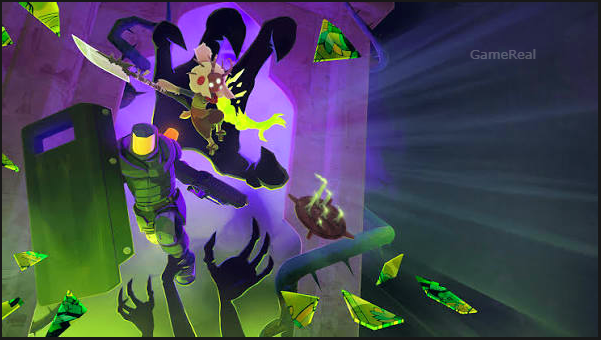
Risk of Rain 2 Hallowed Concepts: Price, Survivors and Bosses
Risk of Rain 2 has added to its already deadly world with Hallowed Concepts, a paid DLC that adds more to the disturbing lore of N’kuhana. The DLC was released on October 8th, 2026 and features two new Survivors, new bosses, new levels, new Trials, and new systems that revolve around Hexes and Hallowed Items.
Enforcer and Acolyte are the headline additions, two characters with very different playstyles. Enforcer is all about holding ground and controlling engagements, while Acolyte uses close-range glaive attacks, ranged attacks, and powers that interact with her life force. Hallowed Concepts also adds three bosses, new enemies, and a new collectible Curio, the N’tormat.
There is another compelling reason to pay close attention to this particular release: the launch update features quality of life changes for all players, and buffs to six original Survivors. It is important to note that these features are separate from the DLC content and do not require a purchase.
Here is a breakdown of Hallowed Concepts, its price, and what players should know before buying it.
Enforcer: A Defensive Survivor with the Power to Push Forward
Enforcer is one of two new playables Survivors, and confirmed to be available in s0, they are free to use from the get go.
The core of his concept is defensive control. The official synopsis emphasizes tactical movement, cover creation, and a role which can either anchor a team or push the center of a fight.
That makes Enforcer a different kind of character from those designed around perpetual motion, moving away from danger. “Tactical movement, The opportunity to provide cover, and A role both as a holder or a fighter in the centre of the battle.
But, as in Risk of Rain 2, defensive play in this game has to take into consideration the central pressure of the game: enemies are increasingly more threatening the longer they wait. What was a controlled engagement minutes earlier, can be an overwhelming fight simply because you stayed put for to long. Enforcer’s ability to push forward is as essential to him as his defensive nature.
What are Your Options for Playing Enforcer
When learning the character, the following three questions are things to think about:
Positioning: How well can you leverage cover to reduce the amount of pressure thrown at you without finding yourself in an unfavourable position? Motion: When the battle calls for it, can you move forward, fighting in the defense alone?
Team Support: Can you assist your team mates in safer place to stand when you have them, even if it is just for a little while?
These are just strategic thoughts based on the direction the character’s design is confirmed to go, not a statement on what one specific build/ability combo is the strongest.
Acolyte: A High-Risk Survivor with Powerful Rewards
Acolyte offers a very different playstyle. Her official description centers on glaive combat: she can strike foes up close, attack from a distance in ways that affect their souls, and trade some of her own life force for added strength.
She isn’t available to play from the start. Acolyte is an unlockable Survivor, so you’ll need to meet the game’s requirements before adding her to your roster.
Her apparent strength lies in balancing aggression with caution. Closing in for a glaive attack may leave you vulnerable, while hanging back can give you room to plan your next move. Knowing when to engage—and when to pull away—is likely to matter more than attacking every enemy you see.
The life-force element helps set Acolyte apart, but it doesn’t reveal exactly how her abilities work. Check the in-game descriptions for details on their costs, effects, and possible combinations instead of relying on her theme to predict the mechanics.
Who might enjoy Acolyte?
She may be a good fit if you like to:
– Switch between melee and ranged combat.
– Learn a character whose abilities appear to involve calculated risk.
– Test item combinations that suit a particular fighting style.
– Improve through practice rather than stick with a familiar setup.
Acolyte’s potential depends on how effectively you use her abilities, not just on the prospect of dealing heavy damage. Since one mistake can end a run, managing risk is an essential part of playing her.
New Bosses, Enemies and Stages
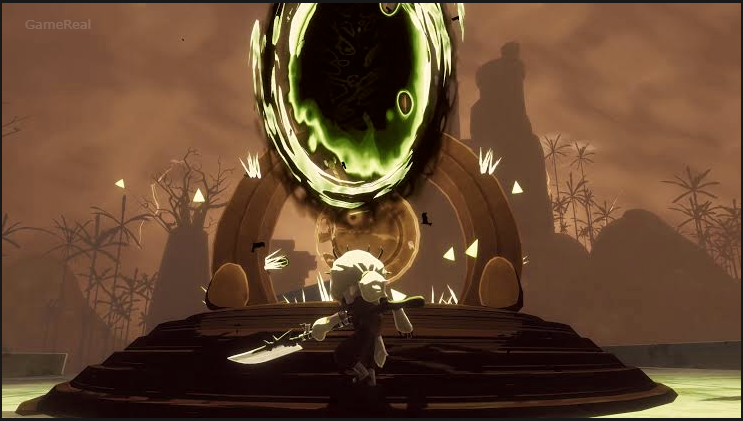
Three bosses, three new standard stages, three new enemies and one new Elite type are added in the expansion. A number of Trial stages are also added, which are built around extra challenges.
The official material confirms the number of bosses, but the material is not detailed enough at this point to give a confident list of their names, health values, attack patterns or specific weaknesses. These are details best found in the game itself, not guessed.
The new stages are just as important as the bosses. In Risk of Rain 2, a stage is more than just a backdrop; it determines movement, exploration, enemy encounters and how quickly players can find and activate the teleporter.
New environments can change how a familiar Survivor plays. Open areas might favor movement and ranged attacks, while tight spaces can make positioning harder when multiple enemies close in. These are elements to consider when approaching new stages, not claims that every Hallowed Concepts map follows a certain design.
Why the new Trials are important
Trials provide challenges beyond the normal cycle of travelling through stages, gathering items and activating the next teleporter. The expansion introduces three challenge variants:
Survival Sifting: Survive the challenge and keep yourself alive.
Predation Sifting: Hunt prey in the challenge.
Mortality Sifting: Race against time, risk it all for survival.
The above are the official descriptions of these themes but players should refer to the in-game instructions for the exact rules and conditions for completing each Trial.
Hexes and Hallowed Items: A New Risk-and-Reward System
A core aspect of the expansion is the interplay between Hexes and Hallowed Items.
There are 14 Hexes and 11 Hallowed Items, plus three more regular items, according to the official patch notes. The store description says that players can take on Hexes in exchange for Hallowed Items.
This is a relationship you want to understand before you go into a run. In a game full of powerful item combinations, a reward should not be evaluated solely by its immediate worth. The conditions that come with obtaining it can be just as important.
An easy way to think about this system is to ask:
- What is the Hex and what is the challenge or disadvantage it presents?
- What is the Hallowed Item and what is the reward?
- Is the reward compatible with your current Survivor and item build?
- Can you take the risk at this point in the run?
The correct answer may vary between runs. A buff that works well for one build might be less effective in another, and a risk that feels manageable at the beginning of a run might be deadly when health is low or enemies hit harder.
The official announcement is not detailed enough to create a universal ranking of all Hexes and Hallowed Items. Consider early attempts to be learning experiences with the new systems rather than assuming every new reward is an automatic improvement.
Three standard items are separate from the new item types
The expansion also adds three standard items. They are not to be confused with the 14 Hexes and 11 Hallowed Items.
That distinction matters, when looking at the content list: the expansion introduces several classes of additions, and each can affect a run in a different way. The full effect will be more obvious once players find synergies and see which effects combinations ones best.
The N’tormat Curio and Its Collectible Pages
The N’tormat is a new Curio found in Hallowed Concepts. Players can discover and collect N’tormat Pages, that are related to unlocking powerful abilities at a cost.
Which adds to the expansion another discovery-centric system. Instead of just getting all rewards at once, players know to explore the world and figure out how the Curio works.
The price tagged to its powers is crucial to the idea. In a game where a strong positive swing can end a run, a downside makes for an important choice: Is this advantage worth the downsides you have to give up or suffer?
The exact sequence of unlocks and consequences should be confirmed through in-game. To make up numbers for page count, precise list of abilities, guaranteed rewards etc is how to mislead people, when you have no facts.
For those unfamiliar to the game, the N’tormat is yet another incentive to take your time while playing instead of rushing through each stage. It should be interesting for veteran players especially since it introduces another system to delve into alongside the typical item and teleporter progression.
For returning players, the practical benefit is diversity. A new ability may remake a familiar Survivor’s playstyle when going into encounters or using combinations of items. It would also provide players with incentive to go back to a character that they may have stopped playing after settling on a best build.
Don’t assume these skills come available automatically as soon as the update is released. The patch notes say each one has an unlock condition, so look for the info for each character and challenge in-game.
What the Karma system is?
An optional Karma system that can also make the final fight on the moon more challenging is introduced with the update.
The key word There is a key word in this discussion, optional. For those who wish to have a more formidable final endgame encounter, there is yet another means to up the challenge, and for the rest, don’t need to play with that as a compulsory difficulty modifier.
This is a welcome addition for seasoned players who already know the standard route and want to go through another gauntlet. If you are still learning the game or you’re trying a new Survivor, it might be better to get a feel of the normal encounter before you add extra difficulty. The Karma system is included in the update for all players, not a Hallowed Concepts exclusive feature.
Other balance changes
Patch notes for the 8 October patch also bring some adjustments to the Halcyon Shrine, enemy behaviour and combat interactions. For example, on the shrine less so on the first stage, on some Solus enemies shields in effect have been reduced. The patch further resolves bugs with Survivors, bosses, items, stages, and the way that multiplayer works.
These changes are significant, even if you don’t purchase the DLC. They can influence the flow of a run, how certain fights act, and how consistently abilities work. Hence, returning players should view the October 8 release as both a content release and a more general game update.
Frequently Asked Questions
When was Risk of Rain 2: Hallowed Concepts released?
The expansion came out on October 8, 2026, for PC, PlayStation 5, and Xbox Series X|S.
What is the price of Hallowed Concepts?
It’s listed for US$14.99 on Steam and the US PlayStation Store. The Xbox India store lists it at ₹1,099. Prices may vary by region, so check your local store for the latest amount.
Which Survivors are part of the expansion?
Hallowed Concepts adds two Survivors: Enforcer, available from the start, and Acolyte, who must be unlocked.
How many new bosses are there?
The official patch notes confirm that the expansion adds three bosses. Their names, attacks, and encounter details are best checked in the game.
Does every player in a multiplayer lobby need to own the DLC?
No. According to the official store description, one player’s purchase is enough to make the expansion’s monsters, stages, and items available in the lobby. However, players who don’t own it can’t choose the new Survivors or permanently unlock its content.
Do the new Survivor abilities require the DLC?
No. The October 8 update adds new skills for Commando, Huntress, Acrid, Artificer, Engineer, and REX. Each skill has a separate unlock requirement.
Is the Karma system exclusive to Hallowed Concepts?
No. Karma is an optional feature included in the wider update, not the expansion itself. It can also make the final confrontation on the moon more difficult.