
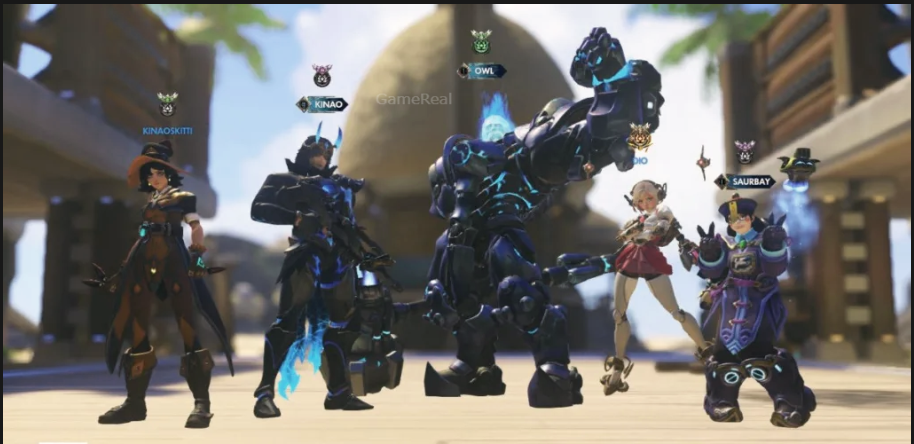
Overwatch Graveyard Games: Challenges and Rewards List
The Halloween event in Overwatch has a new twist this year: dying can make your hero stronger, and making up your mind on who is going to fight next will be decided by completing challenges. Mystery Madness: Graveyard Games is a partial time-limited arcade mode, part event progress system, with players participating for a pair of reasons: unlocking seasonal rewards and grasping Offerings that impact the line-up of the event’s heroes.
The event was released on October 6, 2026 as part of Reign of Talon – Season 5: A Grim Doctrine. Until 9am PT/12pm ET on November 2, 2026, you have four “weeks” to claim the season’s challenges, play through weekly Event Passes and commit Offerings to Winston, Ashe or Moira.
Before you begin playing, the progression system is worth learning about. Rewards, Challenge Completions, Battle Pass XP, and Event Passes You earn Rewards and Offerings by completing Challenges you Syndicate Offerings by pledging them with Battle Pass XP You can get another set of Milestones to pursue by picking up Weekly Event Passes.
You don’t need to spend all of your time playing Graveyard Games to make progress, either.
This is how the event functions, what reward mechanics are important, and how to play this time-limited mode without throwing your playtime away.
How to Get Rewards at Graveyard Games
There are three levels each tied to the event progression itself: challenges, Offerings, and weekly Event Passes.
They are related, but each has its own function.
1. Finish event challenges
Challenges are your main source for Graveyard Games prizes. Blizzard says that finishing Challenges awards spooky-themed prizes and Offerings that can be used on the event’s hero voting system.
Instead of treating challenges as something to check off after each match, take a look at the tasks they offer before deciding what to play. Some tasks are more suited for you to perform your regular Overwatch grind and a few of them will make you venture into the limited-time mode.
The best practice is to:
Before your first game, enter the event challenge menu.
Read the specific instructions, and pay attention to any objectives that you are already working on.
What kind of challenges to look out for if you want to play your way.
Check your progress during sessions instead of assuming everything goes for every objective in every match.
Collect or claim rewards whenever the ingame UI asks for more input.
The last item is important for completion and the reward for an objective task in live-service games often are not the same in one and the same step of a process. Watch for the status indicated in the current event interface.
Don’t assume every challenge needs to be completed with Graveyard Games. Blizzard has assured us that we can play at our own pace in portions of Overwatch outside of the event mode, but that is it. Still, the first repeatable challenge in the event to play Mystery Madness, so this event mode is useful if you want to earn more Offerings.
2. Collect Offerings and pledge them to a hero
Offerings are the voting currency of the event. They are how players can affect which of three heroes appears next in Graveyard Games.
The heroes you can pledge to are:
- Ashe
- Moira
- Winston
Once you have earned Offerings from challenges, you can pledge them to any of the heroes. You can put all of your Offerings on one hero, or you can divide them among the heroes.
The hero who receives the most Offerings is summoned into the mode next. So it is more than just a reward system; the community plays a part in how the limited-time mode evolves.
You also directly progress. Each Offering pledged provides Battle Pass XP. This gives you a reason to go back to the event menu and spend your Offerings instead of letting them sit there.
Should you pledge all your Offerings to one hero?
It depends on what you want from the event.
If you have a strong preference for Ashe, Moira, or Winston to be added to the mode sooner, then concentrating your Offerings on that hero is the easiest way to do that.
If you like all three characters, you can also spread your Offerings. The system does not force you to dedicate everything to one hero.
You do not have to think of your choice as a permanent commitment to one hero. The point of the system is to allow players to influence the order that the heroes enter the mode.
How Mystery Madness: Graveyard Games Works
The event arcade mode marries concepts from Mystery Heroes, Junkenstein’s Lab, and Stadium. Its defining mechanic is brilliantly basic: you get new Powers whenever you die.
Instead of turning every death into a pure discouragement, Graveyard Games makes it a chance to evolve your character’s build. As the match sees action, players can begin to obtain progressively more bizarre combinations of effects.
Random heroes with a role restriction
Graveyard Games employs the 5v5 Open Queue format with a twist: 1-2-2 role composition is guaranteed.
At the start of a round the game picks a random role for you, and gives you three heroes from that role. And then you pick which of those heroes to play.
If you hit random, the game picks between the three heroes and rewards you a little.
This configuration also differentiates the mode from ordinary game, where you select your favorite hero freely before fight. You might have to make do with a hero you don’t regularly play and a role you don’t want to play.
If you don’t know any of the kits of the heroes you can pick from, it’s a good rule of thumb to just go with the one you know the most of. In some cases, the value of being able to retreat, give to teammates, or make an impact from a distance is greater than what you get out of playing a hero simply because you like how they look.
Experience and Power Dec/def Options
You receive experience both passively and through kills and assists. When you have enough experience, you gain a level.
Upon dying or a round change, you are given Power Choices commensurate with the levels you had gained since your last death. For all levels you have gained during that timeperiod, you select among two Powers.
Powers are available in three rarity tiers:
Common : Provides a support-style effect similar to a handful of perks or low level stadium effects.
Epic: May allow for more impactful effects of your run in..
Legendary Can make for particularly strong or surprising synergies.
How much a Power is worth depends on the options it offers, and how they interact with your hero, and the game you’re currently playing. Just because an effect looks rare doesn’t mean it’s the best pick in ever situation.
For example, an offensive effect will be valud when your team can put continual pressure on the opponents, and a defensive or mobility effect will help you live long enough to get some of the upgrades you have accumulated.
Since your plan of attack is based on the Powers you get, being flexible is more important than sticking to one rigid set-up.
Examples of Graveyard Sounds Games Powers
Blizzard has showcased two such examples that shows just how ridiculous the game mode can be.
Jump Scare Button Off In Combat allows you to become a prop while out of combat, giving you an opportunity to flank opponents and scare them when they are least expecting an attack.
Zomnic Summoner N1 lets you throw a grenade summon a Zomnic when it explodes.
These are examples of Powers that affect more than raw damage or survivability. Some enable you to betray the enemy, apply unexpected pressure or even come to a fight in different ways.
The takeaway for playing is: read the description of for each Power as they come. Don’t assume all options behave like a normal hero perk or that an effect will be meaningful in all situations.
So, what happens when you die?
There’s more to death than reward-based Power Choices.
Dieing gives, as per Blizzard’s notes on the patch:
A 10% Ultimate Charge.
Overhealth equal to 40% of your maximum life when you respawn.
A 30% movement speed boost out of combat when you respawn.
These advantages are built into the rules of the mode, but they don’t mean that throwing away lives is a viable strategy. You still lose time to be off of the fight, if your team need to go contest without you and you’ve given the enemies the opportunity to take it. And if the other team uses the opening to take control, you’re again going to be left behind for an intentional death.
Make Steady Progress Without the Grind
The easiest way to make progress is to fit challenges into the way you already play. You don’t need to spend every session grinding through objectives.
Review your challenges before a match
Before you start, check which goals you can realistically work on. Some challenges require Mystery Madness, while others may count progress in regular modes. Knowing the difference can save you from spending a whole match in the wrong place.
Play the repeatable challenge to earn more Offerings
If you’re hoping to collect Offerings, the repeatable Mystery Madness challenge may be worth your time. When it’s available, playing the event mode lets you enjoy its limited-time rules while working toward influencing the next hero. Check the challenge details in-game first, so you know what counts before settling in for a longer session.
Offering pledges regularly
Don’t skip the vote screen after you’ve collected Offerings. How you contribute to hero selection and every pledged Offering awards you Battle Pass XP.
Make it a habit to check the event after a few rounds. This makes it easier to keep track of which hero is receiving your support, and it keeps your contribution up-to-date.
Don’t even bother with the weekly milestones Ever.
The weekly Event Pass adds a level of progression beyond what you can get from the individual challenges. Check out the active pass and its milestone in case you need to work on something this week.
With the event lasting four weeks you might as well check back regularly rather than wait to come and examine everything all at once in the final days.
Learn to adapt instead of chasing every kill
Graveyard Games relies on randomized heroes and changing Powers. You won’t always have your dream character, or a perfect batch of upgrades.
What your present hero can do now depends on you. Be mindful of the goal, use your powers intentionally, and pick Powers that first serve your necessary immediate step.
Kills and assists reward XP, but so does playing the objective and helping your team. Going after a high-risk kill just to soak up some XP may be more costly than beneficial.
Have realistic expectations of rewards
An ideal challenge guide would isolate known systems of rewards from those that have not been.
Blizzard has announced chilling challenge rewards, Offerings, weekly Event Pass rewards and, perhaps most excitingly, end-of-week milestones. However, this published announcement should not be taken as a definitive or universal inventory of all cosmetics, challenge counts, or reward amounts.
The availability of the items you can purchase from the menu event live should be your last word-use. Do not trust to unofficial lists that do not say their sources or which version of the event they are from.
Is It Graveyard Games Worth Playing?
That depends on what you’re looking for in Overwatch’s Halloween event.
If you’re just pursuing the progression of the season, both challenges, the Offerings and the weekly Event Passes have a couple of things to work for. Pledging Offerings for Battle Pass XP also ties the event into the broader seasonal progression system.
The mode’s death-based Powers are its biggest draw if you like messing around with weird builds. There’s a random hero selection, three rarity tiers and effects like Jump Scare and Zomnic Summoner that make it less predictable than a regular Control match.
If you like to have a consistent hero pick and plan out your team comps, the random role and hero selection might not be that appealing for you. The mode is tailored for adjustment rather than total control over the setup of your starting point.
It provides a practical reason to run back through the game at intervals during October, rather than simply making the occasion a one-day event, for those who relish event rewards and playing experimenting with game play.
Frequently Asked Questions
How long does Overwatch Graveyard Games last?
Mystery Madness: Graveyard Games will be taking place from October 6 until November 2, 2026. The time-limited event and its progression bonuses are predicated on this timeline.
Where can I get Offerings in Graveyard Games?
Lead by the event challenges. Blizzard confirms that challenges also give Offerings in addition to the rewards. There is a repeatable challenge tied to play Mystery Madness, that also serves as a means of acquiring more Offerings.
What can you do with offerings?
Offerings are to Ashe, Moira or Winston to determine which hero the next summon in Graveyard Games calls. Each Offering pledged also grants Battle Pass XP.
Do you have to play Graveyard Games to get every event reward?
No, I don’t think you need to. Blizzard says fans will be able to continue playing their favorite Overwatch modes beyond the event mode, while making their way through the seasonal celebrations. The other repeatable challenge that you can do to get more Offerings is related to Mystery Madness, so check out exactly what you need to do for each objective.
Which hero do you pledge Offerings to?
Take Ashe, Moira, or Winston whomever you want [to support]. You have the option to focus your Offerings on a single hero or split them between your choices. The next hero to receive the most Offerings will be called up next, and Blizzard assures that all three will be available by the last week.
What are the Graveyard Games weekly Event Passes?
Every week brings a new event pass, with spooky rewards and a checkpoint at the end. View the in-game pass for the level requirements and rewards for this week.