

Final Fantasy Resonance: A Closer Look at Its Combat System
Final Fantasy Resonance puts a fresh spin on the series’ classic turn-based formula by combining enemy stagger mechanics, turn management, customizable Visions, and high-impact combo attacks. Winning battles is not simply about choosing the ability that deals the most damage. Players also need to consider the timing of each character’s turn, an enemy’s stagger progress, and how different skills can be chained together for stronger results.
Visually, the game marks another major milestone for the franchise as the first Final Fantasy title to embrace Square Enix’s HD-2D presentation. Pixel-inspired characters are placed in detailed 3D environments, while cinematic effects add extra flair to battles and story moments. Beneath that nostalgic presentation is a combat system with several layers, encouraging players to think ahead and build strategies instead of depending solely on high damage output.
A free demo is already available before the game launches on October 22, 2026, giving players an early chance to experience the opening chapter and get familiar with its mechanics. Here’s a breakdown of the core systems, why they are important, and the key things to consider when putting together an effective party.
These features are intended to be used in tandem. These features are: the timeline to make players know when to make their next move the staggering to delay when the enemies can take their next action and, the Resonance attacks that provide the players with an opportunity to make use of the turn order if the sequence was successful.
The end result is a timing system that works with character stats, and not just against them.
1. Action Timeline Is What Makes The Act Turn System Work The turn order is important because of your Action Timeline.
There is a Rhythm Countdown feature in Final Fantasy Resonance that is among its most valuable attributes.
The timeline shows the next actions of the party and the enemies. Turn order is predetermined by arrival times: characters move left to right executing their turns, just like in previous games.
This gives players a much better understanding of the immediate battle situation.
In a classic turn-based battle, a player may choose an attack mainly because of its damage or cost. But there’s a new one to add, thanks to the visibility of the timetable: “What will be happening before the next time I have a chance to do anything?”
For instance, let’s say an enemy will be hitting you before the next character in your rotation. It may be better to use the opportunity on an enemy you can already work toward disrupting or damaging, instead of holding out for a less important target. Or, if the enemy is close to being staggered, you may say, use the other appropriate skill to get additional work done before the enemy takes their next turn.
These are tactical choices, not guaranteed answers to anything. The best action really depends on the exact turn order, the abilities you have, and the conditions of the battle.
2. The Stagger Gauge Rewards Planned Attacks
The stagger gauge is yet another core aspect of FFR’s battle system.
An enemy has a stagger gauge under their HP bar. Emptying this gauge staggers the foe, which stops it from taking its turn and weakens the enemy.
This has two implications: two very significant ones.
Enenemies’ stagger attacks can be disrupted, too, and stagger status can be dispelled in the same way. The drop in defense opens up the chance to do more damage when the enemy is exposed.
Thus stagger is more valuable then the attacks that are required to fill the stagger bar. A good stagger at the right moment can also turn the flow of a battle by taking the opponent away from an attack.
Why timing stagger matters
Let’s say when a threatening foe near at the next turn when it’s stagger gauge is full or near empty.
There are two ways you can go about it. You could always do the strongest damage option available, or you could play the recommended play for the stagger sequence instead.
However, if the later allows to make the enemy to stagger before doing it’s scheduled move, that may be even more important tactically then simply getting the maximum immediate damage. However, the right choice is based on how much stagger progress your abilities actually provide. Players should learn what their attacks do instead of assuming every powerful ability will be equally good at breaking an enemy’s defenses.
Staggering is not equal to knocking down an enemy
It is also necessary to differentiate between an enemy’s HP and its Stagger meter.
The amount of damage an enemy can take before it is killed is dictated by HP. The stagger meter measures progress towards countering the enemy.
A foe can also be left with high HP, when staggered. That’s why the mechanic is important – it lets the players break the predictable rhythm of the battle and use a momentary lead.
3. Sweeping Stagger and Extra Phases Add More Follow-ups
Final Fantasy Resonance really takes the stagger mechanic to the next level with something it calls Sweeping Stagger.
As explained in the gameplay by Square Enix itself, Sweeping Stagger lets you launch at the end of the Extra Phase a Vision-Specific Resonance Move.
This means stagger management is a bit more important now, because it can lead to more than just an interruption.
The rule of thumb here is to go into the stagger opportunity, not come out of it.
Upon nearing staggering an enemy, players need to ask themselves what follow-up skills they want to use and if their currently equipped Vision grants a meaningful Resonance attack.
This can change depending on the fight and what abilities the group has. To say that any stagger will result in the same outcome or that a certain combination of actions will bring victory would be dishonest.
What can players take away from this mechanic
A stagger window can be layered in multiple ways with value on each layer:
1. It prevents the enemy from acting on its turn.
2. It reduces the enemy’s defense.
3. After a Sweeping Stagger, the Extra Phase can open up a chance for a Vision-specific Resonance assault.
So this is the reason why impulse abilities are important. Players who are tunnel visioned on immediate damage may miss the chance to stop an enemy and chain into a high damage move.
Instead, think about each step building on the next one.
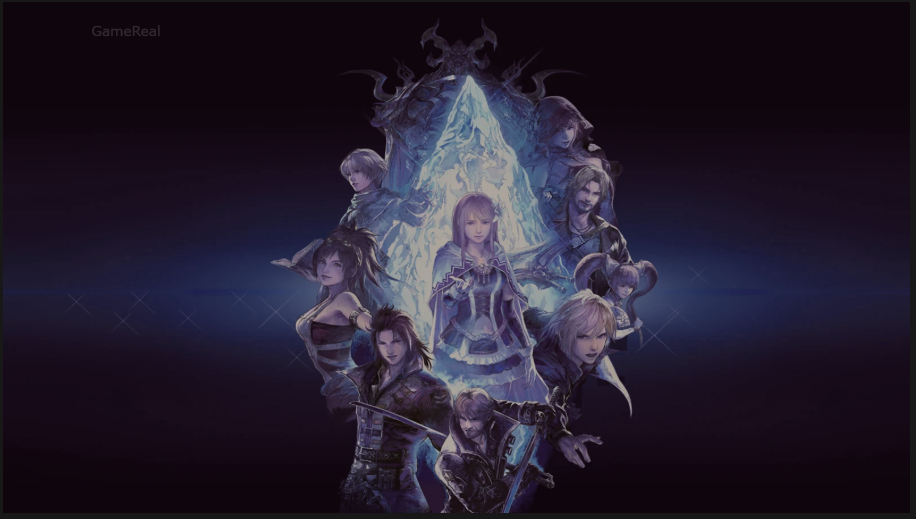
4. Visions Offer More Freedom to Customize Characters
Visions are one of Final Fantasy Resonance’s defining features. They hold the essence of characters encountered during the story, and players can earn them by completing certain events. Equip a Vision, then fight to unlock the abilities it offers.
Some Visions are based on well-known heroes from earlier Final Fantasy games. They may be a nod to longtime fans, but they also play an active role in shaping how combat works.
How the system works
There are three steps:
– Earn a Vision by progressing through the game and completing related events.
– Equip it to the character of your choice.
– Take that character into battle to learn the Vision’s abilities.
Learning an ability doesn’t mean you have to keep its original Vision equipped. Once unlocked, the ability can be used with another Vision, as long as it falls within the relevant cost limit.
This lets players mix and match abilities to create their own character builds, rather than locking them into a single Vision’s skill set.
Why the price cap matters
Cost limit for abilities adds a trade-off to customization.
A player may want to bring a handful of powerful abilities on the journey, but the cost limit forces each decision to be weighed against all others.
That’s to encourage playing around. Instead of equipping automatically with all the abilities they find, players have to decide which pairings work best for how they play.
Like, one build might be full on damage, and the other would focus on a better selection of options. These are ways to tailor gameplay – not necessarily the best builds.
The optimal set-up is going to depend on what powers you have, the fight, and how you feel like managing the group.
Visions and a classic job system
Final Fantasy Resinance features Visions as a more modern and accessible version of the series’ traditional job-system idea.
The comparison is instructive because both methods provide players with means through which to modify character differentiation beyond rudimentary statistics.
But the traditional job system should not be discarded in favour of Visions. Previous details of the confirmed mechanics include learning abilities from equipped Visions to a maximum of three and risk being over weaned by the cost limit.
That distinction is significant when assessing the depth of the game. The real question isn’t just how many Visions there are (i.e., six), but how much choice the ability combos give you while in battle.
5. Resonance Attacks Empower Visions
The Vision system is now linked to the game’s battle strategy through resonance attacks.
Upon Sweeping Stagger, players can execute a Vision-exclusive special move called Resonance at the conclusion of the Extra Phase.
They come in various forms. Square Enix has categorized them as high damage attacks, strong AoE attacks, and secondary effects.
This adds another dimension to Visions, beyond just learning abilities. Visions can also perform special attacks that help players take advantage of a successful battle sequence.
Selecting a Vision for its Resonance
When equipping a Vision, players must consider not only the abilities they wish to learn or use, but also the special move associated with that Vision.
A Vision with a relevant Resonance attack may be more suited to a different situation than one primarily chosen for its other abilities.
The optimal choice depends on what the party requires from the player.
A Resonance with AoE, for example, is effective against multiple enemies, but a different effect may be more desirable in another fight. These are strategic options based on the officially detailed attack types, not claims about a Vision’s effectiveness. The trick is to look at the whole picture, not just to judge a Vision by one ability.
6. Espers Lend a Hand with Temporary Summoned Support
Espers add another layer to combat strategy.
Players unlock these mighty summons as they play through the story and complete side quests. An Esper, once summoned, fights alongside the party for three turns, finishing with a powerful move on its last turn before vanishing.
This adds a time element to using Espers, as well as availability.
Given that the summon is temporary, players must decide when their presence will be most effective. While an Esper may be of great help when summoned during a tough fight, its short duration means players cannot rely on it to stay for the whole fight.
Thinking about Esper timing
Before summoning, think about the current state of the battle.
– Is the party up against a tough enemy?
– Can the Esper’s temporary presence assist during a critical part of the fight?
– Is there a significant chance to gain from its finishing move?
This framework helps to guide players without making the assumption that all Espers have the same abilities or that one summoning strategy works in every encounter.
Espers also play a different role than Visions. Visions help customize characters and Resonance attacks, while Espers are temporary summoned allies that fight for a set number of turns.
This distinction helps players not fall into the trap of thinking every special system serves the same end.
7. How the Combat Systems Interact
Final Fantasy Resonance’s combat design is at its best in the connections its systems have with each other.
The timeline tells us what will happen next. Stagger gauge Stagger gauge: you can stagger enemies.
A Sweeping Stagger can pave the way for a Resonance attack, whilst since Visions are a by-product of the fighting for us get access to abilities and special moves that defines a parties play-style where it in a nutshell. This structure shows why the system is not merely a matter of doing the command with the biggest listed damage.
They need to consider what comes next, what doing something adds to the encounter, and how the capabilities on each team member complement one another.
That doesn’t necessarily suggest that the entire game will be hard, or well balanced. Those are decisions that require playing broader. What it does demonstrate, however, is how the systems as described officially are desired to generate tactical choices.
8. What to Test in the Free Demo
The free trial is a good way to try out the battle system without buying the entire game.
Square Enix has confirmed that the demo will take you from the beginning to the end of Chapter 1. Data from the save can be transferred to the full game.
Instead of hustling through the beginning, experience how the different systems work in actual fights in right now in the demo.
Check the action timeline before giving commands
Watch the sequence of upcoming actions and you may want to see if any enemies are ready to attack before your team responds.
This will help you realize how much actionable information the timeline gives you
Watch the stagger gauge
Feel how different attacks influence the stagger gauge and if certain weapons are better for staggering enemies.
Don’t take your highest hp damage ability as your best fit for making a stagger opportunity.
Experiment with Visions
Take note of how Vision abilities are learned, and how the cost limit impacts your possible combos.
The system of customization is more understandable when you see how the various limitations affect your options. Notice the transition to Resonance
During a Sweeping Stagger, take note of Extra Phase + Resonance and how that plays into the fight.
This is one of the most straightforward examples of how the game’s separate combat systems link.
Frequently Asked Questions
Is Final Fantasy Resonance turn-based?
Yes. Battles use turn-based commands, and an action timeline shows when each ally and enemy is set to act.
What is the stagger gauge for?
It shows how close an enemy is to being staggered. Emptying the gauge stops the enemy from taking its turn and reduces its defense.
What are Visions?
Visions are crystallized character essences that let you learn abilities through combat. Once learned, abilities can be used with another Vision, as long as you stay within its cost limit.
What are Resonance attacks?
These special moves are tied to specific Visions and become available at the end of the Extra Phase after a Sweeping Stagger. They can deal heavy damage, hit multiple enemies, or provide other effects.
How do Espers work?
Espers are powerful summons unlocked as you progress through the story and complete side quests. They join the party for three turns, then use a finishing attack on their last turn.
Can I try the game before buying it?
Yes. The free demo covers the opening up to the end of Chapter 1, and you can carry your save data over to the full game.
Does Final Fantasy Resonance use a traditional job system?
It offers a fresh take on the familiar job-system style through Visions. You learn abilities from the Visions you equip, then mix and match them within a cost limit for more flexible character customization.