
THE FINALS Season 12: How the New Destruction System Impacts Combat
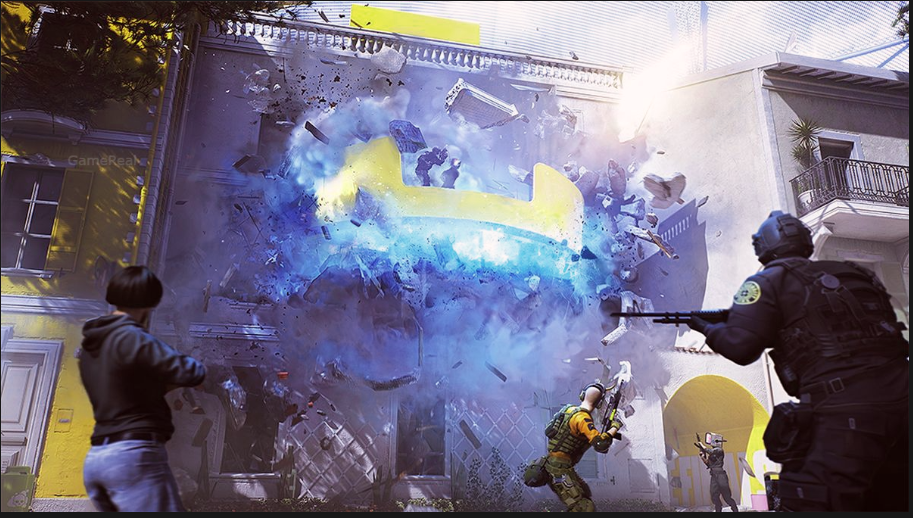
Destruction has always been one of THE FINALS’ hallmarks. Walls melt away in a gun battle, floors give way under the feet of a squad and a safe Cashout position comes under fire moments after you lay eyes on it. But Season 12, dubbed PRIME TIME, is kicking that up a notch by changing how buildings break apart and how the environment reacts.
Season 12, for release on 20 October 2026, brings THE most destruction update, Embark Studios has said, yet for the game since launch. Rather than the environment being either undamaged or completely destroyed, the new system will allow for more types of damage, leaning walls, sagging floors, dynamic debris and environmental chain reactions.
That might change a lot more than just how the arenas look, however. They can change how teams defend objectives, what routes they take, how to flee from bad situations, and even when to go on the attack.
The key difference is that these new systems have already been announced and how competitively impactful they actually are can’t be completely determined until they are in the hands of the players in live matches. Here’s what’s been confirmed for now, and what the changes might mean for how you play on a day-to-day basis.
THE FINALS Season 12 Release Date and Status of a TV Show
Season 12: PRIME TIME will air on 20 October 2026. this season has Not yet reached the date of its announced release yet on Oct 19.
Embark Studios have revealed a huge list of changes coming with the update, including enhancements to destruction, classic arena redesigns, a new playstyle, a new mode, and a full UI and HUD rework.
The destruction patch is especially significant because it influences the physical places of fighting. The introduction of new weapons and gadgets may shift what options a player has at any given time, but modifications to the environment can shift the viability of a single piece of gear, defensive cover, or route of movement for an entire game.
Destruction features that have been announced at this time include:
Structures, instead of becoming fully destroyed all at once, breaking up progressively.
Floors that sag and walls that lean while still clinging to the same structure.
More diverse building failures.
Chain reactions environmental.
Rubble that can provide new surfaces to move and fight on.
Force- and terrain-sensitive Smoke in the Arena
Visual indicators have also been enhanced players to detect early stages of structural hazard.
Arena improvements, balance changes and performance enhancements have also been announced for the developer. But the precise improvements in performance and in turn the competitive impact these destruction changes will have for the final game are not to be taken for granted before the update is out and tested.
What Is Changing in the Destruction System?
It is the largest change in the space between a stable building and a collapsed one.
In the past, players could usually tell the state of a wall or building using a fairly simple rule: is it whole, or is it broken? a portion of a building is whole, or it has fallen in. THE FINALS already supports a high environmental destruction rate, but Season 12 is going to introduce more variety and physical expression to the process.
That in-betweener status is significant, because buildings don’t always have to vanish overnight to alter the course of a battle. A damaged floor can collapse underfoot, a wall might fall into a neighboring room, and a half-razed block can throw up barriers — or break them down.
The end result is an arena that evolves multiple times and not just in large, dramatic collapses.
1. Gradual Desintegration Leads to More Ambiguous Spots
In the announced system, a structure can be broken apart while still hanging together on some levels. Sagging floors, leaning walls, and collapsing buildings can all happen in different ways.
It also adds another layer for players to think about tactically: Seeing damage to a position might mean it’s about to become compromised, even if it’s still totally there.
Imagine a team defending Cashout from an upper level. If an opponent weakens the environment, the team can no longer rely on the house as a stronghold for defense. A floor potentially sagging could represent an emerging issue, and a leaning wall could dictate which angles to hide behind.
It won’t necessarily mean, however, that every compromised structure will come crashing down or that all floors above damaged ones will turn into boiling boiling plates. The particular behaviour will depend on how it is implemented in the game and on the situation.
The takeaway is to observe the state of the surroundings, rather than assume that a familiar building will stay the same over the course of a fight.
2. Floors that sag might provide new pathing through levels
How this is happening To revisit the Embark example, consider a damaged floor bulging into the room below. That can create a moment for players to react and maybe leave a new route between levels.
It’s important in a game where vertical play can affect how teams approach objectives and defend against opponents.
An upper floor holding team might imagine that the enemy have to come down a stairwell, elevator, or other predetermined path like our hypothetical in-house situational would-be Spring Hill member. If destruction creates a hole between floors… that may not be safe either.
The reverse scenario can also play out. A pressured team could get out of nowhere when an old structure throes open a new way. The passage formed by destruction may be used as a means of escape, an aggressive tap-in or a route of return with no need to conform to the path opponents bank on.
But players shouldn’t expect that every broken floor means a safe way down. The developer has sketched possible structural solutions, not an every-encounter guaranteed route-generation mechanic.
What the clueless should know: vertical access should be revisited once a fight takes its toll on your floors and walls.
3. Leaning Walls Could Alter Cover and Sightlines
Cover is only effective when it shields a player from the relevant angles. A wall that is still standing but leaning may shift those angles before it eventually falls.
A squad relying on a compromised wall to absorb enemy fire, for instance, might discover that the level of cover they receive has altered as the wall adjusts. Perhaps a section becomes more exposed, or the wall’s new orientation could block a previously open path.
This could make defensive positioning less predictable. Players might have to decide whether holding a certain corner is still worth it, or if they should move before the wall becomes too unstable.
Now, an important caveat here: leaning walls are a confirmed feature, but we don’t know exactly how they will impact bullets, collision, movement, and cover for each player until it is in the game. It would be incorrect to say that every leaning wall will either leave players more exposed or prevent them from taking a certain path.
However, the intent is clear. The condition of a structure is meant to be relevant between the time it is first damaged and the time it is fully destroyed.
Environmental Chain Reactions Could Make Destruction More Tactical
Embark has also said that the environmental effects this game offers will be more extreme, with one effect leading to another.
This is potentially the most important change for seasoned players. Destruction is more tactically engaging when result of an action can have an impact on nearby structures or objects rather than finishing with the first compromised area.
Imagine a theoretical battle on a building. One attack damages a portion, and that harm is part of the bigger whole of collapse. The changed terrain or the resulting rubble could even influence the pathways for both sides. Now, instead of reacting to a single blast, they might have to deal with multiple environmental shifts.
That potential makes it worth watching what’s around a target before pouncing on it. But a building is not necessarily an isolated thing. Its position and relation to the arena around it may be significant when damage propagates, or a collapse extends into adjacent tunnels.
There’s a line between a potential chain reaction and a sure one, however. Embark has confirmed the system will be strengthened, but there is no indication that every explosion will prompt to a predictable series of collapses.
Players need to discover the nature of the system in the game rather than presuming that a certain move will always have the same effect.
Why Chain Reactions Matter During Objective Fights
Objective-based fights are often a mess of conflicting priorities: you want to defend your teammates, hold entrances, keep your foes from gaining useful terrain around the objective, and more.
If environmental damage can cause successive changes, teams may have to consider the repercussions of destroying a building as well as the immediate damage.
A destructive shot could also strip cover from an enemy, but maybe reroute your team, too. A rockfall, for example, can create a new opening, but it can also deposit talus which disrupts movement.
This is the point where the system could lead to interesting decisions. Wrecking more of the arena is not always the right choice. The right question is, Is the environment you’ve created for the fight your team to play in that much better for your team than them.
That is a tactical possibility rather than a confirmed Season 12 meta. Actual results will crunch the game’s final behaviour, the layouts of actual maps, and player decisions made mid-match.
New Debris Could Change How Players Move
Embark has listed dynamic debris piles as one of the features that will be added in Season 12. The developer has also detailed how remnants of a larger collapse can form new surfaces that players can move and fight on.
This adds another level to the destruction system. The environment is not just losing pieces; it can also form new physical shapes after a collapse.
A large piece of debris could influence how players travel through a broken section, engage an enemy, or move between elevations. A familiar path could become more challenging, while a modified part of the map could provide a new means of movement.
For teams, this means that relying solely on memorising the original layout of a map may not always suffice. Players will still want to learn map geometry, but they may also need to adjust to how that geometry shifts during a match.
It is still too early to say that debris will always create new high ground, safe cover or shortcuts. These are things worth testing, not guaranteed advantages. The main question after launch is if the new debris will add significant movement choices without making fights too hard to read.
Smoke That Responds to the Environment
Smoke will also become more influenced by forces and changes within the arena in Season 12.
Smoke can affect a firefight by reducing visibility and making it more difficult to determine an opponent’s location. When its actions are influenced by environmental forces, smoke in a fight may become less predictable than players are accustomed to.
This could become a factor during assaults on fortified positions or when trying to traverse open ground. In the event that smoke evolves along with the arena, players might need to adjust what they perceive as visible, rather than relying on a smoke-filled area always being a static barrier.
But the announcement itself is not detailed enough to know exactly how the system will behave in every case. It does not specify distances, durations, visibility values or how every weapon and gadget will function with the new smoke.
At this point, players should consider dynamic smoke as a confirmed design choice, not necessarily a fully fleshed-out tactical mechanic.
After launch, the interesting things to look for will be whether smoke affects visibility in significant ways, how reliably those changes happen and whether players are given enough information to respond effectively.
How Season 12 Could Redefine the Team Meta
The new destruction system could influence a number of the typical in-game decisions. These are some of the practical effects of the features that have been announced, rather than any definitive changes in the competitive meta.
Defending a Cashout
A defensive location might be less secure after the structure around it has been weakened. Teams might even benefit from monitoring walls and floors, as opposed to solely incoming enemies.
When a building starts to crumble, the defenders might have to choose whether to hold their ground, move to a closest distance, or fall back to let the enemies in through a modified path.
The correct course of action depends on the circumstances. If they leave too soon and give up a stronghold, or if they wait too long and they get caught or caught.
Assaulting a Defended House
Attackers may also feel that the terrain around an objective is more relevant to their play- style, if damage can create new routes or have secondary uses.
Instead of hacking away at what is clearly the main entrance to the house, a team might consider whether making a hole somewhere else could yield a second access point. How important that choice is depends on what the destruction actually accomplishes and if your teammates can capitalise on it. An exit is only as good as the team’s ability to get to and hold it.
Escaping a Losing Fight
A path that was safe at the start of a fight may become blocked or may become too dangerous as the environment of the fight changes. On the other hand, destruction may create a path that was not there before.
Players who are pressured should be prepared to evaluate their escape routes again instead of relying solely on their original plan. This does not mean you need to anticipate every single collapse; it means recognizing when the environment has changed enough that your old plan is no longer trustworthy.
Coordinating With Teammates
Communication could become more important as the environment changes in phases. Pointing out a damaged floor, an unstable position or a newly opened route can help teammates to make the same choices with better information.
Teams should refrain from viewing a potential collapse as inevitable. More accurately describing what is actually occurring is more helpful than assuming a structure will fall because it has sustained damage.
Frequently Asked Questions
When THE FINALS Season 12 start?
Season 12: PRIME TIME is set to release on October 20, 2026. The set release date is still to come as of October 19.
What does new about the Season 12 destruction system?
The introduced patch brings gradual building damage, such as sagging floors, leaning walls and more diverse collapses. Besides that, it adds more powerful environmental chain reactions, dynamic debris piles and smoke that reacts to forces and changes in the arena.
Can broken floors create new paths?
They can, according to Embark’s description of the new system. The developer also cited a damaged floor collapsing into the lower level and forming a new path. This is not meant to imply that there will be a way through every damaged floor.
Would THE FINALS be even more competitive with destruction?
It may add more tactical decisions regarding cover, movement, and positioning. On the other hand, it can’t be proven how will (if any) affect ranked play, competitive balance, and match results.
Are there any changes to the old arenas in season 12?
Yes. Embark announced reworks to classic arenas including lighting, materials, texture, and level design improvements. The aim is to increase visual readability and provide stronger identities to arenas.
If so, is there any change in players’ tactics before the release of Season 12? There’s no reason to think an untried strategy will be necessary. Players can prepare by keeping in mind that structures and paths may respond differently.