
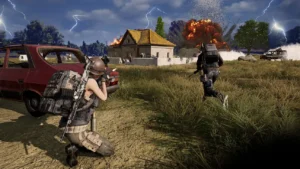
PUBG Survival Strategies: The Complete Guide to Winning More Battles
PUBG, short for PlayerUnknown’s Battlegrounds, has become one of the most recognizable names in the battle royale gaming world. Its combination of realistic gunplay, tactical movement, looting, vehicles, shrinking play zones, and unpredictable encounters makes every match different. Unlike games where players can rely only on fast reflexes, PUBG rewards decision-making, positioning, communication, patience, and map awareness.
For new players, PUBG can initially feel difficult because there are many mechanics to understand. You need to choose a good landing location, collect useful equipment, manage ammunition, understand weapons, move safely through the map, and know when to fight or avoid an opponent. Experienced players also understand that winning is not always about getting the highest number of eliminations. Sometimes the best strategy is to survive, rotate intelligently, and choose the right moment to attack.
This complete guide explains practical PUBG strategies that can help beginners and intermediate players improve their performance. Whether you normally play solo, duo, or squad matches, the fundamentals of survival remain important.
Understanding the Basic PUBG Battle Royale System
A PUBG match starts with players entering a large map and choosing where to land. After landing, players search buildings and other locations for weapons, armor, healing items, ammunition, attachments, and useful equipment. As the match continues, the playable area becomes smaller, forcing players closer together.
The shrinking zone is one of the most important elements of PUBG. Remaining outside the safe area for too long can cause significant damage and eventually eliminate a player. Therefore, survival requires constant awareness of the map and the next safe zone.
| Game Element | Why It Matters |
|---|---|
| Landing Location | Determines early loot quality and the likelihood of immediate combat. |
| Weapons | Provide the ability to fight opponents at different distances. |
| Armor | Reduces incoming damage and improves survivability. |
| Healing Items | Help restore health after taking damage. |
| Safe Zone | Controls player movement and gradually creates more intense encounters. |
| Positioning | Provides tactical advantages during fights. |
| Communication | Helps squads coordinate attacks, rotations, and enemy information. |
Choosing the Right Landing Location
Your landing location can influence the entire match. A highly populated location may provide excellent loot, but it can also produce several fights immediately after landing. A quieter area may offer safer preparation but sometimes provide fewer resources.
Beginners should consider landing in areas where they can collect equipment without constantly fighting multiple opponents. This allows them to learn movement, looting, weapon control, and map awareness before entering larger battles.
Hot Drops
Hot drops are locations where many players land at the beginning of a match. They are suitable for players who want immediate action and are confident with close-range combat. Hot drops can help improve reaction speed and fighting ability, but they also carry a high risk of early elimination.
Safe Drops
Safe drops are locations away from the most crowded areas. They are useful when your primary goal is survival, practice, or reaching the late game. After collecting enough equipment, you can rotate toward the next safe zone and engage enemies when you have a positional advantage.
Looting Efficiently in PUBG
Looting is more than simply picking up everything you see. Carrying unnecessary items can fill your backpack and prevent you from collecting important supplies. Efficient players quickly identify what they need and leave behind low-value equipment.
A practical loadout normally includes a primary weapon, a secondary weapon, ammunition, healing items, throwable equipment, armor, a helmet, and useful attachments.
| Loot Category | Priority | Purpose |
|---|---|---|
| Primary Weapon | Very High | Main weapon for most engagements. |
| Secondary Weapon | High | Useful for close-range or alternative situations. |
| Ammo | Very High | Required to continue fighting. |
| Armor | Very High | Improves protection from enemy attacks. |
| Healing Items | Very High | Restore health after fights. |
| Attachments | Medium | Improve weapon handling and performance. |
| Throwables | High | Useful for attacking, defending, and controlling areas. |
Understanding PUBG Weapon Categories
PUBG offers different weapon types designed for different combat situations. Learning when to use each category can significantly improve your results.
Assault Rifles
Assault rifles are versatile weapons that can perform well in medium-range encounters and remain useful at closer distances. They are generally a reliable choice for players who want one weapon capable of handling several situations.
Submachine Guns
Submachine guns are particularly useful in close-range fights. Their mobility and rapid firing characteristics can make them effective inside buildings and during aggressive pushes.
Sniper Rifles
Sniper rifles are designed for long-range engagements. They can be powerful when used from strong positions, but players need good aim, patience, and awareness of enemy movement.
Designated Marksman Rifles
Designated marksman rifles provide an effective middle ground between assault rifles and sniper-style weapons. They can be valuable when fighting enemies across open terrain at medium or long distances.
Shotguns
Shotguns can be extremely effective at close range. They are particularly useful during early-game building fights where enemies may appear suddenly at short distances.
Improve Your Aim and Recoil Control
Good positioning is important, but mechanical skill still plays a major role in PUBG. Players should regularly practice aiming and recoil control rather than changing their sensitivity settings constantly.
Choose settings that feel comfortable and give yourself time to adapt. Constantly copying another player’s sensitivity may not produce the same results because every player has different habits, devices, screen sizes, and aiming preferences.
Practice Short Bursts
When controlling automatic weapons, practice firing controlled bursts at different distances. Learn how the weapon moves while firing and gradually develop muscle memory.
Practice Tracking
Tracking means keeping your crosshair on a moving opponent. Practice following targets smoothly instead of making large, sudden movements.
Practice Close-Range Combat
Close-range fights often happen quickly. Practice movement, aiming, weapon switching, and reaction speed so that you can remain calm when an enemy suddenly appears.
Use Cover Instead of Standing in the Open
One of the simplest ways to survive longer is to use cover. Trees, rocks, walls, buildings, vehicles, terrain elevations, and other objects can protect you from enemy fire.
Running across an open field without a plan can make you an easy target. Before moving, look for your next piece of cover. Think about where you will go if an enemy starts shooting.
Hard Cover vs Soft Cover
Hard cover generally provides more reliable protection from enemy attacks. Buildings, large rocks, and substantial terrain features can give you better defensive options. Smaller objects may provide limited protection and should not always be treated as completely safe.
Master the PUBG Safe Zone
The safe zone is one of the most important strategic elements in every PUBG match. Players who ignore the zone can be forced into dangerous rotations or lose health while trying to reach safety.
Check the map regularly and plan your movement before the zone becomes a problem. If you are already near the center of the next safe area, you may have more time to observe other players and select a strong position.
Rotate Early When Necessary
Early rotation can be especially useful when you are far from the next zone. Moving early may allow you to reach a favorable position before other players arrive.
Avoid Predictable Movement
When crossing dangerous areas, avoid moving in a predictable straight line for long periods. Use terrain, cover, vehicles, and natural obstacles whenever possible.
Positioning Is More Important Than Many Players Think
Positioning can turn an average player into a difficult opponent. A player with an excellent position may defeat someone with better aim simply because the opponent has limited cover or poor visibility.
High ground can provide better visibility, while buildings can offer protection and multiple angles. However, high ground is not automatically safe. Always consider whether enemies can approach from behind or from another elevation.
Think About Third-Party Attacks
After fighting an enemy, remember that other players may hear the gunfire and attack both sides. Avoid spending too much time looting immediately after a fight. Heal, reload, check your surroundings, and prepare for another engagement.
Learn When to Fight and When to Avoid a Fight
One of the biggest differences between inexperienced and experienced PUBG players is decision-making. Not every enemy needs to be eliminated.
If an opponent is far away, has excellent cover, and has not noticed you, firing immediately may reveal your location without providing a meaningful advantage. Sometimes it is better to continue rotating or wait for a stronger opportunity.
| Situation | Recommended Approach |
|---|---|
| Enemy has no cover | Consider taking the shot if your position is safe. |
| You have weak equipment | Avoid unnecessary fights until you improve your loadout. |
| Enemy is unaware | Use the opportunity carefully rather than rushing blindly. |
| You are outside the zone | Prioritize reaching safety. |
| Squad is separated | Regroup before taking a risky engagement. |
| Enemy has strong high ground | Look for another angle or reposition. |
Squad Communication and Teamwork
Squad matches become much easier when teammates communicate effectively. Communication does not need to be complicated. Simple and accurate information can make a significant difference.
Tell teammates where enemies are located, how many opponents you see, what direction they are moving, and whether you need support. Avoid giving confusing information during intense fights.
Useful Squad Callouts
Effective callouts include directions, landmarks, approximate distance, enemy numbers, and movement information. Instead of saying “enemy there,” provide more useful information such as “two enemies near the building on the left” or “one player moving toward the ridge.”
Stay Within Supporting Distance
Squad members should avoid spreading so far apart that nobody can help during an attack. At the same time, standing extremely close together can make the entire team vulnerable to explosives or concentrated enemy fire.
Use Vehicles Strategically
Vehicles provide fast transportation and can be valuable when the safe zone is far away. However, vehicles also create noise and can reveal your position.
Use vehicles when speed is more important than remaining completely quiet. Before stopping, think about whether the location provides cover and whether nearby enemies could hear your arrival.
Vehicle Rotation Tips
When using a vehicle to rotate, avoid stopping in completely exposed locations. If possible, choose areas with buildings, terrain, trees, or other cover. In the late game, vehicles can sometimes attract unnecessary attention, so evaluate whether driving is actually safer than moving on foot.
Healing and Boost Management
Healing items are essential for survival. After taking damage, do not automatically continue fighting at low health if you have an opportunity to recover safely.
Before entering a major fight, make sure your health is in a suitable condition and that you have enough healing resources. Boost-related items can also support recovery and movement depending on the game mechanics and current situation.
Use Throwables Intelligently
Throwables can change the outcome of a fight. They can force opponents away from cover, create opportunities for pushes, or help you escape dangerous situations.
Smoke Grenades
Smoke can help conceal movement and provide temporary visual protection. It can be useful for crossing exposed areas, reviving teammates, or repositioning.
Frag Grenades
Frag grenades can pressure enemies hiding behind cover. Instead of throwing them randomly, think about where the opponent is likely to move.
Other Tactical Throwables
Different throwable types can provide different tactical benefits. Learn their behavior and practice their timing so you can use them deliberately rather than carrying them without knowing how they work.
How to Survive the Mid Game
The mid game is often where players make unnecessary mistakes. After collecting good equipment, some players become overly aggressive and search for fights simply to increase their elimination count.
A better approach is to balance aggression with survival. Keep monitoring the zone, listen for nearby gunfire, watch likely rotation routes, and maintain enough resources for future fights.
How to Play the Final Circle
The final stages of a PUBG match require patience and excellent positioning. The available space becomes smaller, and every movement can expose your location.
Avoid unnecessary shooting when you do not have a clear reason. Gunfire can attract nearby opponents. Instead, observe enemy positions and look for opportunities to fight when another player is vulnerable.
Keep Moving Carefully
Remaining completely stationary can make you predictable, but unnecessary movement can also reveal your position. Use small positional adjustments and stay near useful cover.
Watch Multiple Angles
In the final circle, enemies can appear from unexpected directions. Do not focus exclusively on one opponent. Regularly check your surroundings while maintaining awareness of the zone.
Common PUBG Mistakes to Avoid
Improvement often comes from recognizing repeated mistakes. Many players focus heavily on kills while ignoring the decisions that caused their deaths.
| Mistake | Better Approach |
|---|---|
| Looting for too long | Collect essential equipment quickly and move. |
| Fighting every enemy | Choose engagements that provide a tactical advantage. |
| Ignoring the zone | Monitor the map and plan rotations. |
| Running in open areas | Move between available cover. |
| Reloading at the wrong time | Reload when safe and prepare before pushing. |
| Ignoring teammates | Stay coordinated and communicate. |
| Panicking during fights | Slow down your decisions and prioritize cover. |
How Beginners Can Improve Faster
Beginners should not measure improvement only through the number of victories. Pay attention to whether you are surviving longer, making better rotations, choosing stronger landing spots, improving aim, and understanding why you were eliminated.
After each match, think about the most important mistake you made. Perhaps you landed in an overly crowded area, stayed outside the zone too long, exposed yourself while looting, or pushed an enemy without enough information. Identifying one mistake and correcting it in future matches can gradually produce significant improvement.
Focus on One Skill at a Time
Trying to improve everything simultaneously can be overwhelming. Spend several matches focusing on a specific skill such as recoil control, movement, positioning, close-range combat, or map awareness.
Solo, Duo, and Squad Play Styles
PUBG feels different depending on the mode you choose. Solo matches require independent decision-making because there are no teammates to revive or support you. You must evaluate every encounter yourself.
Duo matches require stronger coordination because each player has greater responsibility. Squads add even more strategic possibilities, including coordinated pushes, crossfire, revives, and defensive formations.
| Mode | Important Skill | Recommended Focus |
|---|---|---|
| Solo | Decision-making | Positioning, awareness, and independent rotations. |
| Duo | Coordination | Communication and supporting your teammate. |
| Squad | Teamwork | Callouts, positioning, coordinated attacks, and revives. |
Building a Consistent PUBG Play Style
There is no single play style that works for everyone. Some players prefer aggressive combat, while others enjoy strategic survival. The important thing is to understand your strengths and gradually improve your weaknesses.
An aggressive player should work on patience and positioning. A passive player may need to practice initiating fights and improving close-range mechanics. Finding the right balance can make your gameplay more consistent.
Why Patience Wins More Matches
PUBG rewards players who can remain calm under pressure. A player who panics may rush into an open area, reload at the wrong moment, forget to heal, or expose their position unnecessarily.
Patience does not mean avoiding every fight. It means waiting for a favorable opportunity. If you have better cover, better information, or a stronger position, there is often no reason to rush.
Final PUBG Strategy Checklist
Before and during every match, keep several basic principles in mind. Choose your landing location according to your skill level and current objective. Loot efficiently instead of spending excessive time searching for perfect equipment. Maintain a balanced weapon setup, enough ammunition, healing resources, and useful throwables.
Always monitor the safe zone and plan rotations before you become trapped outside it. Use cover whenever possible, avoid predictable movement, and think about enemy positions before crossing open terrain. During fights, focus on positioning and information rather than simply firing as quickly as possible.
In squad matches, communicate clearly and stay close enough to support teammates. After every fight, expect that another player may arrive. Heal, reload, check your surroundings, and then decide what to do next.
Conclusion
PUBG is a game where strategy and mechanical skill work together. Excellent aim can help you win individual fights, but smart positioning, zone management, communication, resource management, and decision-making are what help you survive consistently.
The most important lesson is that every match provides an opportunity to learn. If you analyze your mistakes instead of simply blaming bad luck, your gameplay can improve much faster. Learn the maps, understand different weapon categories, practice recoil control, use cover, manage your inventory, communicate with teammates, and choose your fights carefully.
Whether you are playing your first PUBG match or trying to improve your late-game performance, these fundamentals provide a strong foundation. The ultimate goal is not simply to collect eliminations but to make better decisions throughout the entire match. With practice, patience, and consistent improvement, you can become a more confident PUBG player and increase your chances of reaching the final stages and securing more Chicken Dinners.