
We Were Here Tomorrow: co-op puzzle tips
It’s hard to solve a puzzle by yourself when you can only see part of the puzzle. In We Were Here Tomorrow, that restriction is the core of the experience. One player might be observing a machine, while the other may have possession of other tools or information. In each situation, neither explorer is likely to have all that is required to figure out what is going on, so moving forward depends on getting good descriptions, asking good questions and working through the clues as a team.
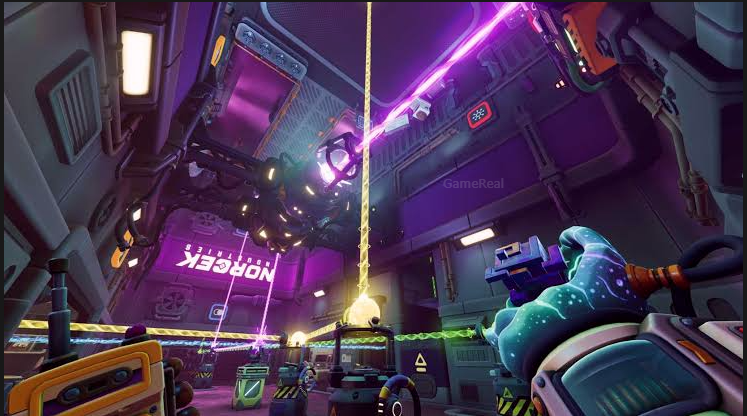
The co-op puzzle-adventure series We Were Here from Total Mayhem Games continues with We Were Here Tomorrow. Set within a strange facility – Norček Industries – two adventurers are required to probe odd technology, perform tasks and discover what befell the team of researchers, in this sequel to the We Were Here series. The game features the series’ signature split perspectives, walkie-talkie communications, and cooperative-focused puzzles.
The game is due out on October 20, 2026, for PC, PlayStation 5 and Xbox Series X|S, with cross-platform play across those platforms. When checked the Steam listing was still showing a timed early access unlock on release day so availability could depend on the platform and local release timings.
This guide concentrates on methods which can aid you and your buddy to get through the new puzzles without dying of frustration. It is not intended to be a room by room walkthrough, and it does not offer solutions that have not been tested. Instead, it tells you how to exchange information, arrange clues, take alternate perspectives, and revert when a puzzle starts to feel like nonsense.
How We Were Here Tomorrow Is Not Your Average Puzzle Game
In many puzzle games you can examine every object, piece together every clue and try out solutions from a single screen. We Were Here Tomorrow does things a little differently.
It is an asymmetrical co-op game. Both players have different perspectives and tools and need to communicate to put their information together. The developer has also mentioned puzzles involving time, gravity, and space.
This affects how you should approach a puzzle.
Consider this: one player is standing in front of a control panel while the other player is looking at an object or piece of information that tells them how the panel works. The first player may know how to operate the controls but not the correct order. The second player may know the order but cannot directly interact with the panel.
No player can solve the puzzle by just staring at their own screen. They need to convert what they see into data the other person can use.
Here are three habits that make this style of gameplay smoother:
1. Look before you leap. Before touching anything, examine the environment, controls, symbols, and instructions.
2. Communicate information accurately. Replace vague terms like “the thing on the left” with descriptions that uniquely identify the object or position.
3. Verify your comprehension. Before inputting a sequence or modifying a mechanism, restate crucial instructions in your own words.
1. Set Up Communication Before You Get Stuck
A walkie-talkie is more than just a way to communicate. Communication is a primary tool the game intends for you to employ, so it is beneficial to agree on a simple method before the puzzles grow intricate.
You do not require formal military-style callouts. You need consistent language.
Describe locations using fixed reference points
Consider a screen full of buttons, symbols or objects. “Press the top one” might not be specific enough if your partner sees a different layout.
Instead, agree on a reference point. You could learn to identify objects from left to right, use rows and columns, or even start with a nearby unique object as your reference.
For a hypothetical panel, you could say:
“There are three rows on the panel. From left to right, the middle row has a circle, a triangle and a square.”
Your partner can then instruct you to press the correct item without having to guess which object you are referring to.
These are examples of communication techniques, not necessarily instructions for a specific puzzle in the game.
Keep what you see separate from what you think it means
In cooperative puzzles, confusion often arises when an idea is mistaken for a confirmed fact.
It helps to describe each step clearly:
What you see: “There’s a circle around a vertical line.”
What you think it means: “Maybe it’s a power switch.”
What you want to try: “Should I activate the control with the matching symbol?”
Keeping observations, guesses, and plans distinct makes mistakes easier to catch. If your guess is off, you can pinpoint the misunderstanding without retracing a whole conversation.
Confirm key details before acting
When your partner gives you directions or a sequence, repeat the most important parts before you proceed.
For instance, if they name three symbols, say them back in order. Your partner can quickly correct you if you’ve mixed up the first two.
Pausing to confirm may seem slower, but it can prevent wasted effort—especially if a wrong move resets your progress or makes you repeat a task.
2. Provide Every Player with a Role to Play
The game assigns every explorer a separate role and special tool. How much those tools actually help is very situation-dependent, but the higher-level take away is really simple: there should be at least a little information and agency coming from both players, and not one person calling all the shots.
A productive way to separate duties, is temporarily.
Focused on analyzing the available data, the observer. This player finds symbols, take notes on patterns, reads instructions that are within sight and makes sense of the things between objects.
The operator’s role is to use with the relevant machinery or issue. The player announces the available controls, verifies the current state, and executes agreed upon actions.
These are recommended communication roles not official character classes. They might change as the puzzle requires.
How this division is effective
When two players attempting to issue instructions and explanations concurrently, it’s easy that some elements will be left out. Assigning each participant a temporary role gives a bit more direction to the flow of the discussion.
But the observer should not assume that the operator has a view of all described and the operator itself should never pull a lever just because the observer sound sure of herself.
Both players should be active in the thought-process. State your reasons why the solutions fits the clues before taking on a big action. If the game introduces a system which requires you to split the duties in other way, do so – do not try to apply this solution to every case.
3. Convert Visual Clues Into Actionable Information
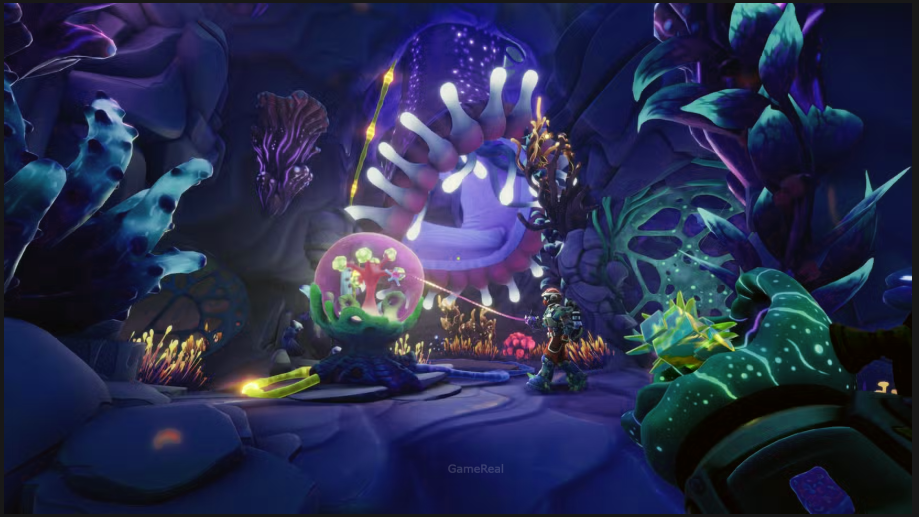
A puzzle may contain unfamiliar symbols, exotic machinery or multiple objects that look alike. To list every single aspect of the visual can be tiring, and some details are not even relevant.
The answer is to organise what you see.
Focus on the overall layout first
Before you focus on individual symbols, describe the layout of the space.
Consider:
How many items or controls are present in the view?
Are they ordered in rows, columns, groups, or a sequence?
Are any objects linked with lines, cables or other visible characteristics?
Does the environment have a written instruction or diagram?
Does the environment change after an interaction?
You are trying to create a mental image that you both share. When both players know how things are laid out, they can spend time on the details that make each object unique.
Give symbols clear, consistent names
When a puzzle includes unfamiliar shapes, give each one a simple temporary label. For example, call a mark with two vertical strokes “double line” or a circle with a dot inside it “ring dot.”
The labels don’t have to match the game’s official terms. What matters is that everyone uses them consistently.
For more complicated symbols, describe how their parts are arranged instead of making up a new name each time. Note whether one mark sits above, below, inside, or beside another.
Pay attention to how things relate
A symbol may not mean much on its own. Its location, repetition, or connection to another object could be more important.
Look around for clues such as:
– The order or direction of objects
– Repeated shapes or patterns
– Links between different controls
– Differences among objects that look similar
– Anything that changes after you interact with something
Not every visual detail is a clue. Start by noting what you can see, then test whether it relates to how the puzzle works.
4. Tackle Time, Gravity and Space Puzzles Systematically
Time, gravity and space are some of the concepts that the game’s asymmetrical puzzles play with, according to Total Mayhem Games. This sets the overall themes but does not tell you the solution to every puzzle or the exact mechanics of every room.
You can still be systematic when a puzzle seems to revolve around one of these concepts.
In the case of time puzzles
Focus on sequence and state.
Consider if an action influences subsequent events, if a mechanism functions in a specific order, or if two readings need to be compared. In the event that the environment modifies following an interaction, you should document the before and after states instead of relying on memory.
Do not try to make many changes at once. It is hard to know which action made a difference if you activate several controls without ever tracking the outcomes.
In the case of gravity puzzles
Consider the relationships between objects and their environment.
Note any differences in orientation, position or movement. Describe what you actually see, not what you think an object should do based on real-world physics.
When an action modifies an object’s position, tell your partner about the outcome. This information might help link a visual clue on one side of the puzzle to an interactive element on the other.
In the case of space puzzles
First, you should be able to describe positions and relationships.
In the event that the two players have different perspectives, do not assume their layouts will be identical. This could be key to the puzzle.
5. What to Do When You’re Stuck
A puzzle can feel impossible even when the answer is within reach. You may have missed a direction, mistaken one symbol for another, or made an early assumption that sent you down the wrong path.
Rather than keep trying things at random, take a moment to reset and work through these steps.
Step 1: Pause and take stock
Stop using the controls for a moment. Describe what is happening now, which controls you’ve tried, and what changed as a result.
This gives you a clear picture of where to begin again.
Step 2: Share what each of you sees
Ask your partner to explain the important objects from their point of view. Listen before suggesting an answer.
You may find that one of you has misunderstood where something is or overlooked a detail the other person noticed.
Step 3: Look over the clues again
Check any instructions, diagrams, symbols, or details in the surroundings. There may be a clue you haven’t used yet.
Be willing to question your first interpretation—even if you’ve already spent time following it.
Step 4: Change One Thing at a Time
If you can formulate a plausible hypothesis, test it in a controlled manner. Make a change, see what happens, report.
Changing multiple variables at once makes it more difficult to learn anything from a failed experiment.
Step 5: Let Go of a Weak Premise
If you find the tests that you perform are on the repeat contradicting your explanation, think it over. A good hypothesis should explain what evidence is observable to both sides.
Sometimes the issue isn’t that you don’t have enough clues — it’s that you have the wrong idea about how the machinery functions.
This technique is especially helpful in preventing guess-fail-guess-fail cycles of doing-same-things-that-don’t-work-type actions.
6. Make More of Each Player’s Specific Tool
The developer confirms both explorers have a unique high-tech tool. These tools are designed to enhance cooperation, but players should not expect that all tools will work the same way or its function will be immediately obvious.
When you see a tool you do not know how to use, treat it like a new puzzle.
You must first determine what the interface is capable of. Then, search for items or natural elements that seem significant, and explain to your partner what options are available with the tool.
If there is a visible response to the tool, inform us what that response is. Let us know if it does nothing too. You can eliminate some options with a failed interaction as well.
Let us also consider whether the tool offers information, alters the environment, or enables an interaction that the other player is unable to take. It’s a way to think about your thinking, not “this is the precise function of the tool.”
Above all, never assume the person with the tool has to complete the entire puzzle. One player could potentially have a tool to perform an action and the other player could have information needed to use that tool.
7. Avoid the Co-op Mistakes That Waste the Most Time
Tiny communication issues can turn a solvable puzzle into a lengthy debate. A few habits can prevent that.
Don’t hurry through the instructions. When another player is describing a complex setup, let them finish before you offer up a solution.
Don’t assume both screens are the same. The game is built with an asymmetrical design, meaning that seeing things from different angles is part of the experience. Ask what the other player can actually see.
Don’t hide failed attempts. Tell your partner when an action doesn’t work. Otherwise, they may keep reasoning from an assumption that is no longer true.
Don’t let one player become a spectator. Even if one person is operating a mechanism, the other should still be thinking about the clues and verifying the logic.
Don’t confuse confidence with proof. An confident explanation still needs to be consistent with the information given.
Don’t immediately look for a complete solution. If you want to keep the discovery element, try rephrasing the problem and looking at the clues again before referring to sources outside the game.
These habits are not only helpful in We Were Here Tomorrow. They are relevant in other co-op escape-room games where players must communicate their information, not just share a single perspective.
8. What to Do Before Your First Session
A little bit of prep work can help avoid problems, especially if you’re playing with someone on a different platform.
Verify your Platform and Online Setup
The Game is Coming soon on PC via Steam, on PlayStation 5, Xbox Series X|S, and it will support cross play all platforms. If you and your partner have different platforms, check the cross-platform availability for your particular title and version prior to your planning your session.
Crossplay doesn’t mean every online feature is the same on every platform. In case of compatibility errors – check with the current store listing and platform requirements.
Test your mic
The game lists a requirement for online co-op, internet connection, and a functioning PC-compatible microphone. Vcs are integral to the design, so test your microphone before going on a long puzzle run.
Verify the chosen input device, the microphone permissions for the operating system the microphone permissions for the operating system and the audio settings of the game. If your teammate can’t hear you, fix that before you go into a puzzle that relies on them reading your description closely.
If you are using a headset, make sure that its microphone is the one that is selected instead of the game automatically selecting the right device.
Know what system you have.
The Steam page lists Windows 11, a Ryzen 5 3600-class CPU or equivalent, 8 GB of RAM and a GTX 1660 Ti 6 GB-class GPU or equivalent as minimum PC specs. In one displayed requirements section, the listing also states 25 GB of storage, and later listing view shows 50 GB.
As two storage numbers shown are different, make sure to check the live Steam requirements before installation instead of one from an outdated listing. The recommended specifications are more demanding than the minimum.
A functioning microphone and stable internet connection are particularly crucial for this genre of game. Good communication can be just as important as the ability to draw the environment.
Select a partner who likes to talk
You do not need a puzzle guru. You need someone who will tell you what they’re looking at and listen to what you’re telling them if you’re looking through a telescope.
A patient, questioning partner may be more helpful than a veteran player who immediately starts trying to boss them around. The experience is centered on finding how two disparate pieces of knowledge connect.
9. Do You Need to Play the Previous We Were Here Games?
No. The series is built so that its entries are standalone online co-op experiences. The We Were Here developer’s description of the new episode states that it is a separate adventure and new players don’t need to have played previous games.
Perhaps returning players will recognize the series’ emphasis on communication and asymmetrical puzzles, but newcomers will be welcomed by a new place called Norček Industries, bizarre motion machines, and a mystery centered on the research team of the facility.
Never having played a We Were Here game before, I played this one as a primer on the rest of the series’ core premise – two people are given different pieces of information and must collaborate to decipher it.
If you’ve played earlier entries, don’t make the mistake of assuming that a familiar-seeming object obeys an old rule. Play each new feature by its own rules until the game tells you otherwise.
Frequently Asked Questions
Is We Were Here Tomorrow a single-player game?
We Were Here Tomorrow is not a single-player game. It is a two-player online co-op experience. The puzzles require two explorers to collaborate, and the Steam listing notes that PC players will need a microphone and internet connection.
Does We Were Here Tomorrow have crossplay?
Cross-platform play has been announced for PC, PlayStation 5 and Xbox Series X|S. If you are having trouble connecting with a friend, double-check the instructions for your specific platform.
Can beginners play We Were Here Tomorrow?
Yes. The game is a standalone title, so no prior knowledge of the series is needed. Beginners should focus on carefully articulating clues, verifying assumptions and attempting one potential solution at a time.
What if one player can’t solve their puzzle?
Ask both players to describe their surroundings once more. The missing piece of information might be right in front of the other person, or the team might have misinterpreted how two clues fit together. Before resorting to random actions, re-examine the evidence.
Should we use a walkthrough?
For the best discovery experience, try communication and troubleshooting first. If you do choose to use a walkthrough later, make sure it is for your exact puzzle and game version, and avoid using unverified solutions from similar-looking rooms.
How long is We Were Here Tomorrow?
Total Mayhem Games has stated that the game will feature roughly 15 hours of content.