
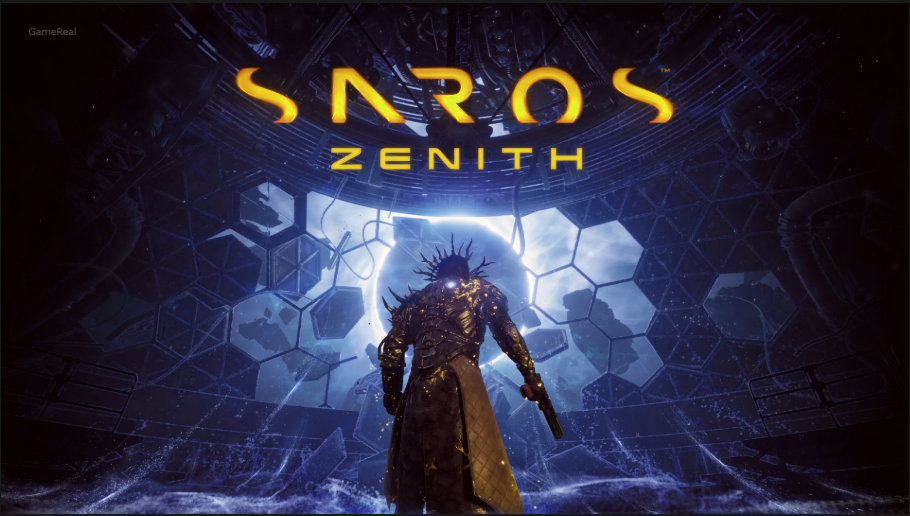
SAROS Zenith Update: New Game+, Overlord Rush and Accessibility
Now, SAROS has even more reasons to come back to Carcosa. The free Zenith update landed on October 19, 2026, introducing a New Game+ mode, a boss-rush challenge, new story finds and a slew of other goodies.
The update serves two different functions.
Players that already finished the campaign will be able to do so again under more extreme circumstances, or see how fast they can clear the Overlord. People who thought SAROS’s fast projectile-heavy combat was a stretch now have even more options for tweaking the way the game looks and how easy it is to read an encounter.
That distinction matters. Zenith is not just an endgame content pack, nor a set of easier modes. It extends the experience on both ends, allowing experienced players more brutal challenges, while giving newcomers greater control of the combat.
Here what the update brings, how its core features function and what you could consider as your first try.
SAROS Zenith Update Release Date and Availability
The Zenith update was released by Housemarque on 19 October 2026. It is free for SAROS owners on PS5.
There are two essential gameplay changes in the update: Eclipse Layers, which acts as New Game+, and Overlord Rush, an off-arc mode comprised of successive boss fights. It also brings new Carcosan Modifiers, six trophies, 12 hidden Visions, more control options, and more visual options.
That is to say, these features have fundamentally different purposes In the case of eclipse layers it is for people who completed the campaign and want a harder run. Overlord Rush adds a more concentrated way to gauge boss-fighting skill without getting through the entire journey again.
Accessibility options can make a difference, however, during normal play. You don’t have to treat them like endgame features, or assume that changing the controls means you’re playing the wrong way.
Eclipse Layers: How SAROS New Game+ Works
Eclipse Layers is SAROS’s New Game+ mode. Once the main story is completed, players have the option to revisit Carcosa for the grittier return in a trip now with a different set of rules and a host of other challenges.
The access starts at the Passage, where after completing the campaign new nodes appear in the Armor Matrix, These Nodes lead to The Next Eclipse Layer.
This is the path to the next Eclipse Layer.
The only real difference from a normal replay is that you need to use Carcosan Modifiers. You will need to meet a minimum Modifier amount before you can play an Eclipse Layer. Trial Modifiers satisfy that need and in doing so, they add more difficulty to the run.
It does let you pick which Trials to do, so it’s not just a static difficulty escalation where everyone ends up getting the same set of restrictions. Your choice is part of the preparation for the run.
What are Carcosan Modifiers?
Carcosan Modifiers allow you to tweak parts of the game’s difficulty. Zenith extends this system with 10 new Protection Modifiers and 10 new Trial Modifiers.
Protection Modifiers (which make the experience easier) and Trial Modifiers (which add more challenges). The two types are functional in nature, but Eclipse Layers asks players to think about how their picks modifiers synergize.
For instance, a Protection might for example address one of your weaknesses, and a Trial require dealing with an even tougher combat modifier. You don’t have to pick the most brutal combo possible. It’s find a build that meets the bar while still giving you a chance to survive the run.
House marque also points out synergistic combinations that can be exceptionally lethal. A seemingly manageable modifier alone could become alot harder if combined with another rule,modifier etc.
Take the description of every modifier when going for a run. Don’t pick Trials just because they sound like something you’ll be able to handle. Know what each one modifies, and if normal combat routines still apply.
Why Eclipse Layers is more than Flask difficulty settings
A traditional New Game+ style mode most days lets players repeat a single campaign with some sort of increased difficulty, or continued progression. Eclipse Layers introduces a decision-making aspect before the run even starts.
Your choice of modifiers defines what the challenge you are completing is, and a new progression system now gives you even more reasons to explore beyond the end, once again.
This makes the mode particularly applicable to players who already know the basics of SAROS’s combat system but who want to see if they can adjust on the fly.
That’s if you had a hard time with the original campaign, of course – if not, there’s no need to race out to Eclipse Layers yet Overlord Rush and new accessibility settings provide alternative avenues through which to hone particular abilities before undergoing the more punishing second run.
The Crown, Golden Armor and twelve Hidden Visions
Eclipse Layers also brings a visual reward for challenging yourself. On these runs, Arjun wears a Crown and his armor turns a golden glow. The more Trial Modifiers and eventually your Modifier Balance you add, the more the effect becomes active.
The Crown is more than… a cosmetic presentation. It also ties into the new story collectibles of the update.
There are 12 hidden visions throughout Car cosa. They are murals and messages in conjunction with an ancient king for players that want to playr around the world beyond the main campaign.
It provides a reason for players focused on completion to revisit areas, and play around with different modifier combinations. Instead of trying to get everything in one normal run through, you have another form of progression that incentivizes playing more aggressively.
A feasible mindset is to consider the Visions as a long-term goal, rather than “pushing” for the highest Crown level right away. Understand how the Trials modify your run, get better at them and challenge yourself even more as you get better.
The mode also features integrated leaderboards, so players can compare their scores with friends and other players across the globe. You can filter the global leaderboard by your main weapon, which allows you to compare your performance against players using the same weapon.
The online leaderboard features require an internet connection and a PlayStation account.
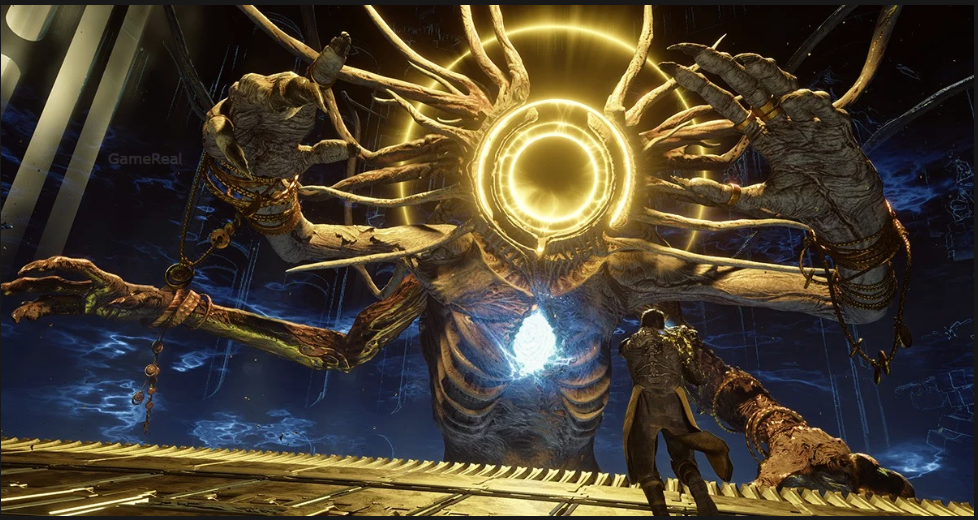
Which Overlord Rush set should you try first?
For players looking to practice boss fights without committing to a full campaign run, starting with one of the shorter sets is recommended. A smaller challenge allows you to learn the mode and see which encounters are costing you time or health.
For players who wish to attempt the full boss-rush test, Totality is the obvious choice. In an eight-Overlord lineup, consistency becomes more important. While an impressive showing against one boss is helpful, it won’t cut it if you keep getting hung up on subsequent encounters.
You should also distinguish between speed and control. If you rush an attack because you want a better time, you may leave yourself open to damage. Building a more helpful foundation is to learn an enemy’s attack patterns and respond consistently, rather than trying to shave seconds off a run before you even know what you’re doing.
How to make the Overlord Rush better
Treat Every Run As the Opportunity to Expose one particular Weakness.
Learn attack patterns. Look for how they are the attacks that surprised you the most, not just your final score.
Practice your defensive timing. SAROS demands that players react to a barrage of incoming projectiles with the right movement or defensive action. A better response can be worth more than a bossy start.
Apples to apples. The main-weapon leaderboard filters allow for a more apples-to-apples comparison than the overall leaderboard.
Repeat to with a Purpose in mind. If you’re struggling with a specific fight, focus on learning to deal with it better, so you can be consistent, rather than trying to get faster overall.
You can also use Overlord Rush to tell if you are ready for a more challenging Eclipse Layers run. If you find it difficult to make sense of a boss’s attacks in a concentrated fight, throwing multiple Trials into a campaign may not be the greatest move.
New Accessibility Options: How They Work
Zenith’s accessibility tools are just as worthy of attention as its endgame challenges. SAROS asks players to move quickly, watch for incoming attacks and make decisions in an instant. That pace may be difficult for anyone who needs extra time to process what’s happening on screen or finds it uncomfortable to keep a button pressed for long stretches.
Housemarque’s new options adjust how you engage with combat while preserving the patterns and challenges that define each fight.
Slow Game Speed
With Slow Game Speed, you can reduce the action’s pace, leaving more time to spot enemy cues, follow projectiles and choose your next move—whether that’s jumping, dashing, shielding or parrying.
The amount of slowdown is adjustable. You can also set the feature to turn on during combat automatically or switch it on yourself whenever you need it.
Rather than erasing difficult attacks, this option gives you a longer window to react to them.
New players may find it easier to recognize an enemy’s next move before responding. It can also help experienced players practise unfamiliar battles or get back into the game after time away. If you’d like to work toward playing at the standard speed, try different settings as you go; you don’t have to stick with one setup throughout the entire game.
Auto-fire
With auto-fire enabled, your weapon will automatically fire when you are aiming at an enemy. This reduces the need to continuously hold down the firing button during engagements, eliminating one more repeated input you need to manage.
One major caveat: you still don’t automatically reload. You still need to time your button press for a perfect reload.
So auto-fire doesn’t remove all aspects of weapon management. It just takes some of the physical and mental strain out of repeatedly holding the firing input while you are also trying to move and react to attacks.
This can be especially handy if holding down a button for extended periods is uncomfortable or if you struggle to coordinate continuous firing with defensive movement.
Motion-Sensor Aiming
Zenith now supports motion-sensor aiming, which allows players to use the motion sensors in the DualSense controller to aim.
Players who prefer motion control can try enabling this feature in addition to the button remapping options already available. It’s a matter of personal control preference, so there is no guarantee that it will be compatible with every player.
You should try it in some controllable encounters before you decide if it is for you. What comes naturally to one player may feel clunky to the next.
High-Contrast Visuals
High Contrast visual mode has been added in the update. These are to help you tell key things a little bit more apart when you are playing.
When attacks and projectiles from enemies can be anywhere from a quarter of the screen to the entire screen, visual clarity can influence how quickly you identify a threat and decide on a response. High contrast options give you another way to tailor that experience.
The optimal settings are based on what your eyes prefer to look at and the type of things you have the most trouble reading. Don’t choose your options based on how they look in the menu, test them in real fights.
New Modifiers in Zenith: How They Affect Combat
Zenith’s 20 new Carcosan Modifiers provide more options for customizing difficulty. A few of them are intended to make the game easier; a few of them compel you to significantly alter your strategy.
Housemarque has showcased Corruption Melee Enhancement as one such modifier. Corruption is normally accumulated on Arjun’s armor from certain projectile hits, and it reduces maximum Integrity. This Protection Modifier causes a melee attack against an enemy to consume the gathered Corruption and add damage.
This affects how you approach Corruption in a fight. Rather than viewing it as something you need to mitigate, you now have a tool to transform that gathered risk into a strong melee attack. The fundamental danger is still present, so the modifier encourages thoughtful play rather than making Corruption safe.
Hostile Regeneration is another type of pressure on the Trial side. While larger enemies can be stunned by weapon damage, they recover fast. They must be killed with a melee strike, which means you have to get close and finish the job before they heal.
This is why modifier combinations are important in Eclipse Layers. A Trial can force you to advance on an opponent, and another modifier could alter the effects of damage. Together, they can cause a familiar fight to feel completely different.
Before you pick out a few Trials, consider the types of fighting they will go against. If you tend to play at range, a modifier that requires melee follow-ups might force you to get more aggressive.
What Should You Test First in Zenith?
Your best beginning point is based on how far into SAROS you’ve gotten, and what you want out of the game.
If you haven’t completed the campaign: Test out the accessibility options that mitigate your biggest challenge. Decelerate Game Speed may also provide you additional time to read the attacks; meanwhile, auto-fire option may alleviate repeated button pressing. To take advantage of these options, you don’t have to complete the game.
If the campaign is completed: attempt the Eclipse Layers if you want a challenging repeat run. Read the descriptions of the modifiers you pick carefully and select one or two that will test you but not make the run too full of guessing.
If you want to get better against bosses: Overlord Rush – Incursion or Ascension. Learn the patterns and your consistency during each try before attempting to take on Totality.
For lore and completionists: Progress to higher Crown levels in Eclipse Layers to unveil the 12 Visions. That means there’s a story-driven motivation even for grinding runs, not just combat challenges.
For the competitive among you: Compare your best scores on the Overlord Rush leaderboards, with best results by main weapon. Worry about your personal consistency first, before worrying about how you rank up against other players.
Frequently Asked Questions
Is the SAROS Zenith update free?
Yes. Zenith was released by Housemarque on October 19, 2026, and is available to all SAROS owners at no additional cost.
How do you unlock New Game+ in SAROS?
You must first complete the main campaign. After completing SAROS, new nodes will appear in the Armor Matrix at the Passage that grant access to Eclipse Layers.
How many bosses are in Overlord Rush?
There are three sets in the mode. Incursion and Ascension each have three Overlords, while Totality has all eight Overlords in one long challenge.
Does SAROS Zenith make the game easier?
Zenith gives players more control over difficulty and accessibility. Protection Modifiers and Slow Game Speed can help make combat more approachable, while Trial Modifiers add more elements to the game for players looking for a greater challenge.
Does auto-fire automatically reload weapons?
No. Auto-fire only makes the weapon fire on its own when you are aiming at an enemy, but you still need to time your button press correctly for a perfect reload.
What are the 12 Visions in SAROS?
The 12 Visions are hidden murals and messages that tell the tale of an ancient king. They are found in Eclipse Layers, with more story texts becoming visible as your Crown level increases.
On which platforms is the Zenith update available? The Zenith update is part of SAROS on PlayStation 5. Housemarque has not mentioned a separate platform release for Zenith in their official update announcement.