
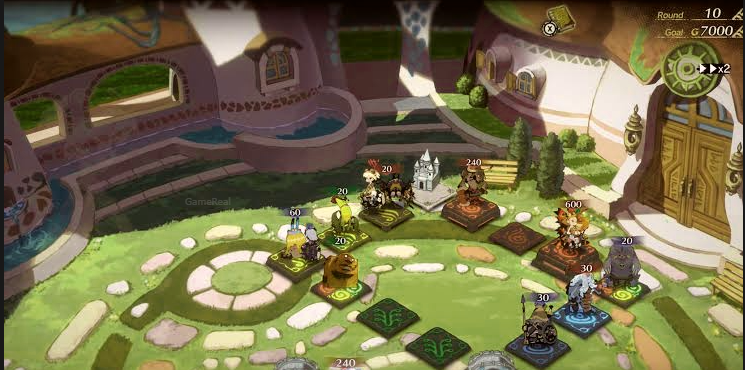
Culdcept BEGINS: How Dice, Territory and Cards Work
A roll of the dice determines where you move in Culdcept BEGINS, but it does not determine everything that happens next. Every landing can create a new opportunity to claim territory, strengthen an existing position, challenge an opponent or protect the magic needed to win. Your cards influence those decisions, turning a familiar board-game movement system into a strategic contest built around creatures, items, spells and resource management.
Developed and published by Neos Corporation, Culdcept BEGINS combines board-game movement with collectible-card-style battles and deck building. The game features more than 400 cards, several creature elements and a 40-card deck system called a Book. Instead of winning simply by defeating opponents in combat, players must build up their total magic, manage valuable territories and complete the journey back to the castle.
The game launched on Nintendo Switch and Nintendo Switch 2 on July 16, 2026. Its Steam release is scheduled for October 28, 2026, bringing additional battle maps and interface improvements to PC players.
Understanding how its systems interact is more useful than memorising individual card names. The central challenge is learning when to expand, when to invest in a territory, when to fight and when avoiding a battle is the smarter decision.
How Culdcept BEGINS Works
Culdcept BEGINS follows a simple objective: be the first player to reach the target Total Magic and return to the castle.
The route towards that objective involves several connected systems. Players roll dice to move around the board, gain magic by completing circuits, summon creatures to claim land, and use cards to defend or capture territories. Spells can disrupt opponents, while items can change the outcome of battles.
These systems serve different purposes, but none operates in isolation.
Moving around the board helps you reach new spaces and complete circuits. Landing on an available territory creates an opportunity to establish control. Owning territory contributes to Total Magic, while upgrading land can increase its value and the toll an opponent must pay when landing there.
Combat creates another route to expansion. If an opponent controls a valuable space, defeating their creature can allow you to take that territory. Losing, however, can mean paying a toll in magic.
The result is a game in which progress depends on more than collecting powerful cards. Your position on the board, the resources available to you and the decisions of other players all influence how effectively your deck performs.
1. Dice Movement Is the Starting Point, Not the Whole Strategy
Every turn begins with movement. You roll the dice and advance the number of spaces indicated by the result.
That familiar mechanism introduces uncertainty because you cannot simply choose any space you want. However, the movement system still creates decisions around the spaces you are trying to reach, the routes available to you and the territories controlled by your opponents.
Completing circuits is particularly important. According to the game’s official tutorial, each lap around the board earns additional magic. This means that moving around the map is not merely a way to reach battles; it also contributes to your wider economic progress.
A useful way to understand this system is to separate movement into two questions.
First, where might the roll take you? This determines which spaces and potential encounters are within reach.
Second, what would landing there mean for your position? An unclaimed space may provide an opportunity to expand, while an enemy-controlled space could lead to a battle or a toll payment.
These questions matter because the nearest available territory is not necessarily the most useful one. A move that creates an opportunity to strengthen your position may be more valuable than one that leads directly into an expensive confrontation.
There is also a difference between movement that helps you complete a circuit and movement that creates immediate territorial gains. Both contribute to progress, but they do so through different routes.
Practical takeaway: Evaluate the likely consequences of a landing rather than treating every turn as a race towards the next space. The dice introduce uncertainty, while your card choices and resource decisions determine how you respond.
2. Territory Ownership Connects the Board to Total Magic
Territory is the central link between movement and long-term progress.
When you stop on a suitable space, you can summon a creature. The land becomes your domain, and owned land contributes to your Total Magic. This gives territory a purpose beyond controlling a particular section of the board.
Claiming land can help you build the resources needed to reach the game’s target. Yet ownership also creates responsibilities because an opponent may eventually land on the same space and challenge your creature.
A territory should therefore be considered in two ways: what it contributes to your progress and how well you can protect it.
Why upgrading land matters
Culdcept BEGINS allows players to level up land they control. The official tutorial explains that doing so increases the domain’s value and contributes to Total Magic. It also raises the toll that opponents must pay when they land there.
This creates a strategic trade-off.
An upgrade can make a territory more valuable and potentially more costly for opponents to challenge indirectly through toll payments. However, the increased toll does not make the territory impossible to capture. An opponent who wins a battle can still claim the domain.
Upgrading should therefore be considered alongside the strength of the creature defending the space and the resources available for future turns.
For example, imagine that you control a valuable territory but have limited options for protecting its creature. Increasing the land’s level could improve its contribution to your total, yet the investment may be less comfortable if an opponent can challenge it successfully.
Now consider a different situation: your creature is well positioned to defend the territory, and the increased value helps you approach the target Total Magic. In that case, an upgrade may support both immediate progress and the cost of landing there for an opponent.
These are strategic illustrations rather than guaranteed outcomes. The actual result depends on the cards, battlefield and decisions involved.
Territory is valuable, but not automatically safe
A common misunderstanding would be to assume that claiming a space permanently removes it from the competition. In reality, opponents can challenge your domain.
This distinction is important when evaluating a creature card. A creature is not simply a way to claim land; it is also part of the defence protecting the value attached to that land.
Expansion and defence must work together. Claiming more territory can increase your opportunities, but each additional domain also creates another position that may need protection.
3. Creature Battles Decide Who Controls Valuable Spaces
Creature cards are the foundation of territorial combat. They summon creatures to your land, help defend domains and provide a means of capturing opponents’ territories.
When you land on an enemy-controlled space, you can enter a battle. Winning allows you to claim the opponent’s domain, while losing can require you to pay a toll in magic.
This makes combat important for two different reasons.
The first is territorial expansion. Defeating an opponent can give you access to land that they previously controlled.
The second is economic pressure. An unsuccessful landing may cost you magic, meaning the decision to challenge a territory can affect your ability to reach the game’s objective.
A battle should therefore be judged by more than the possibility of winning. The value of the territory, the strength of the creatures involved and the resources you might lose all contribute to the decision.
When should you challenge an opponent?
There is no universally correct answer because the result depends on the specific situation. Nevertheless, the game’s documented systems suggest several questions worth considering before entering a fight:
- What territory could you gain if you win?
- What toll might you have to pay if you lose?
- Can an item improve your creature’s position in battle?
- Would taking the territory meaningfully help your progress towards the target Total Magic?
- What resources would remain available for your next decisions?
These questions do not eliminate the uncertainty created by dice and combat. They help distinguish a calculated risk from a challenge that offers little benefit.
The official tutorial also identifies paying the toll as an alternative when you do not believe you can win a battle. Avoiding combat may preserve resources that would otherwise be lost in an unfavourable encounter.
That option matters because attacking is not always the best response to an enemy domain. Sometimes the immediate cost of a confrontation may outweigh the potential benefit.
4. Creature, Item and Spell Cards Have Different Jobs
Culdcept BEGINS offers more than 400 cards, with nearly 400 card designs receiving updated visuals. The game’s card system includes creatures, items and spells, each serving a different role.
Understanding these categories provides a useful foundation for building a Book and making decisions during a match.
Creature cards: Claim and defend territory
Creature cards summon units to territories. Their roles include defending land and capturing enemy domains through battles.
The game features five elemental categories: fire, water, earth, air and neutral. The official card information describes creatures as having different abilities and tactical uses, so the element is one part of understanding what a card contributes.
It would be misleading to assume that a single element is automatically the strongest or that one creature can handle every situation. The useful question is how a creature fits the role you need it to perform.
A creature intended to support territorial expansion may serve a different purpose from one chosen to protect an important domain. The value of each choice depends on the rest of the deck and the situations you expect to face.
Item cards: Change the battle conditions
Item cards can be equipped to creatures during combat. Some improve attack or defence, while others provide special effects that influence the battlefield.
Their significance becomes clearer when viewed alongside territory ownership. A creature may be responsible for defending land that contributes to Total Magic, so an item that improves its battle position can help protect a broader strategic investment.
Items can also affect the decision to challenge an enemy. A battle that looks unfavourable without additional support may deserve another look if a suitable item is available.
However, an item is not a guarantee of victory. Its effect depends on the specific card and battle circumstances. Players should consider what an item actually does rather than assuming every equipment card simply adds strength.
Spell cards: Influence the wider situation
Spells provide another way to affect a match. The official game guide describes them as tools for hindering opponents or giving yourself an advantage.
Unlike a creature, which occupies a territorial role, or an item, which supports a creature in battle, a spell can influence the broader situation.
Timing is therefore important. A spell may be more useful when it changes a meaningful decision than when it is used without a clear objective.
For example, a spell intended to disrupt an opponent’s plan should be evaluated in terms of what that disruption might achieve. Does it help protect your position, improve your chances of expansion or support your progress towards the target?
The answer depends on the spell itself and the current state of the match. The available official information does not establish a single best spell combination for every situation.
5. Building a 40-Card Book: Why Deck Choices Matter
In Culdcept BEGINS, a Book is the name used for a deck. Players select 40 cards to create a Book suited to their preferences and strategies.
This is an important distinction: owning a large collection of cards and building an effective deck are not the same thing.
The card collection provides options. The Book determines which options are available within the deck you have prepared.
A useful starting point is to think about the different tasks your cards need to support. Creatures help establish and defend territories. Items can improve the outcome of battles. Spells provide ways to influence opponents and the wider match.
A Book that accounts for these different roles can be considered more deliberately than one assembled only around cards that look individually powerful.
That does not mean every deck must follow a fixed ratio of creatures, items and spells. The official information establishes the 40-card limit and the roles of the card categories, but it does not provide a universal distribution that guarantees success.
Instead, consider the problems your chosen cards are intended to solve.
If your plan relies on claiming territory, which creatures support that objective? If an important domain is challenged, what options do you have for defending it? If an opponent creates a difficult situation, do your selected spells offer a relevant response?
These questions connect deck building to the actual objective of the game. Your Book should support territorial progress, resource management and combat rather than focusing on only one part of the system.
How to approach the card shop
The official game website explains that players can buy and sell cards at the card shop. More card-pack options become available as the story progresses.
This provides a way to develop your collection over time. As new cards become available, consider how they fit into your existing Book instead of automatically replacing a card simply because the new option looks interesting.
A card’s usefulness depends on the role it fills and how it interacts with the rest of your choices. The more clearly you understand your deck’s purpose, the easier it becomes to evaluate whether a new card adds a meaningful option.
For new players, learning the function of the cards already available is a sensible first step. It provides a foundation for recognising which gaps matter before making further deck changes.
6. A Practical Decision Loop for New Players
The game combines several systems, so beginners may find it helpful to approach each turn with a consistent set of questions. The following is a research-based way to think about the officially documented mechanics, not a claim that a particular sequence has been tested as the strongest strategy.
Step 1: Consider your movement.
After rolling, look at the space you are approaching and consider what landing there could mean. An available territory, an enemy domain and a route towards completing a circuit can present different opportunities and costs.
Step 2: Evaluate the territory.
If you can claim a space, consider how the creature contributes to your broader plan. If the space belongs to an opponent, weigh the potential reward of winning against the toll you might have to pay if you lose.
Step 3: Check your available cards.
Before treating a battle as a simple strength comparison, consider whether a relevant item or spell can change the situation. Their usefulness depends on their actual effects and the circumstances in which they can be used.
Step 4: Think about your Total Magic.
Ask whether the decision helps you approach the target. Claiming land, completing circuits and upgrading domains all connect to progress, but they do so in different ways.
Step 5: Consider the position you leave behind.
A decision can create a benefit now while leaving another problem for later. An upgraded territory may be more valuable but still vulnerable to an opponent’s challenge. A successful attack may win land but consume resources that could be needed elsewhere.
Thinking through these consequences helps connect individual turns to the overall objective.
7. What the Steam Version Adds
For players considering the PC version, Culdcept BEGINS is scheduled to arrive on Steam on October 28, 2026. The game was already released for Nintendo Switch and Nintendo Switch 2 on July 16, 2026.
Neos Corporation announced several additions and interface improvements for the Steam version.
Three additional battle maps expand the available settings for strategic matches. Ten new Book Cover designs provide more customisation for decks, and a card-name read-aloud feature has been added to the Card Library.
The announced interface improvements focus on visibility and usability during battles. These include clearer character positions in Map Mode, improved card selection in the Information screen and better visibility of movement directions at route junctions.
These changes matter because the game requires players to interpret board positions, select cards and consider possible movement routes. Improvements to visibility and selection can make those actions easier to follow, although the announcement alone does not establish how much they change the experience in practice.
Neos has also said that the additions and improvements are planned as a free update for the Nintendo Switch and Nintendo Switch 2 versions at a later date. A release date for that console update has not been confirmed in the announcement.
The developer has reported that the game surpassed 100,000 units shipped worldwide, including digital sales. That figure provides context for the release, but it should not be treated as a measure of player count, active users or the quality of any individual match.
8. What New Players Should Understand Before Starting
Culdcept BEGINS may appeal to players who enjoy both tactical card games and board games, but its systems require more than collecting strong creatures.
The first thing to understand is that dice movement creates opportunities rather than guaranteeing a particular outcome. You still need to decide how to respond to the space where you land.
Second, territory ownership is connected to Total Magic. Creatures are important because they help establish and defend domains, while upgrades can increase their value and the toll associated with landing there.
Third, battles carry consequences beyond winning or losing a fight. Capturing a domain can improve your position, while losing may cost magic. Paying a toll can sometimes be preferable to taking a battle you do not expect to win.
Finally, the 40-card Book should be considered as a complete set of tools. Creature cards, items and spells fulfil different roles, and their value depends on how they work together within your chosen approach.
There are limits to what can be concluded from the published information alone. The official explanations describe the core systems, but they do not establish a universally strongest deck, guaranteed winning combinations or exact probabilities for particular outcomes. Those claims would require more specific evidence.
Final Takeaway
Culdcept BEGINS brings dice movement, territorial control, resource management and card-based combat into one connected strategy system. The dice determine movement, but creatures establish domains, upgrades increase their value, items influence battles and spells create opportunities to disrupt an opponent.
The central objective is not simply to own the most land or win every fight. It is to reach the target Total Magic and return to the castle before your rivals, using the opportunities and resources available to you.
For newcomers, the best foundation is to understand what each card category does, how territory contributes to progress and why an unfavourable battle may be worth avoiding. Once those relationships become clear, the game’s many cards and tactical choices are easier to evaluate as parts of a single strategy.