
BMSD 2026 Promotion & Relegation Explained: BGMI Format
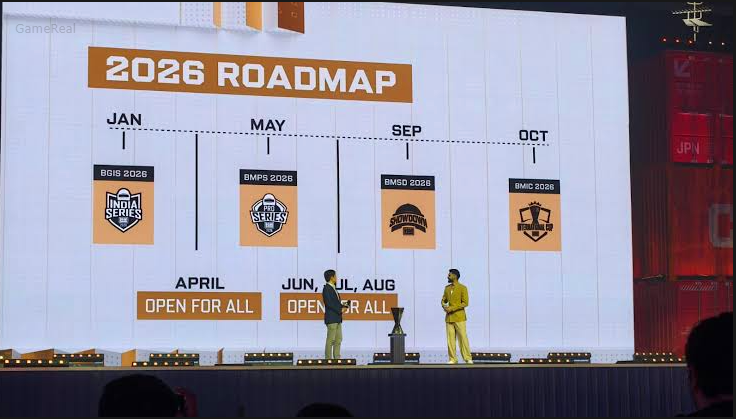
BMSD 2026, officially known as the Battlegrounds Mobile India Showdown 2026, is one of the major official BGMI tournaments on the KRAFTON India Esports calendar for the second half of the year. It is an invite-only event featuring 48 of the country’s top teams, selected primarily on the basis of performances across the KIE Leaderboard, BGIS 2026, and BMPS 2026. There is no open registration. Only teams that have already proven themselves through the competitive season receive invitations.
The tournament begins on September 22, 2026, and runs through multiple stages before culminating in offline LAN Grand Finals scheduled for October 16–18, 2026. A total prize pool of ₹1 crore is on the line. What makes the early phase of BMSD particularly interesting is the Promotion & Relegation system that opens the competition. This guide explains exactly how that system works, why it exists, and how it shapes the rest of the tournament.
Overview of the BMSD 2026 Structure
The full tournament path looks like this:
- Promotion & Relegation Week 1: September 22–24
- Promotion & Relegation Week 2: September 25–27
- Promotion & Relegation Week 3: September 28–30
- Upper Bracket Survival: October 1–3
- Lower Bracket Survival: October 4–6
- Semi Finals: October 8–11
- Last Chance: October 12–13
- LAN Grand Finals: October 16–18
The first three weeks are dedicated entirely to sorting the 48 invited teams through a promotion and relegation mechanism. Only after these weeks are complete do the survival stages, semi-finals, and final qualification paths begin.
How the Promotion & Relegation System Works
The 48 invited teams are divided into three groups of 16 teams each. These groups are typically labeled Group A, Group B, and Group C, with Group A representing the highest tier at the start of the stage.
Each week consists of match days in which every team plays a set number of matches (commonly six matches per week). After the matches of each week are completed, the standings within each group are used to move teams up or down.
The core rules of the system are:
- The top 4 teams from Group B are promoted into Group A.
- The top 4 teams from Group C are promoted into Group B.
- The bottom 4 teams from Group A are relegated into Group B.
- The bottom 4 teams from Group B are relegated into Group C.
- Teams finishing 5th through 12th in their group remain in the same group for the following week.
This process repeats across the three Promotion & Relegation weeks. Because teams move between groups every week, the composition of each group changes continuously. A team that starts in Group C can climb all the way to Group A with consistent strong performances, while a team that begins in Group A can drop if results are poor.
Why This Format Exists
Promotion and relegation systems are designed to reward consistency rather than a single strong week. In a traditional static group stage, a team can have one excellent set of matches, secure a high seed, and then coast. In the BMSD system, every week matters. A strong week can move a team into a higher group with tougher competition and better seeding implications, while a weak week can send even a favored team downward.
The format also creates more meaningful matches throughout the early stage. Teams near the promotion and relegation cut-offs are under constant pressure. Matches that might otherwise feel like “dead rubbers” in a fixed group stage suddenly carry weight because finishing 4th versus 5th, or 12th versus 13th, changes a team’s path for the following week.
What Happens After the Three Weeks
After the third Promotion & Relegation week concludes, the final group standings determine seeding and placement into the next phase of the tournament — the Survival stages.
Strong performances across the three weeks, especially finishing high in Group A by the end, generally lead to more favorable positioning in the Upper Bracket Survival. Teams that end lower may find themselves in the Lower Bracket Survival or facing a more difficult route toward the later stages.
From there the tournament continues through:
- Upper Bracket Survival
- Lower Bracket Survival
- Semi Finals
- Last Chance (for teams that narrowly miss direct qualification)
- LAN Grand Finals
Only the teams that navigate these stages successfully reach the offline Grand Finals, where the BMSD 2026 champion is crowned.
Practical Implications for Teams
For participating organizations the Promotion & Relegation weeks demand careful preparation and adaptability.
- Consistency across multiple maps and multiple days is more valuable than a single dominant performance.
- Teams must be ready to face different styles of competition as they move between groups.
- Mental resilience matters. A team that is relegated one week still has the opportunity to climb back the next week.
- Draft and strategy flexibility become important because the group environment changes weekly.
Fans following the tournament should pay attention not only to overall points but also to where teams sit relative to the promotion and relegation lines each week. Those cut-off battles often produce some of the most tense matches of the early stage.
Invitation Criteria and the Competitive Context
Because BMSD 2026 is invite-only, the teams that appear in the Promotion & Relegation weeks are already among the strongest in the Indian BGMI scene. Invitations are based on accumulated results from the broader 2026 competitive season, including the KIE Leaderboard, BGIS, and BMPS. This means the field is deep and the margin for error is small from the very first match day.
The ₹1 crore prize pool and the prestige of the event add further weight to every stage. For many teams, a strong BMSD run also carries implications for future international opportunities and organizational visibility.
Following the Tournament
Matches during the Promotion & Relegation weeks are expected to be broadcast on official BGMI and KRAFTON India Esports channels. Viewers can follow daily standings to see which teams are climbing, which are dropping, and which are fighting to stay in their current group.
Because the groups reshuffle each week, the narrative of the tournament evolves quickly. A team that looks safe in Week 1 can find itself under pressure in Week 2, and a team that starts slowly can mount a climb that changes its entire trajectory.
Final Thoughts
The Promotion & Relegation system in BMSD 2026 is the mechanism that sorts 48 invited teams over three weeks of competition. Teams are divided into three groups of 16. After each week, the top four from the lower groups move up and the bottom four from the higher groups move down, while the middle teams stay put. This process repeats across three weeks and rewards sustained performance rather than isolated results.
Once the three weeks conclude, the final standings feed into the Upper and Lower Bracket Survival stages, followed by Semi Finals, a Last Chance round, and ultimately the LAN Grand Finals in mid-October. The format creates constant stakes, forces teams to adapt weekly, and gives fans a dynamic early phase filled with meaningful matches.
For anyone following Indian BGMI esports in the second half of 2026, understanding how promotion and relegation works is essential to tracking which teams are truly in control of their path toward the BMSD title.