
Delta Force Season 12 Aurora: Martelo and Zenith Port Explained
Delta Force Season 12, titled Aurora, went live on November 10, 2026, introducing a new Assault Operator, a Warfare map built around a major environmental event, and several changes to the way players approach combat. Two additions deserve particular attention: Veronica Cardozo, better known as Martelo, and Zenith Port, a coastal battlefield where a massive wave can transform the match and move the fight from the streets to the rooftops.
These additions are connected by a common idea: changing how teams approach an engagement. Martelo brings a combination of forward pressure, crowd control and smoke cover, while Zenith Port forces players to adapt to changing terrain and different routes into objectives.
However, the launch version is not the entire story. The November 12 update adjusted Martelo’s Smoke Halo audio behaviour and made several changes to Zenith Port’s deployment positions and vehicles. Players learning these additions should understand the updated mechanics rather than relying only on the original launch announcement.
This guide explains Martelo’s abilities, the Riptide event, rooftop access, important map adjustments and practical considerations for using the new content effectively.
What Is New in Delta Force Season 12 Aurora?
Aurora is the game’s twelfth season and introduces several additions across its main modes.
The most relevant changes for this guide are:
- Martelo: A new Assault Operator with a forward-charging ram, smoke launcher, high-explosive grenade and movement-related passive ability.
- Zenith Port: A new Warfare map featuring the Riptide event, which floods the lower battlefield and shifts the fighting towards rooftops.
- Brakkesh 2.0: A major update to the existing Operations map.
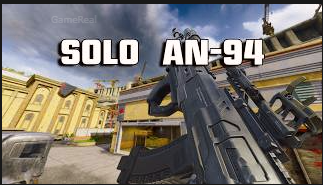
- AN-94: A new assault rifle using 5.45x39mm ammunition.
- New ammunition and attachments: Additional equipment options for different weapons and combat situations.
Martelo and Zenith Port are the most interesting additions for players who enjoy coordinated team fights. One changes how an individual operator can enter an engagement, while the other changes the routes an entire team must use to reach an objective.
Martelo: New Assault Operator and Abilities
Martelo is the codename of Veronica Cardozo, a new Assault Operator introduced in Season Aurora.
Her abilities combine aggressive movement, smoke deployment and explosive damage. Instead of relying on a single offensive gadget, her equipment provides different ways to approach an enemy position.
Understanding when to use each ability is more useful than simply activating everything during the same fight.
1. Ariete: Charge Through Enemy Positions
Ariete is Martelo’s signature ability. She deploys a heavy ram and charges forward continuously.
During the charge, incoming damage from the front is reduced. The ability ends when Martelo collides with an enemy or a wall, triggering a Heavy Strike that damages and knocks down enemies within range.
She can also end the charge early by jumping and slamming the Ariete into the ground ahead of her. This produces another damaging attack that can knock down nearby enemies.
The important distinction is that Ariete is not simply a movement ability. It combines forward movement with an offensive impact.
How to think about using Ariete
Ariete is most useful when there is a clear reason to move aggressively into an engagement. For example, it can help Martelo pressure an enemy position or disrupt opponents holding a narrow approach.
However, the frontal damage reduction should not be mistaken for complete protection. The ability specifically describes reduced damage from the front during the charge. It does not establish that Martelo is immune to incoming attacks.
Players should also consider the direction of the charge. Running into a position without knowing what is beyond it can leave Martelo exposed after the ability ends.
A more controlled approach is to identify the intended target area, check the team’s position and use the charge when teammates can benefit from the disruption.
The early jump-and-slam option is another important part of the ability. It gives Martelo a way to end the charge before reaching a wall or enemy collision. This can be useful when the desired impact point is ahead of her rather than directly at the end of the movement path.
2. Smoke Halo: Create Cover for an Attack or Retreat
Smoke Halo is Martelo’s smoke-launching ability.
Her shoulder-mounted launcher fires multiple smoke grenades around her. When they detonate, they create a ring or halo of smoke around the operator.
The ability also has an alternative firing method. Holding it switches to single-shot mode. Martelo can select a target location and release the ability to fire a smoke grenade that creates a full smokescreen over the selected area.
This gives players two different ways to use smoke.
The surrounding smoke option
The multiple-grenade deployment creates smoke around Martelo. It can help when she needs nearby visual cover or wants to disrupt enemy sightlines during an immediate engagement.
The targeted smoke option
The single-shot mode is more suitable when the team needs cover at a particular location. For example, a squad may want to obscure an enemy’s view of a crossing or create a covered area before moving towards a contested position.
The distinction matters because smoke placement affects the entire team’s movement. A poorly positioned smoke screen can obscure friendly players’ vision or fail to cover the route the squad actually intends to use.
Before deploying Smoke Halo, consider where the team needs to move and which enemy sightlines need to be blocked.
Smoke Halo’s November 12 audio adjustment
The first important post-launch adjustment arrived on November 12.
The developers changed Smoke Halo’s sound attenuation range to 50 metres and increased sound attenuation beyond 30 metres. They also changed the mechanical sound played when Martelo turns the camera while holding the ability. That particular sound can now be heard only by Martelo.
This is important because audio can reveal an operator’s position even when smoke blocks direct visibility.
The update changes how opponents receive sound information about Martelo. It does not mean that Smoke Halo has become completely silent or that every sound associated with the ability has disappeared.
Players using Martelo should understand the revised audio behaviour, while opponents should avoid assuming that they can identify her position through the same camera-turn sound as before.
3. High-Explosive Grenade
Martelo also carries a High-Explosive Grenade.
She quickly throws it forward, and the grenade begins a countdown after being thrown before exploding a few seconds later.
This provides another way to apply explosive pressure without relying entirely on Ariete.
The grenade is particularly relevant when opponents are holding an area that Martelo cannot safely enter immediately. Rather than charging straight into an uncertain position, players can use the grenade to pressure the area before deciding how to approach.
Because the grenade has a countdown, its timing matters. Throwing it without considering the enemy’s movement can allow opponents to leave the affected area before detonation.
It should therefore be treated as an area-pressure tool rather than a guaranteed elimination.
4. Guerreira: Movement and Reload Speed After Combat Pressure
Guerreira is Martelo’s passive ability.
It briefly increases her movement speed and reload speed when she knocks down an enemy or drops below a certain health threshold.
The ability connects Martelo’s aggressive playstyle with her ability to maintain pressure during an engagement.
For example, knocking down an opponent can create a short opportunity to reposition or reload before the next fight. Taking significant damage can also activate the temporary benefits, although deliberately losing health to trigger a passive ability would be an unsafe strategy.
The important point is that Guerreira provides a temporary advantage under specific combat conditions. It does not offer a permanent movement-speed increase or replace the need to manage health and ammunition.
How to Use Martelo More Effectively
Martelo’s abilities work best when players understand how they complement one another.
Ariete provides an aggressive entry option. Smoke Halo can interfere with enemy visibility. The High-Explosive Grenade adds explosive pressure, while Guerreira provides a short boost after specific combat events.
A practical approach is to think about the engagement in stages.
Before entering a contested area
Identify the enemy position and decide whether the team needs smoke, explosive pressure or a direct entry. Do not automatically begin every encounter with Ariete.
During the push
Use smoke to interfere with the enemy’s view when teammates need to cross or approach. If the route is suitable, Ariete can help disrupt the defenders’ position.
After a successful knockdown
Pay attention to Guerreira’s temporary movement and reload-speed benefit. Use the opportunity to prepare for the next engagement rather than assuming the fight is over.
When the position is unclear
Avoid charging blindly. An aggressive ability can become a disadvantage if Martelo enters an area without support or a clear route back.
These are tactical interpretations of the documented abilities, not a claim that one fixed Martelo strategy works in every match.
Zenith Port: A New Warfare Map With a Changing Battlefield
Zenith Port is a coastal Warfare map introduced in Season Aurora.
The attacking side begins its assault from the sea, with the docks ahead and the city’s buildings rising behind them. The battlefield combines land, water and air approaches.
Its defining feature is the Riptide event.
Unlike an ordinary map hazard that only changes the appearance of the environment, Riptide transforms the way teams approach objectives. The event floods the lower areas and shifts the fighting towards rooftops.
This means players need to understand the map in two different states: before the wave and after it.
How the Riptide Event Works
Riptide begins after a sustained barrage of guided missiles draws fire from the air defences. Intercepted missiles explode in the sea, unleashing large waves that move towards the port.
The event develops through several stages.
Stage 1: The Initial Coastal Assault
At the beginning of the match, attackers approach the port from the sea and push towards the city.
The docks and surrounding streets form part of the initial battlefield. Players should become familiar with the available buildings, approaches and routes rather than focusing only on the immediate objective.
This knowledge becomes more valuable when Riptide changes the environment later in the match.
Stage 2: The Wave Approaches
The wave advances from the sea towards the coast.
The developers describe a sequence involving strong wind, heavy rain and environmental changes as the wave approaches and moves through the port.
This is more than a visual effect. It signals that the match is about to transition into a different type of fight.
Players who remain focused only on the current ground-level position may find themselves poorly prepared for the next stage.
Stage 3: The Streets Flood
After the wave reaches the port, the water eventually recedes from its peak, but the battlefield remains flooded.
Ground-level capture points disappear, and rooftops become the new front line.
This is the most important mechanic to understand about Zenith Port.
Players cannot simply continue using the same ground-level approach after the event. The objectives and available routes change, so squads must adapt their movement and positioning.
The developers have also said they were still testing how quickly the water drops after the wave. That means players should not rely on an invented fixed number of seconds for the entire transition.
How to Reach the Rooftops After Riptide
The developers have described several ways for players to return to the rooftop fight.
These routes are important because the change in objective height could otherwise leave players below the new combat area with limited options.
1. Use the Osprey Helicopter
The Osprey Helicopter gives attackers an aerial deployment option.
It allows the attacking team to approach rooftop positions from above rather than relying entirely on ground movement.
However, defenders have anti-aircraft guns that can challenge this approach.
This creates a clear tactical relationship between the two teams. Attackers need to coordinate their rooftop arrival, while defenders need to watch the sky as well as the objective.
For attackers, sending players towards the same rooftop together is more useful than treating every aerial arrival as an isolated action. A coordinated group has a better opportunity to support one another after landing.
For defenders, ignoring the air route can leave rooftop positions vulnerable to an unexpected approach.
2. Use Amphibious Vehicles
Amphibious vehicles provide another way to travel through the flooded areas.
The developers have enabled and refined vehicle buoyancy so that amphibious vehicles and watercraft respond to changes in the water.
This matters because the spaces between buildings become water routes after Riptide.
Vehicles are no longer useful only for the opening coastal assault. Their movement through the flooded environment can also help squads reach positions near buildings.
Players should consider the destination before committing to a vehicle route. Reaching the base of a building is only part of the journey; the team still needs a way to reach the rooftop.
3. Swim and Use a Zipline
Players can also swim to the base of a building and then use a zipline to reach the rooftop.
This is an important alternative for situations where an amphibious vehicle is unavailable or unsuitable.
It also means that the flooded spaces between buildings are not simply obstacles. They can become approaches for players trying to return to the objective.
Defenders should therefore avoid watching only the most obvious aerial route. The water and zipline approaches can also bring attackers back into the fight.
Practical Strategy: What Attackers and Defenders Should Do
The Riptide event creates different responsibilities for both sides.
Tips for attackers
Learn the ground layout early. The opening stage gives players an opportunity to understand the streets and buildings before the flood changes the objective area.
Keep the squad coordinated. When the fight moves to rooftops, individual players arriving at different times may struggle to support one another. Coordinate the approach where possible.
Use more than one route. The Osprey, amphibious vehicles and swimming routes provide different ways to reach elevated positions. Avoid treating one approach as the only option.
Watch enemy anti-aircraft coverage. The Osprey can be challenged by defenders. Aerial deployment should be planned around the team’s ability to reach and support the rooftop position.
Do not remain focused on old objectives. Once the ground-level capture points disappear, the team needs to adjust to the new rooftop fight.
Tips for defenders
Watch the sky. The Osprey creates an aerial approach that defenders must account for.
Protect rooftop access. Swimming and ziplines give attackers another way to reach elevated positions. Watch the building approaches rather than concentrating every player in one location.
Use the changed terrain. The flooded streets alter movement between buildings. Players should be aware that enemy movement may come from water routes rather than familiar ground approaches.
Coordinate vehicle support. The map’s vehicle mechanics matter during both the initial assault and the flooded phase. Teams should avoid wasting available vehicle opportunities.
These recommendations follow from the routes and mechanics described by the developers. Exact positions, ideal loadouts and the strongest operator combinations should be established through actual match testing rather than assumed from patch notes.
November 12 Update: Important Zenith Port Changes
The first post-launch balance update made several changes to Zenith Port.
These adjustments are important because players learning the map from its November 10 launch should not assume that every deployment arrangement remains unchanged.
Sector B: Attacker Deployment Changes
The developers adjusted existing Deployment Bases and added new ones for attackers in Sector B.
They also changed the vehicle available to attackers when reinforcements are low. The updated vehicle is the Wheeled Tank Destroyer.
This changes the support available to attackers under those conditions.
Players should pay attention to the current deployment options rather than relying on the vehicle arrangement they may have encountered in the first days of the season.
Sector C: Defender Vehicle and Post-Riptide Deployment
The defenders’ deployment vehicle in Sector C was changed to an Infantry Fighting Vehicle.
The update also added one Deployment Base for each side after the Riptide event in Sector C.
This is particularly relevant because the post-Riptide stage changes the way teams approach the map. Additional deployment options give both sides another way to re-enter the fight after the environmental event.
Other Map Fixes
The November 12 update also addressed several problems:
- Fixed abnormal damage to characters and vehicles after buses exploded.
- Fixed collision issues with certain buildings in Sector A.
- Fixed redeployment location problems in Sector B.
- Fixed an issue where objectives were marked as destroyed too late when Riptide triggered.
These changes are not simply cosmetic. Deployment, collision and objective feedback can all influence how players understand the state of a match.
Vehicle Supply Stations: One Important Rule to Remember
The November 12 update also changed Vehicle Supply Station servicing.
Once a vehicle finishes servicing at a Vehicle Supply Station, all Vehicle Supply Stations enter their servicing cooldown simultaneously.
This is a system-wide cooldown rather than a separate cooldown that allows teams to immediately rotate between different stations.
For squads that rely on vehicle support, this makes servicing decisions more important.
Before using a station, consider whether the vehicle is ready for the next engagement and whether the squad can afford to wait for the shared cooldown.
This adjustment is especially relevant to teams that use vehicles to move through the changing water routes on Zenith Port.
What Makes Martelo and Zenith Port Work Together?
Martelo and Zenith Port are separate additions, but their mechanics fit naturally into the same combat environment.
Martelo’s smoke can help disrupt visibility during an approach, while Ariete gives her an option for aggressive entry. Guerreira can briefly improve her movement and reload speed after specific combat events.
Zenith Port, meanwhile, requires teams to approach objectives through different routes as the environment changes.
The important connection is not that Martelo is officially the best operator for Zenith Port. The developers have not published evidence establishing a universal best operator or a verified win-rate advantage for her on this map.
Instead, her abilities provide tools that can be relevant to the kinds of engagements the map creates.
For example, smoke may help a team move through an exposed approach, while Ariete may be useful when pressuring an enemy position. But the effectiveness of those choices depends on the location, teammates, opponents and current objective.
Players should experiment with the operator rather than assuming that the new map automatically makes her the strongest choice.
Frequently Asked Questions
When did Delta Force Season 12 Aurora launch?
Season 12 Aurora launched on November 10, 2026.
Who is Martelo in Delta Force?
Martelo is Veronica Cardozo, a new Assault Operator introduced in Season Aurora. Her abilities include Ariete, Smoke Halo, a High-Explosive Grenade and the Guerreira passive.
What does Martelo’s Ariete ability do?
Ariete lets Martelo charge forward while reducing incoming frontal damage. The charge can end with a Heavy Strike that damages and knocks down enemies. She can also end it early with a jumping slam.
What changed in Martelo’s Smoke Halo?
The November 12 update adjusted its sound attenuation range to 50 metres and increased attenuation beyond 30 metres. The mechanical sound made when turning the camera while holding the ability can now only be heard by Martelo.
What is Riptide in Zenith Port?
Riptide is a map event triggered by a sustained guided-missile barrage and the interception of missiles over the sea. The resulting waves flood the port and shift the fighting towards rooftops.
How can players reach rooftops after Riptide?
The documented options include the Osprey Helicopter, amphibious vehicles, swimming to the base of a building and using a zipline to reach its rooftop.
Is Zenith Port an Operations map?
No. Zenith Port is a Warfare map. Season Aurora also introduces changes to the Operations experience, including the Brakkesh 2.0 update.
Did the developers change Zenith Port after launch?
Yes. The November 12 update adjusted deployment bases and vehicles in Sectors B and C, added post-Riptide deployment bases, and fixed several map and objective issues.
Final Takeaway
Delta Force Season 12 Aurora introduces two additions that change how players approach combat. Martelo gives Assault players a combination of aggressive movement, smoke cover and explosive pressure, while Zenith Port transforms a coastal Warfare battle into a rooftop fight through the Riptide event.
The most important details are not just the new abilities or the visual effect of the wave. Players should understand Martelo’s ability limitations, the updated Smoke Halo audio behaviour, the different rooftop access routes and the November 12 deployment changes.
For anyone learning Aurora, the best starting point is to practise Martelo’s abilities with a clear purpose and learn Zenith Port in both its opening and flooded states. The teams that adapt their routes and coordinate their movement will be better prepared for the map’s changing objectives than those who continue using the same approach throughout the match.