
Free Fire Horizaline Device: How the New Device Works
Free Fire continues to refine its tactical depth with every major update. One of the quieter but more meaningful changes in OB55 is the complete overhaul of the device system and the addition of Horizaline as a brand-new passive device. Previously players could carry only one device at a time. That limitation often forced awkward choices between active tools that required manual activation and passive ones that simply worked in the background. OB55 fixes this by splitting devices into two clear categories and letting every player carry one active device and one passive device together. Horizaline joins Dragon Sprinters and the Jammer in the passive group, giving teams more flexible loadouts and new ways to stay alive or control the flow of a fight.
This guide explains exactly what is known about Horizaline, how the new device system works, why the change matters, and how it fits into the much larger OB55 update that also brought back the NARUTO SHIPPUDEN collaboration, adjusted airdrops, added random events, reworked characters, and introduced the Follow mechanic. All details come directly from the official patch notes so the information stays accurate and useful for both casual and competitive players.
The Device System Before and After OB55
For a long time the device slot was a single shared space. Players had to choose between something like a Launch Pad or Mini Turret that they activated themselves and something like a Jammer that simply ran in the background. Passive devices sometimes felt like they cluttered the system because they could not be used on demand, yet they still occupied the only available slot. The result was reduced tactical flexibility and occasional confusion during matches.
OB55 solves the problem with a clean split:
Active devices require player input and include Active Skill Cards, Launch Pad, Supply Box, UAV-Lite, Mini Turret, and Portal Go.
Passive devices work automatically or provide ongoing benefits without needing constant activation. The list now contains Dragon Sprinters, the Jammer, and the new Horizaline.
Players can equip one device from each category at the same time. This simple change opens up many more combinations. A player can now run a Launch Pad for aggressive rotations while also carrying Horizaline for extra survivability, or pair a Mini Turret with Dragon Sprinters for mobility and area control. The system no longer forces hard trade-offs between different types of utility.
The Jammer itself received supporting updates in the same patch. Its description was clarified, its ability to counter detection skills and items was improved, and new feedback appears when it successfully blocks enemy detection. These quality-of-life improvements make the entire passive category feel more polished.
What Horizaline Brings as a Passive Device
Horizaline is listed simply as the new passive device. In Free Fire’s history the name Horizaline has long been associated with a self-revive tool – a syringe-style item that lets a knocked player stand back up without help from a teammate after a short channel time, usually restoring a portion of health. By placing it in the passive device slot in OB55, the designers have made this style of second-chance utility a permanent, equippable option rather than something that only appears in certain modes or through temporary purchases.
Because it is passive, Horizaline does not require the player to switch to it or press an activation button under pressure in the same way an active device does. Once equipped it sits ready. When the conditions for its use are met (most commonly when the player is knocked), the option becomes available. This design keeps the pace of fights intact while still giving players a meaningful safety net.
The ability to carry Horizaline alongside an active device is the real upgrade. A squad can now plan around both mobility or information tools and personal recovery tools at the same time. A player who likes to push aggressively can equip a Launch Pad or Portal Go for entry and still keep Horizaline as insurance if the fight goes wrong. Support players can run UAV-Lite or Supply Box for the team while holding Horizaline for their own survival. The combinations create more interesting decision-making before the match even starts.
Practical Impact on Gameplay
The new system rewards thoughtful loadout planning. In ranked Battle Royale matches the extra passive slot can decide whether a team survives a third-party fight or gets wiped after the first knock. In Clash Squad the same flexibility helps teams adapt between aggressive and defensive rounds without abandoning useful tools.
Positioning and timing still matter. Even with Horizaline available, standing in the open after being knocked remains dangerous because the revive process takes time and leaves the player vulnerable. Smart players will still try to reach cover or create space before relying on the device. Teams that communicate about who is carrying Horizaline can coordinate better – one player might hold the passive revive tool while another focuses on active area-control devices.
The change also reduces the frustration of finding a strong passive device on the ground only to realize it replaces a carefully chosen active tool. Now both can travel together. This small quality-of-life improvement adds up over dozens of matches and makes the overall utility system feel more generous and less punishing.
How Horizaline Fits into the Full OB55 Update
OB55 is a large content update centered on the return of NARUTO SHIPPUDEN Chapter 1. The collaboration brings multiple map-altering events, new locations, and special abilities.
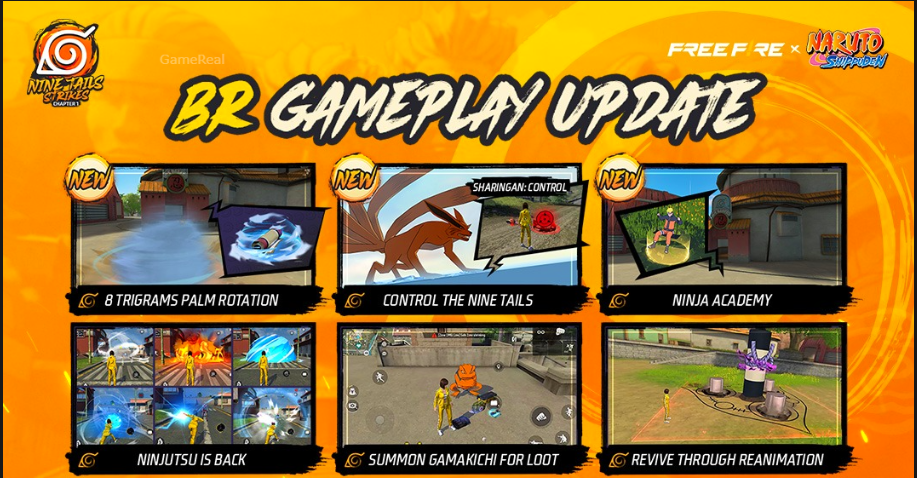
In Battle Royale the Nine Tails can appear at the start of a match and trigger different effects: setting the plane on fire so everyone must eject early, opening Arsenals without keys on Bermuda, or creating a loot-filled crater. Mid-match Sharingan Control points let a player call in a Tailed Beast Bomb that deals heavy explosive damage and leaves burning zones. The Hidden Leaf Village returns both as a playable location and as the default cabin on all maps. A new Ninja Academy building includes an interactable swing that grants a permanent movement speed boost. Revival Points receive a Reanimation Jutsu visual update so revived teammates rise from stone coffins instead of parachuting in. Gamakichi summoning scrolls appear across the map for extra supplies.
Clash Squad also receives the ninja theme. Ninjutsu and kunai become available in the store, the first round uses shurikens instead of pistols, Cyber Airdrops turn into Ninjutsu Scroll Airdrops, and Hidden Leaf Village joins the map pool. A full set of ninjutsu skill cards returns or debuts, including the new 8 Trigrams Palm Rotation defensive skill, Fireball Jutsu, Water Dragon Jutsu, Great Breach, Rasengan, Chidori, and Cherry Blossom Clash. Shuriken and elemental Kunai return as secondary weapons with distinct close-range and control effects.
Beyond the collaboration, Battle Royale receives new random events. At launch these include the Naruto event, Peak Mania on Bermuda, Razing Storm (destructive storms that force players into buildings), Weapon Surge variants that boost specific weapon stats, and a no-event option. Later additions include meteor-style airdrops and discounted vending machines.
Airdrop timing and rewards are comprehensively adjusted. Regular airdrops begin around the 160-second mark with four per match and clearer indicators. Two Defense Airdrops land together later with increased loot quality. One Ultra Airdrop still appears and continues to grant level 5 armor plus teammate revives. The device system change (including Horizaline) sits alongside these adjustments as part of a broader effort to give players more tactical tools.
A new Follow mechanic lets players form moving “trains” using an emote or a follow button. The train leader gets a private flag marker visible only to teammates. Certain combat actions break the train for the affected player while the rest continue. This social and movement feature pairs interestingly with passive devices that improve survivability or mobility.
Character balance focuses on a full Kenta rework. His new kit features a tempest that passes through Gloo Walls for rapid teleportation combined with shield-point-based damage reduction, turning him into a more versatile fighter. Other quality-of-life improvements include the ability to preview and switch weapons while parachuting after revival, helping teammates up without interrupting Med Kit use, clearer map markers while still in the cabin, Coin Jars in ground loot, and smoother downhill movement.
Horizaline and the dual-device system are quieter changes compared with Nine Tails bombs or new ninjutsu, yet they affect every match. They give players consistent access to an extra layer of utility without requiring special events or map-specific conditions.
Strategic Advice for Using the New Device System
Treat the two device slots as deliberate choices rather than afterthoughts. Before dropping, decide whether the team needs more mobility, information, area denial, or personal recovery. One common strong pairing is an active mobility or information device with Horizaline for the safety net. Another is a defensive active device such as Mini Turret paired with Dragon Sprinters for repositioning.
Communicate device choices in the lobby or early in the match. Knowing who is carrying Horizaline lets teammates play more aggressively when they know a second chance exists, or more carefully when the passive slot is occupied by something else. In ranked play the extra slot can be the difference between a successful third-party wipe and a full team elimination.
Practice the timing of any self-revive functionality in training or casual matches so the animation and vulnerability window feel natural under pressure. Even with the device equipped, the best defense remains not getting knocked in the first place. Use Horizaline as a safety net rather than a primary plan.
Because the system is new, the meta around device combinations will evolve over the first few weeks of OB55. Early adopters who experiment with different active-plus-Horizaline pairings will develop advantages before the community settles on preferred loadouts.
Why These Changes Matter Long Term
The device overhaul is a systems-level improvement rather than a flashy new toy. By removing the forced choice between active and passive tools, Free Fire gives every player more agency in how they approach a match. Horizaline specifically adds a reliable form of personal recovery that was previously limited or mode-specific. Together they make the utility game deeper without adding complexity that slows down matches.
When combined with the rest of OB55 – the high-energy Naruto content, clearer airdrops, random environmental events, the Follow train mechanic, and the Kenta rework – the update creates a richer battlefield. Matches feel less predictable and more open to creative play. Players who understand the new dual-device rules and make smart use of Horizaline will find themselves surviving situations that previously ended in elimination.
The core loop of Free Fire remains intact: land, loot, rotate, fight, and adapt. Horizaline and the expanded device system simply give players better tools for that adaptation. Whether you prefer aggressive pushes, careful defensive holds, or flexible support play, the new passive slot and the addition of Horizaline expand the options available in every match.
Master the dual-device system, experiment with Horizaline alongside different active tools, and the improvements will show in both casual games and ranked climbs. The update rewards players who treat utility as seriously as weapons and character skills. That mindset turns a quiet systems change into a consistent competitive edge.