
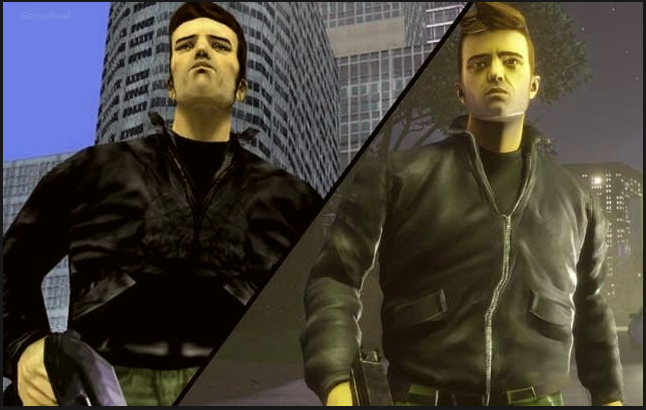
GTA 3 at 25: How It Redefined Open-World Games
Grand Theft Auto III hit PlayStation 2 on October 22, 2001, revolutionizing what many expected out of a 3D action game. Gone was the level-based gameplay where players moved from one isolated environment to the next — now players had the freedom to roam around the Liberty City, steal cars, take missions from various characters, listen to in-game radio stations and come up with their own distractions between story missions.
Now, twenty-five years old, those ideas are familiar ones as open-world games have taken them to various extremes. Still, GTA III warrants more praise than just being an early game with a big map. Its real triumph was to combine the city and the missions and the cars and your freedom of choice into a single experience.
The milestone is a good excuse to peer past nostalgia. GTA III wasn’t the first open-world game or even the first Grand Theft Auto game. It did, however, lay the groundwork for a potent 3D urban sandbox formula — one that shaped how developers created explorable worlds, mission structures and ways of enticing players to wander away from the main storyline.
GTA 3 25th Anniversary – When Is It?
Rockstar Games lists the original release date of Grand Theft Auto III as October 22, 2001. The 25th anniversary of the game will be celebrated on October 22, 2026.
The game was developed by DMA Design, which later became Rockstar North, and published by Rockstar Games. The game is set in the fictional city of Liberty City, which is based on New York City, and features a criminal underworld, rival gangs, police chases, and black humor.
It was originally released for the PlayStation 2. Later versions were released on other platforms, making the game available to more players.
Rockstar’s official summary emphasizes the game’s massive open world, eclectic cast of characters, music, and freedom to explore. These are still key to its standing, but the qualities that make it so important are best understood in the context of the games released before and around 2001.
No special 25th-anniversary event or edition has been confirmed in the information examined for this article. The anniversary is a milestone, not a guarantee of new content.
1. GTA III Put the 3D City at the Center
Open environments, exploration and non-linear play existed in earlier games. The 1997 original Grand Theft Auto, for example, let players drive through cities and take on criminal jobs, though it showed the action from above.
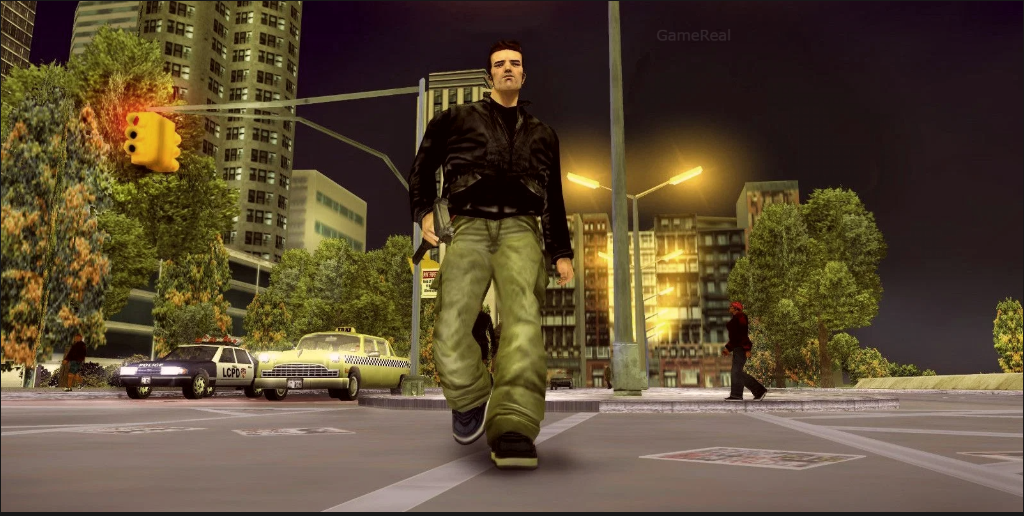
GTA III took the series into a fully three-dimensional world, viewed from behind the main character. This changed how players moved through and interacted with the setting. Streets had depth, buildings towered overhead, and pedestrians and traffic filled the roads. Instead of watching the action from above, players experienced the city at street level.
Liberty City became more than a backdrop for missions. Its bridges, alleys, roads and neighborhoods shaped the way the game was played.
Even a basic task, such as reaching a mission, could become an adventure. Players chose their own route and vehicle, ran into traffic, drew the police’s attention or simply changed plans to explore. The freedom had limits, but it gave players a new sense of connection to the world.
The key innovation wasn’t just the move to 3D. It was making a detailed city—and the activities unfolding across it—the heart of the experience.
2. The World Connected: Driving, Combat and Exploration
One of the most influential design aspects of GTA III was just how organic the connections between its core activities were.
You could be walking down a street, jump in a car, drive to another street, get out and walk on the same road.
And if a confrontation started then combat could also ensue without the game swapping to another shooting system or the game going to another level.
So to speak, “this is nothing new to me.” Action games today typically mix running, jumping, driving, shooting and exploring all in the same place. In 2001, integrating those systems to feel like a single experience was a large part the appeal of GTA III.
The city gave these mechanics a common goal. Vehicles were more than just racing tools. They were modes of transport, a means to elude the cops and, on occasion, a mission necessity. Roads were not just part of the scenery, they were the means by which the player was linked to opportunity.
That interlocking structure of design also caused surprises. A player might damage his vehicle during a mission, draw the coppers while making his escape, or get off with less than he planned at the end of a trip. The world could disrupt a carefully planned route.
GTA III never attempted to model every facet of a living city. Its pedestrians, traffic, and police force met predictable limitations. But it provided sufficient interaction to make the environment feel reactive, not wholly ornamental.
If there’s a big takeaway for devs from GTAIII, it’s that a game world is more believable when its mechanical systems support, rather than function separately from, one another.
3. Missions Gave Freedom a Form
An open world can be end up empty if players don’t have any non-trivial ways they need to use it. GTA III solved that problem with a series of missions tied to characters and places around Liberty City.
They could go to contacts, pick up jobs and play through the story as they unlocked more of the city. Missions had varied objectives, such as driving, fighting, escapes and drop offs.
This format satisfied two competing needs.
One, players craved direction. Story missions had clear objectives and a motivation to progress through the game. Two: they wanted freedom to choose what they do in between those goals.
GTA III didn’t demand everyone’s afternoons be spent playing through the narrative. Players could drive around, play with cars, take unfamiliar roads, wreak havoc and then return to their objectives.
The distinction between the main campaign and what the player does individually was so sharp that it defined the open-world action game.
What made this mission structure effective
The city provided a setting for missions, and missions gave players incentive to explore different quarters of the city. Neither had to carry the whole experience by itself. The same journey can feel different based on what you experienced during the trip. A simple drive could become a police chases and a trip to a contact could lead to an unintended adventure.
4. Liberty City Was More Than a Map
GTA III’s Liberty City has been praised for its urban feel, but the design of the city also conveyed progression.
The game has three core regions: Portland, Staunton Island and Shoreside Vale. Through the campaign, you unlock access to these areas, making it feel as though the city is slowly revealing itself to you.
This is a nice foil to open-world titles that pretty much dump you on the entire map at the start. GTA III mixed a free roam in one area with barricades to other parts of the city.
That limitation was twofold. They helped pace the narrative flow, gave players new environments to explore and made the later levels feel like genuine additions, rather than just more streets in a city map.
The city even utilized visual and environmental categorization to make neighborhoods feel different. Industrial thoroughfares, commercial neighborhoods, and suburban areas all helped illustrate that Liberty City had multiple faces, not just one repeating map.
Then again it was not a completely simulated metropolis. Buildings were often locked, routines were brief, and the population didn’t behave in a way that resembled a real city. And this success was more focused: GTA III took a relatively small game world and made it feel big enough for multiple playthroughs, for exploration, for unscripted gameplay.
For today’s developers, the lesson still applies. A world doesn’t have to simulate all to be memorable. Design, mood, pacing, meaningful interaction, these are perhaps far more important than sheer map size.
5. Radio Stations Turned Driving Into Part of the Narrative
The radio was another key component of the identity of GTA III.
On entering a car, they could tune into several stations playing music or running talk radio. Rather than thinking of driving as empty time between points of interest, the game made use of that time to set tone and character.
The stations helped to contribute to a feeling of place. Music music gave journeys their own mood, while fictional ads, DJs, and talk shows added humor and satire to the world.
This was especially effective as players invested so much time traveling. A radio program or song may accompany a mission, a police chase, or an utterly pointles drive across town.
The audio didn’t have to advance the plot to be valuable. It made the world feel more idiosyncratic when the player was not speaking to a mission character.
That design decision became iconic to the greater GTA formula. b Though later entries expanded on their soundtracks and radio stations identities, GTA III helped prove how environmental audio could become part of a games personality.
It also demonstrates a key design tenet: there is a trade-off factor to deciding which story elements to feature in a cutscene. Tone can be communicated via sound, place, and things the player is doing without interrupting the flow of a game.
6. The Mute Hero Drew More Focus to the City
GTA III’s main character Claude is also a silent protagonist and does not speak throughout the game’s story. That’s a departure from later games in the series, where the main characters were given more lines and more personality.
Claude being mute also serves a functional purpose. Dialogue and character performances deliver much of the narrative personality, with the player taking charge of a protagonist who barely ever talks over the course of those conversations.
That doesn’t mean that all players automatically identify with Claude, nor does silence make a character inherently more grounded in reality. It merely establishes a different dynamic between the protagonist and the people he interacts with.
Much of the humor, tension and criminal-world ambience of the game is provided by the secondary characters. Mission briefings contribute to introducing the player’s current objective, the larger story giving those missions a context within the criminal networks of Liberty City.
The approach also worked for a game where players were often, if not always, taken on detours from the primaries. Whether Claude was driving around, exploring or going into trouble, he didn’t need line of dialogue for every unscripted moment.
Other GA TA games demonstrated different approaches to character-driven stories. Their more loquacious leading protagonists gave Rockstar the ability to delve into personal stories, relationships and opposing viewpoints more extensively. For that sake, GTA III silent protagonist is, therefore, best interpreted as one facet of the game’s design rather than a universally better way of telling stories.
7. GTA III Did Not Invent Open-World Games
The legacy of GTA III is immense, but the roots of open-world design stretch far back in time before the game loaded.
Games had already played with large spaces, non-linear goals and open-ended play. The original Grand Theft Auto itself established a solid precedent for the third game.
Other genres approached open environments in other ways. Adventure games and role-playing games explored interconnected worlds and non-linear play long before 2001.
What GTA III helped to solidify was a particularly influential mix:
– A fully 3D urban environment.
– Vehicles as a part of routine travel and missions.
– Story missions dot the map of a single, connected city.
– Side activities to participate in when you’re not on the main campaign.
– Radio and ambient detail, so travel has character.
– A police reaction, among other routines, that can derail your plans.
What is significant is how those things were enabled by one another.
It would be a lie to say that every open-world game that exists now is a direct descendant of GTA III, or that the game was the origin of every mechanic that is now endemic to the genre. Its legacy is more accurately described as popularizing a certain type of design in 3D action games.
That distinction, at least, makes the anniversary more interesting. GTA III was not a game created ex nihilo but the definitive example of existing ideas repackaged and presented to the mass market.
Why GTA III Still Stands Up, and Is Ripe for Remake Today
GTA III is as frustrating as it is brilliant.
What still works
Establishing Place and Activity: There is a clear place for driving, missions and exploration in the city. There is perhaps a general player expectation of how to flow from one activity to the next.
Space between goals: You can play the story campaign without adding constant story progression. Players have the freedom to explore and experiment if they wish to do so.
One of its unique charm: The radio, the dark humour, the city layout and even the little characters make Liberty City unique If you want to go to a bar or a drug dealer, in this city create identity.
GTA III’s small-scale design Compared to most modern open world games, GTA 3 doesn’t expect you to keep track of a massive amount of different systems and side activities. It’s core loop is pretty simple to comprehend,
What feels dated
Challenge and repetition in missions: Certain objectives can be harsh, and dying on a mission might mean saying things you really don’t want to repeat.
Minimal Character Interaction: Claude’s silence and lack of meaningful interaction with other characters can make III’s storyline feel less developed than many modern narrative-driven games.
Diminished World Simulation: Many homes are off limits, and the behavior of pedestrians is far less involved than in some more recent games. Dated controls and combat: The way the original game moves, aims, and handles its camera might take some getting used to for fans of modern action games.
These limitations should not erase the importance of the game in video game history. They explain why it was more apparent as an influence when seen in the light of the games that refined its ideas.
Frequently Asked Questions
When was GTA III released?
Grand Theft Auto III was first released on October 22, 2001, for PlayStation 2. Its 25th anniversary is October 22, 2026.
Did GTA III invent open-world games?
No. Open-world design was present in games before GTA III, including earlier Grand Theft Auto titles. GTA III helped popularize a full 3D urban action game formula that allowed players to drive, complete missions, explore and enjoy freedom.
Why was GTA III so influential?
Its interconnected 3D city, integrated vehicle and combat systems, mission structure, radio stations and freedom to explore a city between objectives worked together to form a unique open-world experience.
Is GTA III still worth playing in 2026?
For players looking to learn about gaming history, Rockstar’s design evolution or the origins of modern 3D open-world action games, it can be a valuable experience. But its controls, mission difficulty and limited world simulation might feel old-fashioned when placed next to newer games.
Has Rockstar announced a GTA III 25th-anniversary event?
Based on the official information reviewed for this article, no special 25th-anniversary event has been confirmed. The anniversary date itself should not be considered proof of a new game, update or reward.