
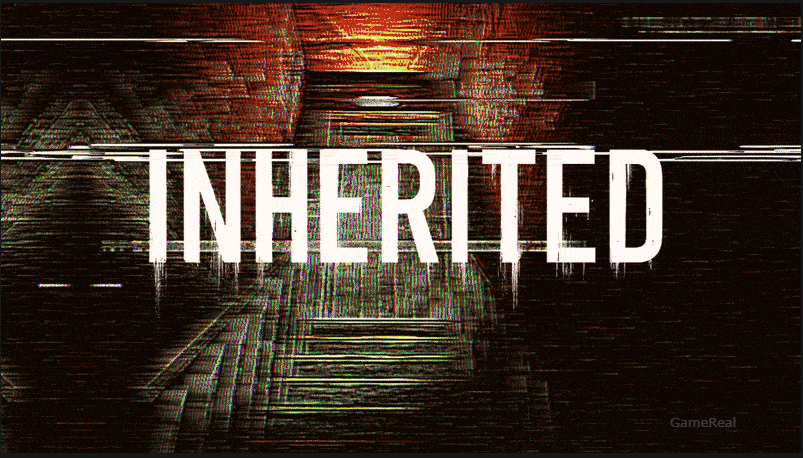
Inherited Demo: How Its Changing House and Environmental Puzzles Work
Inherited is a psychological horror game built around an unsettling idea: the house you are exploring may not remain the same as you remember it. Doors can open unexpectedly, corridors can stretch, and symbols can appear as the investigation progresses. Instead of relying entirely on conventional jump scares, the game connects environmental changes, observation, puzzles, and fragmented storytelling.
Developed and published by Dark Palace Interactive, Inherited follows a character who awakens after a mysterious accident on a lonely road and becomes trapped inside an isolated house. As the player investigates its rooms, evidence begins to suggest that the building is connected to a larger mystery involving previous inhabitants and a repeating cycle.
The playable demo introduces the game’s central systems, including environmental exploration, puzzle-solving, psychological horror, and encounters with mysterious entities known as Stalkers. However, there is an important distinction between understanding the mechanics the developer has confirmed and knowing the exact solution to every puzzle. The available descriptions explain the intended design, but they do not provide a complete room-by-room walkthrough.
This guide examines how the changing environment and environmental puzzles fit together, what clues players should pay attention to, and how to approach the demo without assuming that every unusual detail has a confirmed solution.
What Makes the House in Inherited Different?
In a conventional exploration game, a room generally remains structurally consistent after the player leaves it. Doors lead to predictable destinations, corridors retain their dimensions, and familiar landmarks help players remember where they have been.
Inherited deliberately challenges that expectation.
Dark Palace Interactive describes environments that twist as the investigation develops. Doors may open, corridors may stretch, and symbols can appear as the player discovers more about the house. These changes are central to the game’s psychological horror rather than simply decorative effects.
The result is an environment that players cannot always treat as a reliable map.
Imagine remembering a corridor as a short route between two rooms, only to discover that it now appears longer than expected. Or consider returning to a familiar location and finding a symbol that was not previously visible. Such changes encourage players to question their memory and investigate the difference instead of automatically assuming they have taken a wrong turn.
These are illustrations of the developer’s described mechanics, not claims that a particular corridor or symbol appears at a specific point in the demo.
The important design principle is that the environment itself contributes to the mystery. Players are not simply searching for information hidden inside the house; they must also pay attention to how the house presents that information.
How the Changing Environment Can Affect Exploration
The developer identifies several kinds of environmental changes. Each has a different potential effect on navigation and puzzle-solving.
Doors that open unexpectedly
Doors are familiar navigation landmarks. Players naturally use them to identify room entrances, exits, and possible routes forward.
When a door opens where it was previously closed, it can change the player’s understanding of the space. The opening may offer a new route, reveal a previously inaccessible area, or encourage further investigation.
A useful approach is to treat a newly accessible doorway as a reason to reassess the surrounding area. Look at the room from which the door opens, note any visible objects or symbols, and investigate the newly accessible space carefully.
However, an opening door should not automatically be interpreted as proof that a puzzle has been solved. The game’s official descriptions do not establish that every door is controlled by a specific puzzle or that all changes follow one universal rule.
Corridors that stretch or distort
Corridors help players build a mental map of an environment. Their length, direction, lighting, and nearby landmarks can make a location recognizable.
When a corridor changes, that mental map becomes less dependable.
In practical terms, players should avoid relying exclusively on remembered distances. If a route looks different, observe the current surroundings rather than assuming the game has placed the player in an entirely new location.
Look for recognizable objects, changes in lighting, unusual markings, and nearby doors. These details may help distinguish a meaningful environmental change from ordinary visual variation.
The developer has confirmed that corridors can stretch as the experience progresses. It has not publicly documented every trigger or explained precisely how players should respond to each instance.
Symbols that appear during progression
Symbols are particularly important because they can function as both environmental details and potential story clues.
Inherited’s official descriptions identify symbols among the discoveries that appear as players progress. They also describe a narrative built from documents, recordings, and traces left by previous inhabitants.
Together, these details suggest that symbols should be considered part of the broader investigation rather than dismissed as decoration.
If you encounter a symbol, take note of its appearance and location. Consider whether it appears near a doorway, an object of interest, or another unusual environmental feature. If a similar symbol appears elsewhere, compare the two rather than immediately assuming they have identical meanings.
This is a practical observation strategy, not a confirmed symbol-matching puzzle solution. The developer has not published a complete symbol dictionary or a verified list of symbol combinations for the demo.
How Environmental Puzzles Fit Into the Game
Inherited’s official description states that environmental puzzles unlock new areas and reveal fragments of the narrative. It also emphasizes connecting clues and examining details that might otherwise be overlooked.
That information establishes two important functions for puzzle-solving.
First, puzzles support progression. A discovery may help the player access an area that was previously unavailable.
Second, puzzles support storytelling. Solving them is intended to reveal more about the house and the events connected to it.
This relationship matters because the player is not simply trying to open every door. The wider objective is to understand why the character has become trapped in the house and how the location relates to the cycle mentioned in the game’s description.
Environmental observation comes before assumptions
A useful first step is to examine what the game actually presents.
Look at objects that stand out from their surroundings. Pay attention to unusual lighting, visible markings, sounds, and changes in the room. Read documents and investigate recordings when the game makes them available.
The developer specifically identifies objects, sounds, and light sources as parts of the environmental storytelling. That makes them reasonable places to direct attention when investigating an unfamiliar area.
Nevertheless, not every object must be a puzzle component. A detail can contribute to atmosphere, establish the history of a location, or provide narrative context without being something the player needs to interact with.
The goal is to distinguish potentially useful evidence from assumptions based only on appearance.
Connect clues instead of examining them in isolation
The official description emphasizes connecting clues rather than simply finding individual objects.
This suggests that the intended experience involves interpreting information gathered from different parts of the environment.
For example, a document might establish a piece of background information, while a symbol or environmental change provides another part of the mystery. The player should consider whether the discoveries make more sense together than separately.
That example explains the general approach; it does not identify a specific document-and-symbol combination found in the demo.
A practical method is to ask three questions whenever you discover something unusual:
- What does this detail actually show or tell me?
- Does it resemble anything else I have encountered?
- Has the environment changed in a way that makes this discovery more significant?
These questions help organize observations without inventing a solution before enough evidence exists.
Look for the relationship between a puzzle and progression
Because the developer says environmental puzzles unlock areas and narrative fragments, the outcome of an interaction can help players understand its purpose.
If an investigation leads to a newly accessible location or a new piece of information, consider how that result fits into the larger sequence of discoveries.
Do not assume every successful interaction will produce an obvious visual reward. The available descriptions do not specify the feedback used by every puzzle, nor do they explain whether the demo includes a journal, a formal clue log, or another system for tracking discoveries.
The safest approach is to pay attention to what changes after an interaction and avoid treating an unverified interface feature as part of the game.
A Practical Method for Investigating an Unfamiliar Room
The following process is a general exploration strategy derived from the confirmed mechanics. It is not an official walkthrough or a claim that every room follows the same sequence.
Step 1: Establish your surroundings.
Before moving through a room quickly, look at its layout. Identify visible doors, prominent objects, light sources, markings, and anything that appears unusual.
The purpose is to build a basic understanding of the current environment before the game introduces another change.
Step 2: Examine notable details.
Investigate objects and clues that appear relevant. If documents or recordings are available, pay attention to the information they contain. Remember that environmental details can support the story even when they do not directly solve a puzzle.
Step 3: Pay attention to sound and lighting.
The developer identifies both as parts of the game’s storytelling. Notice when a sound seems unusual or when lighting draws attention to a particular area.
Do not automatically assume that every sound signals an enemy or every lighting change marks a puzzle. The descriptions confirm that these elements matter to the experience, but they do not define a universal rule for interpreting them.
Step 4: Reassess the room after something changes.
If a door opens, a corridor changes, or a symbol appears, examine the surrounding space again. Compare what you see with what you remember.
This is especially useful in a game that deliberately makes familiar environments less predictable.
Step 5: Connect discoveries and test reasonable interpretations.
Use information from the environment to form a tentative explanation. If the game offers an opportunity to interact with something, consider whether your interpretation is supported by the clues you have found.
Avoid trying random interactions indefinitely. When an approach does not produce a meaningful result, return to the available evidence and reconsider what you may have overlooked.
Step 6: Observe the result.
After making progress, look for changes in accessibility, the environment, or the information available to you. A newly opened route or a narrative fragment may help explain why the preceding investigation mattered.
If nothing changes, that does not necessarily prove the interaction was incorrect. The available public documentation does not explain every puzzle’s feedback or conditions.
How Documents, Recordings, and Symbols Support the Story
Inherited’s puzzle design is closely connected to its narrative.
According to the developer, players discover documents, recordings, symbols, and traces of earlier inhabitants. These discoveries are intended to help reconstruct the stories of people connected to the house and understand the cycle at the center of the mystery.
This means environmental investigation has two overlapping goals.
One is practical: determine how to access new areas and continue exploring.
The other is interpretive: piece together what happened before the player’s arrival.
A document may provide context rather than a direct instruction. A recording may reveal something about a previous inhabitant. A symbol may become more meaningful when considered alongside another discovery.
These possibilities explain why collecting information and interpreting it are separate tasks. Finding a clue does not necessarily mean understanding its significance.
Players should also avoid treating every fragment as a complete explanation. Psychological horror often relies on uncertainty, and Inherited’s description explicitly presents fractured memories and unexplained encounters as part of the experience.
The confirmed information does not establish the full meaning of every document, recording, or symbol in the demo. A responsible guide should therefore explain how these elements contribute to the investigation without inventing their exact narrative revelations.
What Happens When the House Becomes Dangerous?
Inherited is not presented as a puzzle experience without threats. The developer also describes mysterious entities called Stalkers, which can observe the player, approach, and force them to run.
Their presence changes the context in which exploration takes place.
Investigating a room may require attention to environmental details while the player remains aware that something else may be nearby. A quiet space is not necessarily a safe space, according to the developer’s description.
This creates a tension between careful observation and the need to react to danger. Players who rush through every area may overlook clues, but stopping to examine everything without considering the surrounding situation may also be unwise.
The available descriptions do not provide enough verified detail to explain the Stalkers’ detection ranges, movement patterns, hiding mechanics, or exact responses to player actions. It would be misleading to present a precise enemy-avoidance strategy without evidence.
For the demo, the most defensible advice is to distinguish ordinary investigation from moments when a threat becomes apparent. Pay attention to the information the game actually provides and respond to the situation rather than assuming an undocumented enemy rule.
What the Demo Confirms—and What Remains Unknown
The developer’s October 26, 2026 announcement describes the Steam demo as an introduction to the opening portion of Inherited. It is intended to showcase exploration, environmental puzzles, psychological horror, early clues, and encounters with the forces inside the house.
The following distinctions help set realistic expectations.
Confirmed features include:
- An isolated house that changes as the investigation progresses.
- Doors that can open and corridors that can stretch.
- Symbols that appear as discoveries are made.
- Environmental puzzles that unlock new areas and reveal narrative fragments.
- Storytelling through objects, sounds, lighting, documents, and recordings.
- Mysterious entities known as Stalkers.
- A larger mystery involving previous inhabitants and a repeating cycle.
Details that remain unconfirmed in the available public descriptions include:
- A complete list of demo puzzles and their exact solutions.
- The precise triggers behind individual room transformations.
- A comprehensive explanation of every symbol.
- The total number of puzzle sequences in the demo.
- The full duration of a typical playthrough.
- Whether every environmental change is tied to a puzzle, a story event, or another gameplay system.
These gaps matter because a mechanics overview is not the same as a verified walkthrough. Players looking for the solution to one specific puzzle will need evidence from that puzzle’s actual presentation rather than assumptions drawn from the general design description.
There is also a storefront-status discrepancy worth knowing about. Dark Palace Interactive announced a Steam demo for October 26 during Steam Scream V, which runs through November 2, 2026. However, the Steam store page still displays the main game as coming soon and unavailable, while the developer’s itch.io page lists a Windows demo download. Players should check the current listing before assuming that the demo is accessible through every advertised storefront.
Final Takeaway
Inherited’s changing house and environmental puzzles work together to make exploration part of the mystery. Doors, corridors, symbols, objects, sounds, and lighting can all contribute to the experience, while puzzle-solving is intended to open new areas and reveal pieces of the story.
The most useful approach is to observe carefully, compare discoveries, revisit your understanding of familiar spaces, and pay attention to what changes after an interaction. At the same time, the developer’s public descriptions do not establish the exact solution to every puzzle or the trigger behind every environmental transformation.
For now, the confirmed mechanics provide a clear picture of the game’s intended direction: investigate the house, connect its clues, question what you see, and use discoveries to understand the cycle surrounding your character. A complete puzzle walkthrough should wait until individual solutions can be verified from the playable demo.