
Minecraft 26.3 Update: Latest Changes & Release Status
Minecraft continues its steady 2026 drop schedule with version 26.3, officially titled the Wilderness Bound update and also known as the Third Drop of 2026. As of early September 2026 the update has progressed from experimental snapshots into formal pre-release testing on Java Edition. This stage usually means Mojang is finishing polish, fixing remaining bugs, and preparing the content for a wider audience.
The update focuses on exploration, building, and small quality-of-life improvements rather than major combat or dimension changes. Its centerpiece is a new autumnal biome, a full new wood set, long-requested decorative blocks, and several camping-themed additions. Below is a complete overview of the current state of 26.3, every major feature that has appeared in testing, technical changes, and practical advice for players and server owners.
Current Release Status
Snapshots for 26.3 began on June 23, 2026. Over the following weeks Mojang released multiple testing builds that gradually introduced and refined the new content. By early September the first pre-release builds became available on Java Edition. Mojang has described this phase as “final touches,” especially around the new Dappled Forest biome and its associated blocks.
No official full release date has been announced. Based on the pace of earlier 2026 drops and the fact that the update is already in pre-release, most observers expect the stable version to arrive in the mid-to-late September window. Bedrock Edition normally follows Java once the Java version is considered stable, so Bedrock players should anticipate a short delay after the Java launch.
Pre-release and snapshot builds remain optional. They are useful for testing and creative experimentation but are not recommended for important long-term survival worlds because further changes, balance adjustments, or even small world-format updates can still occur.
The Dappled Forest – The Heart of the Update
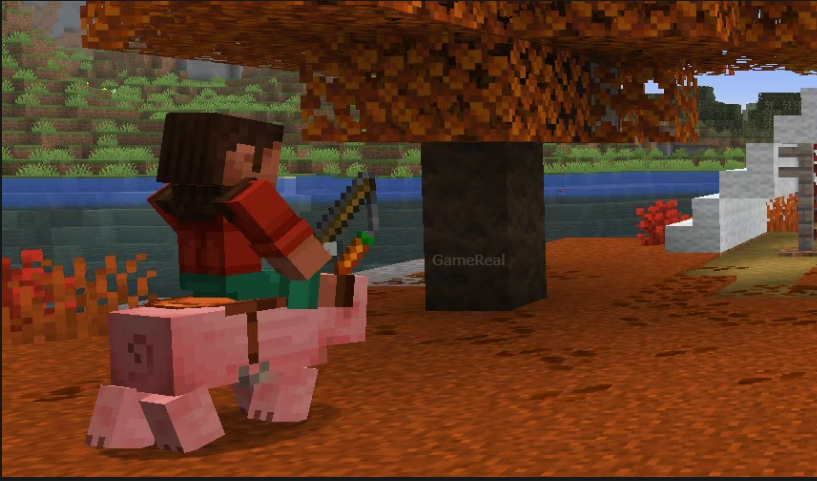
The most visible addition in 26.3 is the Dappled Forest, a new biome that generates near colder regions and carries a distinct autumn atmosphere. The forest feels warmer in color than a standard taiga yet cooler than a regular forest, creating a transitional look that fits naturally into existing world generation.
Key elements of the biome include:
- Poplar trees with three leaf-color variants: red, orange, and yellow
- Matching colored falling-leaf particles for each tree type
- Shelf mushrooms that grow on poplar logs and fallen trunks
- Red shrubs scattered across the forest floor
- A dedicated variant of the new Abandoned Camp structure
Passive and neutral animals that appear in the Dappled Forest use their cold-biome variants where applicable, helping the area feel consistent with its location on the temperature gradient. Because the biome is tied to colder edges of the world, players exploring mountain foothills, cold plains borders, or similar transition zones are most likely to encounter it.
Complete Poplar Wood Set
Alongside the trees Mojang added a full wood family for poplar. This includes logs, stripped logs, wood blocks, planks, stairs, slabs, fences, fence gates, doors, trapdoors, pressure plates, buttons, and signs. The availability of an entire matching set means builders can construct complete houses, furniture, and decorative details without mixing in other wood types for missing pieces.
Poplar saplings grow into one of the three leaf colors at random. This small random element gives each new tree a slightly different appearance and encourages players to plant multiple saplings if they want a specific color palette for a build.
Wool Stairs, Wool Slabs, Concrete Stairs and Concrete Slabs
One of the most requested building features in recent years has finally arrived. All sixteen colors of wool and all sixteen colors of concrete now have stair and slab variants. These blocks remove long-standing limitations for detailed interior work, roofing, pathways, and pixel-art style construction.
Wool stairs and slabs are especially useful for soft, textured builds, while concrete versions give clean, modern edges. Because both materials already existed in full block form, the addition of stairs and slabs feels like a natural completion of the sets rather than an entirely new system.
Cushions – Sitting Down in Vanilla Minecraft
Cushions are a new decorative block crafted from three matching wool slabs. Once placed, a player can interact with the cushion to sit down. This is the first dedicated sitting interaction of its kind in the base game. Cushions come in all sixteen wool colors and can be placed on most flat surfaces.
The addition is modest in mechanical terms but significant for role-play, interior design, and adventure maps. Builders can now create proper seating areas, lounges, and rest spots without relying on awkward stair or slab arrangements.
Straw Beds – Temporary Rest Without Changing Spawn
Straw Beds offer a practical solution for explorers. Crafted from hay bales, a Straw Bed can be used to sleep through the night without setting a new respawn point. After use the bed is destroyed, making it a single-use item. Straw Beds also generate naturally inside Abandoned Camps.
This design keeps the strategic importance of permanent beds while giving travelers a convenient way to skip night-time without committing to a new home base. Adventure-map creators and challenge runners are likely to find creative uses for the limited nature of the item.
Abandoned Camps and Explorer Maps
Abandoned Camps are new structures that appear across a wide range of biomes, including a specific variant inside the Dappled Forest. They contain camping-themed loot and serve as welcome points of interest during long exploration trips. Later snapshots added explorer maps that point players toward additional camps in several biomes, similar to existing village or ocean explorer maps.
These structures reward players who leave the main paths and encourage a more thorough exploration style without introducing high-risk combat encounters.
Technical and Quality-of-Life Improvements
Beyond the visible content, 26.3 includes several under-the-hood changes:
- Order-Independent Transparency (OIT) on Java Edition improves how layered translucent blocks such as stained glass, water, and nether portals render, reducing visual artifacts.
- Some pre-release builds raised the maximum render-distance options.
- Realms received invite-code improvements.
- Data-pack and resource-pack format versions were updated.
- A substantial list of bug fixes accumulated across the snapshot cycle.
- Additional language support appeared in certain builds.
These changes are still subject to final adjustment before the full release, but they indicate Mojang is using the drop to clean up long-standing technical issues as well as deliver new blocks.
Overall Character of the Update
Minecraft 26.3 is clearly a builder- and explorer-focused drop. It does not overhaul combat, add a new dimension, or introduce complex new progression systems. Instead it supplies:
- A visually distinct biome and complete wood set
- Expanded decorative options through wool and concrete stairs and slabs
- Simple but welcome comfort items (cushions and straw beds)
- New structures that make exploration more rewarding
The tone is relaxed and creative. Players who enjoy gathering resources, designing interiors, and wandering the Overworld will find the most immediate value.
Practical Advice for Different Players
Single-player and Realms users
Back up any important worlds before loading a pre-release. Create a fresh creative test world to learn the new crafting recipes and block behaviors. Once the full release arrives, the Dappled Forest and Abandoned Camps will generate in newly explored chunks; already-generated terrain will remain unchanged unless third-party tools are used.
Multiplayer server operators
Begin testing plugins, datapacks, and custom maps against the latest pre-release as soon as possible. Watch for any protocol or world-format notes in the official changelogs. Plan a short, well-communicated maintenance window for the final upgrade.
Builders and content creators
The combination of poplar wood, colored wool and concrete stairs/slabs, and cushions opens fresh design possibilities. Straw Beds also offer interesting mechanics for adventure and challenge maps because they do not set spawn points.
Casual survival players
The new biome and camps give additional reasons to explore. The sitting and temporary-bed features add small comforts that make longer journeys more pleasant.
Looking Ahead
Minecraft 26.3 (Wilderness Bound) has reached the pre-release stage. The core feature set — Dappled Forest, Poplar wood, wool and concrete stairs and slabs, cushions, straw beds, and Abandoned Camps — is already playable and appears stable. A full public release is expected in the mid-to-late September 2026 period, although Mojang has not locked in an exact calendar date.
Until the official announcement, the recommended approach is to enjoy the pre-release on secondary worlds, keep regular backups, and follow official Minecraft channels for the final green light. When 26.3 launches, players will receive a charming new biome, a complete autumn-themed building palette, and several long-requested decorative tools that should remain useful for years of creative and exploratory play.
The update continues Mojang’s 2026 pattern of delivering focused, high-quality drops that improve the everyday experience of the game without requiring massive system overhauls. For builders, explorers, and anyone who simply enjoys walking through a newly generated forest, Wilderness Bound looks set to be a quietly satisfying addition to Minecraft.