
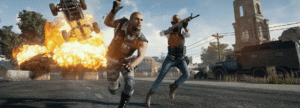
PUBG Battle Tactics: Smart Moves, Survival Skills and Winning Strategies
Welcome to GameReal.online, your destination for gaming guides, tips, strategies, updates, and gaming news. PUBG continues to attract players with its combination of survival gameplay, competitive shooting, exploration, teamwork, and tactical decision-making.
Every PUBG match tells a different story. You may begin by landing in a quiet location, collecting basic equipment, and moving toward the safe zone. Another match might start with an intense battle immediately after landing. Sometimes you will have excellent equipment but a poor position, while another match may force you to win fights with limited resources.
This variety is what makes PUBG interesting. Success does not depend on one single skill. Players need to understand the battlefield, make good decisions, manage resources, use cover, listen for enemies, and know when to attack or retreat.
In this GameReal.online guide, we will explore practical PUBG battle tactics that can help you survive longer, improve your decision-making, and become more confident during matches.
Understanding the PUBG Match
PUBG is based around a simple survival concept. Players enter a large battlefield, search for weapons and equipment, and compete against other players while the playable area gradually changes.
At the beginning of a match, the battlefield is large and players are spread across different locations. As the match continues, the playable area becomes smaller, forcing players into closer encounters.
| Stage | Main Focus |
|---|---|
| Early Game | Landing, looting and surviving the first encounters. |
| Mid Game | Rotation, positioning and selective combat. |
| Late Game | Survival, information and strong positioning. |
| Final Battle | Careful movement, cover and precise decision-making. |
Choose a Landing Strategy That Fits You
Your first major decision is where to land.
A popular location may offer plenty of loot and immediate combat. However, it can also contain many opponents. A quieter location can give you more time to prepare but may provide a slower start.
There is no universal landing strategy. The right choice depends on your experience and preferred style.
Aggressive Players
If you enjoy fast combat and want to improve your fighting skills, a busy landing location can provide plenty of opportunities.
The risk is that you may be eliminated quickly if you fail to find a suitable weapon or lose the first encounter.
Strategic Players
If your goal is to survive longer, choose locations where you can collect equipment with less immediate pressure.
This can be particularly useful for new players who are still learning movement, looting, and combat mechanics.
| Landing Style | Advantages | Risk |
|---|---|---|
| Hot Drop | Fast action and combat practice | High |
| Balanced Drop | Combination of loot and combat | Medium |
| Quiet Drop | More time to prepare | Lower |
Build Your First Loadout Quickly
After landing, do not spend too much time looking for perfect equipment.
Your first priority should be finding a weapon that you can use effectively. After that, collect ammunition, armor, healing supplies, and other useful equipment.
Once you have enough resources to defend yourself, start thinking about your next location.
Early Loot Priority
- Primary weapon
- Compatible ammunition
- Protective equipment
- Healing supplies
- Secondary weapon
- Useful attachments
- Throwables
Do Not Overloot
Looting is important, but spending too much time inside buildings can create unnecessary danger.
Other players may already be moving toward your location. Once you have enough equipment to fight and survive, consider rotating toward a stronger position.
Remember that perfect equipment is not necessary to win a match.
Understand Your Weapons
PUBG includes different weapon categories designed for different situations.
| Weapon Type | Typical Strength |
|---|---|
| Assault Rifle | Versatile medium-range combat. |
| SMG | Fast close-range encounters. |
| Shotgun | Very close-range fights. |
| Sniper Rifle | Long-range engagements. |
| DMR | Precision combat at medium and longer ranges. |
| Pistol | Backup weapon and early-game use. |
Choose Weapons Based on Your Playstyle
Instead of searching for one weapon that is supposedly the best, learn which weapons match your style.
If you prefer close combat, you may want a fast weapon that performs well at short distances. If you prefer to stay farther away, a weapon suited to longer-range engagements may be more comfortable.
The best weapon is often the one you can use confidently.
Improve Your Aim Through Practice
Aiming is one of the most important mechanical skills in PUBG.
Players should practice tracking, recoil control, crosshair placement, and reaction speed.
Simple Aim Practice
- Practice shooting stationary targets.
- Practice tracking moving targets.
- Learn the recoil behavior of your favorite weapons.
- Experiment with sensitivity settings.
- Practice switching between targets.
- Apply your training during real matches.
Crosshair Placement Matters
Good crosshair placement can make enemy encounters easier.
Instead of pointing your crosshair toward the ground while moving, try to keep it at a useful height where an opponent is likely to appear.
This reduces the amount of adjustment required when a fight suddenly begins.
Learn the Battlefield
Knowing the map is an important advantage.
Pay attention to buildings, hills, roads, open fields, compounds, bridges, and other terrain features.
When you understand the environment, you can make better decisions about where to move and where to defend.
Questions to Ask While Moving
- Where is the next safe area?
- Where can I find cover?
- Is this route exposed?
- Could another player be watching this area?
- Where can I stop safely if I encounter enemies?
Use the Safe Zone as Part of Your Strategy
The safe zone is one of the most important factors in PUBG.
As the match progresses, the playable area becomes smaller. Players must move toward the remaining area and adapt to changing conditions.
Do not wait until the last moment before checking the map.
Early awareness gives you more choices and reduces the chance of being caught in an exposed position.
Master Rotations
A rotation is the process of moving from your current location toward another position, usually because of the safe zone or a tactical opportunity.
A good rotation considers distance, cover, terrain, enemy locations, and available vehicles.
| Rotation Situation | Recommended Approach |
|---|---|
| Short Distance | Move carefully using cover. |
| Long Distance | Consider a vehicle or an early rotation. |
| Open Terrain | Look for cover before crossing. |
| Enemy-Heavy Area | Consider an alternative route. |
| Late Rotation | Prioritize survival and safe movement. |
Positioning Can Give You an Advantage
Good positioning can make combat easier before you even fire a shot.
Try to find locations where you have cover, visibility, and an escape option.
A strong position can allow you to observe enemies while reducing the number of directions from which you can be attacked.
Use Natural Cover
Not every fight happens inside buildings.
When moving through open areas, use rocks, trees, hills, walls, terrain, and other available objects to reduce your exposure.
If there is no cover nearby, think carefully before crossing the area.
High Ground Is Useful but Not Always Safe
High ground can improve visibility and give you a wider view of the battlefield.
However, an elevated position can also make you easier to identify if there is no cover.
Use high ground together with concealment whenever possible.
Think Before You Start a Fight
Seeing an enemy does not mean you must immediately shoot.
Before engaging, think about your position, the enemy’s position, the safe zone, your equipment, and whether other opponents may be nearby.
A well-planned fight is generally better than an impulsive one.
The Fight Decision Checklist
- Do I have cover?
- Do I know where the enemy is?
- Can my teammates support me?
- Is the enemy inside or outside the safe zone?
- Will attacking reveal my position?
- Is there a real advantage to taking this fight?
Learn When to Retreat
Retreating can be a smart tactical decision.
If you have poor positioning, low health, limited ammunition, or multiple opponents attacking from different directions, changing position may give you a better chance of surviving.
Winning a single fight is not more important than surviving the match.
Use Sound to Track Opponents
Audio awareness is extremely valuable.
Footsteps, gunshots, vehicles, and other sounds can provide information about nearby activity.
| Sound | What It May Tell You |
|---|---|
| Footsteps | A player may be nearby. |
| Gunfire | Combat is occurring in a particular direction. |
| Vehicle | Players may be rotating or approaching. |
| Reloading | An opponent may be temporarily unable to fire. |
Play With Audio Awareness
If possible, use headphones and pay attention to directional sounds.
Being able to identify whether an enemy is moving from the left, right, front, or behind can give you valuable time to prepare.
Use Throwables Intelligently
Throwables can be useful tools when used with a purpose.
They can help create opportunities, pressure enemies, provide visual cover, or control an area.
Throwable Strategy
| Throwable | Possible Use |
|---|---|
| Frag Grenade | Pressure enemies and defensive positions. |
| Smoke Grenade | Provide visual cover during movement or recovery. |
| Stun/Flash-type Grenade | Disrupt opponents in appropriate situations. |
| Molotov-type Throwable | Restrict movement and control areas. |
Smoke Can Change a Fight
Smoke is particularly useful when your team needs to move across an exposed area or support a teammate.
It can also make your movement less predictable.
Think about your destination before throwing smoke so that you can use the cover effectively.
Squad Gameplay Requires Communication
Playing as a team introduces another layer of strategy.
A squad that communicates clearly can share enemy information, coordinate attacks, support injured players, and rotate together.
Useful Squad Callouts
- Enemy direction
- Enemy location
- Number of opponents spotted
- Important equipment found
- Planned movement
- Need for healing or support
- Potential danger areas
Stay With Your Team
Do not move so far away from your teammates that they cannot support you.
At the same time, avoid standing directly on top of each other.
A good squad formation gives teammates enough space while keeping them close enough to respond when combat begins.
Use Vehicles at the Right Time
Vehicles are useful for crossing large distances and escaping dangerous zone situations.
However, vehicles can make considerable noise and may reveal your position.
If you are close to the next safe area and already have a safe route, walking may sometimes be preferable.
Mid-Game Survival Strategy
The mid-game is where players need to become more selective.
Instead of constantly searching for fights, focus on maintaining good equipment and reaching useful positions.
- Watch the map.
- Maintain enough ammunition.
- Keep healing items available.
- Listen for nearby combat.
- Avoid unnecessary exposure.
- Plan your next rotation.
Late-Game Decision Making
When the number of remaining players becomes smaller, every decision becomes more important.
Players should avoid unnecessary movement and pay close attention to possible enemy positions.
If you have good cover inside the safe zone, there may be no reason to move until the zone forces you to do so.
How to Survive the Final Circle
The final circle can be one of the most intense parts of a PUBG match.
There is less space, fewer hiding locations, and a higher chance of encountering opponents.
Final Circle Tips
- Identify nearby cover.
- Listen for enemy footsteps.
- Monitor the safe zone.
- Keep healing items ready.
- Avoid unnecessary fights.
- Watch enemy movement.
- Move only when necessary.
Do Not Chase Every Knock or Enemy
Chasing an opponent can sometimes put you in a worse position.
Before moving toward an enemy, check whether another opponent could be nearby.
A player may intentionally retreat to lure you into an exposed location.
Always think about the bigger picture.
Inventory Management Matters
Good inventory management prevents you from carrying unnecessary items.
Regularly check your inventory and remove equipment you no longer need.
Make sure you have enough ammunition for your current weapons and enough healing supplies for upcoming fights.
Common PUBG Mistakes
| Mistake | Solution |
|---|---|
| Landing randomly | Choose a landing strategy before jumping. |
| Looting too long | Collect essential equipment and rotate. |
| Running in open areas | Use terrain and cover. |
| Ignoring the safe zone | Check the map regularly. |
| Starting every fight | Choose engagements carefully. |
| Ignoring audio | Listen for enemy movement. |
| Splitting the squad | Stay within useful support distance. |
| Moving without a plan | Identify your destination before rotating. |
How to Improve After Every Match
One of the best ways to improve is to analyze your mistakes after a match.
Instead of simply thinking that you lost because the opponent was better, ask what happened.
Maybe you entered an open area without cover. Perhaps you ignored the safe zone or started a fight while your teammates were too far away.
Identifying the exact mistake makes it easier to improve.
Questions to Ask Yourself
- Where did I get eliminated?
- Was my position safe?
- Did I choose the right fight?
- Did I have enough equipment?
- Did I rotate at the right time?
- Did I hear the enemy before seeing them?
- Could I have used cover better?
Beginner PUBG Training Plan
| Training Area | Practice Goal |
|---|---|
| Aim | Improve accuracy and target tracking. |
| Recoil | Learn how weapons behave while firing. |
| Movement | Move between cover efficiently. |
| Map Knowledge | Learn important terrain and routes. |
| Audio | Recognize footsteps and gunfire direction. |
| Decision Making | Choose better fights and rotations. |
Advanced Players Should Focus on Decisions
Once your basic shooting and movement skills improve, decision-making becomes increasingly important.
Think about where enemies are likely to come from, how the next safe zone may affect movement, and whether a fight is worth taking.
At higher levels of gameplay, small decisions can have a major impact on survival.
Why PUBG Rewards Patience
PUBG is different from games where constant attacking is always the best strategy.
A patient player can observe enemy movements, choose a stronger position, and wait for an opportunity.
Patience does not mean avoiding every fight. It means waiting for the right moment to act.
Final Thoughts on PUBG
PUBG is a game where every decision matters. From choosing your landing location to deciding whether to engage an opponent, your choices shape the match.
Good gameplay comes from combining several skills: accurate shooting, smart movement, map awareness, positioning, resource management, communication, and patience.
If you are a beginner, focus on learning the fundamentals rather than trying to win every match. If you are experienced, focus on improving your decision-making and reducing unnecessary mistakes.
Remember that a great PUBG player is not necessarily the player who fights the most. A great player knows when to fight, when to move, when to hide, and when to wait.
Prepare carefully, move intelligently, choose your battles, and survive until the final moment.
Keep visiting GameReal.online for more PUBG guides, gaming strategies, game updates, tips, and gaming content.
Frequently Asked Questions About PUBG
What is the main objective of PUBG?
The main objective is to survive until the end of the match and become the last surviving player or team.
Where should beginners land?
Beginners can consider quieter or moderately populated areas so they have time to learn the game and collect equipment.
Should I fight every player I see?
No. Evaluate the situation before engaging. Avoiding an unnecessary fight can sometimes improve your chances of winning.
How can I improve my PUBG aim?
Practice regularly, learn recoil patterns, adjust your sensitivity, and practice tracking moving targets.
Why is positioning important?
Good positioning can provide cover, visibility, escape routes, and a tactical advantage during combat.
How can I survive longer?
Watch the safe zone, use cover, manage your equipment, listen for enemies, rotate carefully, and avoid unnecessary fights.
Is teamwork important in PUBG?
Yes. In squad gameplay, communication and coordination can help teammates share information and support each other.
Conclusion
PUBG offers much more than fast shooting. It is a strategic battle royale experience where survival depends on preparation, awareness, positioning, and timing.
Learn the map, understand your weapons, improve your aim, listen carefully, use cover, and think before every major decision. Over time, these habits can help you become a more confident PUBG player.
Play smart, stay alert, and make every move count.
GameReal.online — Your Gaming Guide for PUBG, Minecraft, Candy Crush and more.