
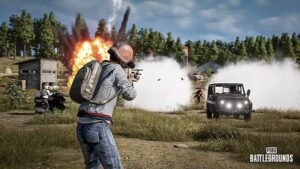
PUBG Map Mastery Guide: Best Landing, Rotation, Looting and Combat Strategies
PUBG is a battle royale game where every decision can change the outcome of a match. From choosing the perfect landing location to deciding when to rotate into the final circle, players constantly have to balance risk and reward. While accurate shooting is important, map knowledge is one of the most valuable skills a PUBG player can develop. Knowing where to land, where to find useful loot, which routes are dangerous, and where to position yourself can give you a major advantage before a single bullet is fired.
Every match presents a different challenge. The aircraft route changes, opponents select different landing spots, the safe zone appears in unpredictable locations, and the final circle may force players into unfamiliar terrain. This unpredictability is one of the reasons PUBG remains engaging. A player cannot simply memorize one strategy and use it every time. Instead, successful players learn how to adapt their strategy according to the map, zone, equipment, teammates, and opponents.
This PUBG map mastery guide explains how to approach different stages of a match. It covers landing decisions, efficient looting, map awareness, rotations, vehicle usage, positioning, combat preparation, squad movement, late-game strategy, and common mistakes. Whether you are learning PUBG for the first time or trying to improve your consistency, these techniques can help you make smarter decisions throughout every match.
Why Map Knowledge Matters in PUBG
Map knowledge gives players information before an engagement begins. When you understand the terrain around you, you can predict possible enemy routes, identify useful defensive positions, and select safer rotation paths.
For example, an open field may provide a short route but very little protection. A longer route through compounds and natural cover may take more time but reduce the risk of being eliminated. Similarly, a hill can provide excellent visibility but may also expose your position to players on surrounding terrain.
Good map knowledge is therefore not just memorizing locations. It means understanding how different areas influence combat and movement.
| Map Knowledge Skill | Benefit | Example |
|---|---|---|
| Landing knowledge | Better early-game preparation | Choosing suitable loot areas |
| Terrain awareness | Improved positioning | Using hills and rocks as cover |
| Rotation knowledge | Safer movement | Avoiding exposed routes |
| Compound knowledge | Better defensive play | Choosing buildings with multiple exits |
| Vehicle knowledge | Faster rotations | Finding transportation when needed |
| Zone awareness | Better late-game positioning | Moving before the zone closes |
Understanding the Aircraft Route
The aircraft route is the first major piece of information available during a match. Before jumping, look at the direction of the aircraft and consider where opponents are likely to land.
Many players immediately jump toward popular locations. This creates intense early-game combat. Other players may prefer to travel farther from the aircraft route to find quieter areas.
There is no universally perfect landing strategy. The correct decision depends on your objective.
Choosing an Aggressive Landing
If you want to improve your combat skills, landing in a popular area can provide immediate opportunities to practice. You will need to find a weapon quickly and react to opponents who may enter the same building.
Aggressive landing is especially useful for players who want to become comfortable with close-range battles. However, it also creates a higher chance of early elimination.
Choosing a Safe Landing
If your priority is reaching the later stages of the match, select a less crowded location. This gives you time to gather equipment, organize your inventory, and study the first zone.
Safe landing does not guarantee survival. Always listen for footsteps and watch for players who may have landed nearby.
How to Choose the Best Landing Location
A good landing location should provide enough loot, reasonable access to transportation, and multiple options for the next rotation. Do not judge a location only by the amount of loot it contains.
Consider what happens after you finish looting. If the area is isolated and the next zone appears far away, you may have difficulty rotating. A location with slightly less loot but better road access and surrounding cover may be more valuable.
| Landing Type | Loot Potential | Enemy Risk | Best For |
|---|---|---|---|
| Major City | High | High | Aggressive players |
| Medium Compound | Moderate | Moderate | Balanced gameplay |
| Small Compound | Moderate | Low to moderate | Beginners |
| Remote Area | Variable | Usually lower | Survival-focused players |
| Edge Location | Variable | Lower initially | Careful rotations |
Mastering the Early Game
The early game begins immediately after landing. Your first goal should not necessarily be getting kills. Your priority should be establishing a basic loadout and understanding your surroundings.
Find a weapon quickly, collect ammunition, and equip basic armor. If enemies are nearby, do not continue searching for upgrades while unprotected. A simple weapon can be enough to survive the first engagement.
Early Game Priorities
- Find a usable weapon.
- Collect compatible ammunition.
- Find armor and a helmet.
- Collect basic healing supplies.
- Listen for nearby enemies.
- Check the first safe zone.
- Plan your next movement.
Once you have the essentials, avoid unnecessary looting. Your objective should shift from collecting everything to preparing for movement.
Efficient Looting Techniques
Efficient looting can save valuable time. Experienced players usually enter a building, collect important items, and leave instead of searching every corner for a perfect loadout.
Organize your priorities according to your preferred weapons. If you find a reliable primary weapon, collect enough ammunition before looking for attachments.
Do not carry excessive amounts of items you rarely use. Inventory management becomes particularly important during long matches.
What Should You Loot First?
Weapons, ammunition, armor, healing supplies, and backpack capacity should generally receive priority. After securing those essentials, look for scopes, grips, magazines, and other attachments that improve your loadout.
Keep some inventory space available for future upgrades. A full backpack can force you to discard useful items when you find better equipment.
Understanding Map Terrain
Terrain can completely change how a fight develops. Hills, valleys, forests, rocks, buildings, bridges, roads, and open fields each create different tactical situations.
High ground can provide visibility, but low ground can sometimes provide concealment. Forested areas can make enemies difficult to see, while open fields may allow long-range weapons to dominate.
Before moving into an unfamiliar area, think about what type of combat is likely to happen there. If the terrain is open, prioritize cover. If you are entering a dense compound, prepare for close-range encounters.
Using Buildings as Defensive Positions
Buildings provide protection from long-range fire and can become powerful defensive positions. However, not every building is equally useful.
A building with multiple entrances and windows may provide more opportunities for observation and escape. A building with only one exit can become dangerous if enemies surround it.
Building Positioning Tips
- Know all entrances and exits.
- Listen for footsteps before moving between rooms.
- Avoid standing directly beside windows for long periods.
- Use stairs carefully.
- Keep an escape route available.
- Do not assume an empty building is completely safe.
Understanding Open Terrain
Open terrain is one of the most dangerous environments in PUBG because players have fewer opportunities to hide. Before crossing an open field, identify where the next available cover is located.
If you have access to smoke, it can help block enemy visibility during dangerous crossings. Vehicles can also provide transportation, although they may attract attention.
Never run across open ground without first considering where enemies could be positioned.
Rotation: The Key to Surviving the Mid Game
Rotation means moving from your current location toward a new position, usually because the safe zone has changed. Good rotation can help you reach a strong position before other players.
Bad rotation can place you directly in front of enemies or force you to cross exposed terrain while the zone is closing.
When Should You Rotate?
You should generally begin planning your rotation as soon as the next zone becomes visible. The exact timing depends on your current location, available transportation, enemy activity, and terrain.
Do not wait until the last possible moment if you are far from the safe zone. Early movement gives you more route choices.
Choosing a Rotation Route
The shortest route is not always the safest route. A slightly longer route with buildings, trees, rocks, or hills may provide much better protection.
When planning a rotation, consider three factors: distance, cover, and enemy activity. If a route passes through a popular area, expect opponents. If a route crosses open terrain, prepare tactical equipment or look for alternative cover.
| Route Type | Speed | Safety | Recommended Use |
|---|---|---|---|
| Direct Open Route | Fast | Low | Emergency movement |
| Compound Route | Moderate | Higher | Controlled rotation |
| Hill Route | Moderate | Variable | Players seeking elevation |
| Forest Route | Moderate | Moderate | Concealed movement |
| Vehicle Route | Fast | Variable | Long-distance rotations |
Using Vehicles for Strategic Rotations
Vehicles are valuable because they allow players to travel quickly. They are especially useful when the safe zone is far away or when a squad needs to cross a large map.
However, vehicles are noisy. Enemies may hear your approach and prepare an ambush. When entering an area controlled by opponents, consider stopping at a safe distance rather than driving directly into the compound.
Vehicle Safety Tips
- Check fuel before beginning a long rotation.
- Avoid driving directly toward unknown compounds.
- Park behind cover when possible.
- Do not rely on a damaged vehicle.
- Use vehicles when speed is more important than stealth.
- Keep alternative movement options available.
Reading the Safe Zone
The safe zone determines how players move around the map. Understanding the zone allows you to make decisions before you are forced into dangerous situations.
When the next zone appears, examine your current location. If you are already inside a strong position, you may not need to move immediately. If you are far outside the zone, begin planning your route.
Players near the center often have more rotation options, while players on the edge may need to travel farther when the zone shifts.
Center Position Versus Edge Position
There are advantages and disadvantages to both strategies.
A central position can reduce the distance required for future rotations, but it may attract players from multiple directions. An edge position may reduce the number of directions from which enemies can approach, but it can create difficult rotations when the zone moves away.
| Position | Advantages | Disadvantages |
|---|---|---|
| Center | More rotation options | Potentially more enemy approaches |
| Edge | Fewer directions to monitor | Long rotations may be required |
| High Ground | Excellent visibility | Can expose your location |
| Compound | Strong physical cover | Can be surrounded |
| Open Area | Flexible movement | Very limited protection |
Using Sound to Read the Map
Sound is an invisible map. You can often determine where opponents are located without seeing them.
Footsteps can indicate nearby enemies. Gunshots can reveal active battles. Vehicle sounds can reveal rotations. Doors and movement inside buildings can indicate that an area is occupied.
When you hear a sound, do not immediately rush toward it. First determine whether the information benefits your current position.
Developing Better Sound Awareness
Play with a comfortable audio setup and pay attention to direction. Over time, you can learn to estimate whether an enemy is above, below, inside, outside, or approaching from a particular direction.
Sound awareness becomes particularly valuable in the final stages when visual information is limited by terrain and buildings.
Map-Based Combat Strategy
Your combat strategy should change depending on the environment. Fighting inside a small building is completely different from fighting across a large open field.
In buildings, close-range weapons and fast reactions can be important. In open areas, cover and long-range accuracy become more valuable.
Urban Combat
Urban environments contain many buildings, walls, windows, and corners. Move carefully and assume that opponents may be hiding inside structures.
Forest Combat
Forested areas provide concealment but can make enemy detection difficult. Listen for movement and use trees as temporary cover.
Mountain Combat
Mountainous areas create strong elevation advantages. Watch for enemies above and below you, and avoid exposing yourself on obvious ridgelines.
Open-Field Combat
Open fields require careful movement because there may be very little cover. Use terrain depressions, rocks, vehicles, and smoke whenever available.
How to Improve Your Position Before a Fight
Before engaging an opponent, ask yourself whether your current position is better than theirs. If not, consider moving before firing.
Try to fight from cover and avoid exposing your entire body. Peek from behind objects and use terrain to reduce the angles from which enemies can attack you.
If your squad has multiple players, consider creating crossfire positions. Two players attacking from different angles can force an opponent to divide their attention.
Knowing When Not to Fight
One of the most valuable lessons in PUBG is that every enemy does not need to be eliminated. A distant opponent who has not noticed you may not be worth engaging.
Firing can reveal your location to other teams. If your position is already strong and the enemy must eventually move, patience may be the better strategy.
Questions to Ask Before Shooting
- Do I have a clear advantage?
- Do I have enough ammunition?
- Is there enough cover?
- Can the enemy escape easily?
- Will another squad hear the fight?
- Will this fight affect my rotation?
Squad Map Strategy
Squad gameplay becomes much easier when everyone understands the team’s movement plan. A squad should avoid spreading so far apart that players cannot support each other.
At the same time, standing directly next to every teammate can make the entire squad vulnerable to one grenade or concentrated attack.
A good formation keeps players close enough to help while maintaining different angles.
Basic Squad Roles
| Role | Main Responsibility |
|---|---|
| Scout | Collect information about enemy positions |
| Entry Player | Initiate close-range engagements |
| Support Player | Provide cover and utility |
| Long-Range Player | Monitor distant areas |
These roles do not have to remain fixed throughout the entire match. Players can adapt according to equipment and situation.
Late-Game Map Awareness
As the number of surviving players decreases, map awareness becomes even more important. The playable area becomes smaller, meaning players have fewer places to hide and more opportunities to encounter one another.
At this stage, avoid unnecessary movement. Every step can reveal your location through sound or visibility.
Identify the strongest available cover and think about how you will move when the next zone appears.
Final Circle Positioning
The final circle rewards players who remain calm. Instead of immediately attacking everyone, first identify where the remaining opponents are located.
Use sound, gunfire, visual movement, and zone information to build a mental picture of the battlefield.
Final Circle Priorities
- Stay within or near strong cover.
- Monitor the next zone.
- Listen for enemy movement.
- Avoid unnecessary firing.
- Keep healing supplies ready.
- Use smoke strategically.
- Maintain an escape route.
- Attack when you have a clear opportunity.
Common Map Mistakes in PUBG
Many players lose matches because they misunderstand the environment rather than because they lose a direct gunfight.
| Mistake | Why It Causes Problems | Better Strategy |
|---|---|---|
| Ignoring the zone | Creates rushed rotations | Plan movement early |
| Crossing open fields | Provides little protection | Find cover or use smoke |
| Stopping in obvious locations | Enemies can predict your position | Choose less predictable cover |
| Driving directly into compounds | Can trigger an ambush | Stop at a safer distance |
| Ignoring high ground | Misses valuable visibility | Evaluate elevation before rotating |
| Over-looting | Delays movement | Collect essentials quickly |
How to Practice Map Knowledge
Improving map knowledge requires active observation. Do not simply play matches without paying attention to your surroundings.
During each match, notice how players rotate, which areas are frequently occupied, where vehicles are available, and which terrain features provide reliable cover.
After being eliminated, think about the position that defeated you. Could you have used different cover? Could you have rotated earlier? Could you have avoided the area completely?
Simple Map Practice Method
- Choose one map and play it repeatedly.
- Learn several landing areas.
- Observe surrounding roads and terrain.
- Identify useful compounds.
- Practice different rotation routes.
- Study common high-ground positions.
- Review mistakes after every match.
How to Become More Consistent in PUBG
Consistency comes from making fewer unnecessary mistakes. You do not need to win every gunfight. Instead, focus on making good decisions repeatedly.
Develop a routine for every match. Land, secure basic equipment, check the zone, improve your loadout, and prepare your next movement. This simple structure prevents panic and helps you remain focused.
When you become comfortable with the basic routine, begin adding advanced strategies such as predicting enemy rotations, creating crossfire positions, and using terrain to control engagements.
PUBG Strategy for Beginners
New players should focus on learning rather than immediately chasing high kill counts. Learn how the map works, practice a few weapons, understand the safe zone, and develop basic movement skills.
Choose landing locations where you can survive long enough to practice. After gaining confidence, gradually increase the amount of aggressive combat.
Do not become discouraged by early eliminations. Every defeat can reveal a specific skill that needs improvement.
PUBG Strategy for Experienced Players
Experienced players should focus on decision quality. At higher skill levels, many opponents can aim accurately, so positioning and timing become increasingly important.
Think about what information your actions reveal. Shooting from the same position repeatedly tells enemies where you are. Driving directly into a compound tells enemies your route. Moving through an obvious chokepoint can make you predictable.
Advanced PUBG gameplay involves controlling information as much as controlling weapons.
The Importance of Patience
Patience is a major advantage in PUBG. A player who waits for the right moment can often defeat an opponent who acts too quickly.
When two enemy squads are fighting, you may have an opportunity to observe instead of immediately joining the battle. Once the fight ends, the surviving players may be weakened, allowing you to take advantage of the situation.
However, patience should not become inactivity. You still need to rotate when required and react to changing zones.
Building a Winning Mindset
PUBG can become frustrating when several matches end badly. Instead of focusing only on the result, evaluate your decisions.
If you died while rotating, study the route. If you lost a close-range fight, review your positioning and aim. If your squad was eliminated separately, improve communication and movement discipline.
A growth mindset turns each match into practice. Over time, small improvements in decision-making can create much better results.
Conclusion
Mastering PUBG maps is about much more than memorizing location names. True map mastery means understanding terrain, cover, buildings, rotation routes, safe zones, vehicle options, and enemy behavior. Once you understand how these elements interact, you can make better decisions before combat even begins.
Start by improving your landing strategy. Choose locations that match your skill level and objective. Loot efficiently instead of spending the entire early game searching for perfect equipment. Learn the terrain around your favorite areas and understand how to rotate safely when the zone moves.
During combat, always think about positioning. Use cover, listen for enemies, and avoid unnecessary engagements. In squad matches, communicate clearly and maintain useful spacing. During the final circle, remain patient and make every movement count.
There is no single strategy that guarantees a PUBG victory because every match is unpredictable. The strongest players are those who can adapt. They recognize when to attack, when to retreat, when to rotate, and when to wait.
With regular practice and better map awareness, PUBG becomes less about reacting to surprises and more about anticipating what could happen next. Learn your surroundings, control your movement, make smarter rotations, and use every match as an opportunity to improve. These habits can help you survive longer, win more important fights, and reach the final circle with greater confidence.
Frequently Asked Questions About PUBG Map Strategy
What is the most important part of PUBG map knowledge?
Understanding terrain, cover, landing locations, rotation routes, and safe-zone behavior is extremely important. These skills help you make better decisions throughout the match.
Is it better to land in a crowded area?
Crowded areas can provide excellent combat practice and strong loot, but they also create a high risk of early elimination. Beginners may prefer moderately populated locations while learning.
Should I always rotate toward the center of the zone?
Not necessarily. The center can provide several rotation options, but it may also attract players from many directions. The best position depends on cover, terrain, enemy activity, and future zone movement.
How can I rotate safely?
Plan your route early, identify cover, monitor enemy activity, and avoid crossing open areas without a reason. Use vehicles when speed is necessary and consider stopping before entering dangerous compounds.
Why should I learn terrain instead of only locations?
Terrain determines visibility, cover, movement speed, and combat range. Knowing how the terrain works allows you to adapt even when the zone appears in an unfamiliar area.
How can I improve my final-circle performance?
Stay calm, conserve useful resources, use cover, listen carefully, monitor the zone, and avoid unnecessary fights. Positioning and timing become especially important as the playable area gets smaller.