
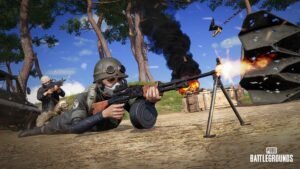
PUBG Survival Guide: 25 Smart Strategies to Survive Longer and Reach the Final Circle
PUBG is a battle royale game where survival, strategy, positioning, and combat skills all work together. While getting eliminations is exciting, surviving until the later stages of a match requires much more than simply having good aim. Players need to make smart decisions from the moment they leave the aircraft until the final circle. Choosing a suitable landing location, collecting the right equipment, monitoring the safe zone, listening for enemy movement, using cover, and understanding when to fight can make a major difference.
Many players lose matches because they make unnecessary decisions early in the game. They may land in an overcrowded location without a plan, spend too much time searching for equipment, chase enemies across the map, ignore the approaching zone, or expose themselves in open terrain. These mistakes can be avoided by developing a consistent survival strategy.
This PUBG survival guide explains 25 practical strategies that can help players survive longer and improve their overall match performance. The guide covers early-game preparation, loot management, weapons, movement, positioning, zone rotations, vehicles, sound awareness, combat decisions, late-game survival, and final-circle strategy. Whether you play solo, duo, or squad matches, these principles can help you become a more disciplined PUBG player.
1. Choose Your Landing Location Carefully
Your landing location is the first major decision of every PUBG match. A highly popular location can provide plenty of loot, but it may also attract many players and create immediate combat. A quieter location may offer fewer enemies and more time to prepare.
Choose a landing location based on your objective. If you want combat practice, a busy area can provide valuable experience. If your priority is survival, consider a location with reasonable loot and fewer expected opponents.
| Landing Strategy | Risk Level | Best For |
|---|---|---|
| Hot Drop | Very High | Players who want immediate combat. |
| Popular Area | High | Players looking for loot and moderate action. |
| Medium Compound | Medium | Balanced gameplay. |
| Remote Location | Low | Players prioritizing survival. |
| Map Edge | Low to Medium | Players comfortable with longer rotations. |
Watch the Aircraft Path
The aircraft path can help you estimate where players are likely to land. Locations that are easy to reach may receive more competition. However, do not assume that every nearby location will be crowded. Player behavior changes from match to match.
2. Find a Weapon Immediately
After landing, your first priority should be finding a usable weapon. Do not spend too much time collecting cosmetic or secondary items while you are defenseless.
Even a basic weapon can give you a chance to survive an unexpected encounter. Once you have a weapon and ammunition, you can continue searching for better equipment.
3. Prioritize Essential Loot
Efficient looting is an important survival skill. You do not need the perfect loadout during the first few minutes. Focus on essential equipment first.
| Priority | Item | Purpose |
|---|---|---|
| 1 | Weapon | Immediate protection. |
| 2 | Ammunition | Supports combat. |
| 3 | Armor | Improves survivability. |
| 4 | Helmet | Provides head protection. |
| 5 | Healing Items | Allows recovery after damage. |
| 6 | Secondary Weapon | Provides another combat option. |
| 7 | Attachments | Improve weapon performance. |
| 8 | Throwables | Provide tactical opportunities. |
4. Do Not Over-Loot
One of the most common PUBG mistakes is spending too much time searching for better equipment. Once you have a functional loadout, continuing to loot every building can expose you to enemies and delay your rotation.
Ask yourself whether the item you are searching for will genuinely improve your chances of survival. If the answer is no, move toward your next objective.
5. Build a Balanced Weapon Loadout
A balanced weapon combination gives you options at different distances. You should ideally have a primary weapon that handles common engagements and a secondary weapon that covers a different range or situation.
| Combination | Strength | Recommended Style |
|---|---|---|
| Assault Rifle + Sniper | Medium and long range. | Balanced players. |
| Assault Rifle + DMR | Flexible ranged combat. | Precision-focused players. |
| Assault Rifle + SMG | Close and medium range. | Aggressive players. |
| Assault Rifle + Shotgun | Strong close combat. | Compound fighters. |
6. Learn Your Favorite Weapons
Instead of constantly changing weapons, become highly comfortable with a small selection. Learn their recoil, reload timing, effective range, and movement characteristics.
Familiarity allows you to react faster during stressful situations. You should know how your weapon behaves without needing to think about every shot.
Practice Recoil Control
Spend time practicing recoil control. Start with controlled bursts and gradually practice sustained firing. Focus on keeping the crosshair on the target rather than simply firing as quickly as possible.
7. Always Use Cover
Cover is one of the most important survival tools in PUBG. Buildings, rocks, trees, walls, terrain, and other objects can protect you from enemy fire.
Before moving, identify your next piece of cover. Avoid running across large open areas without knowing where you will stop if an enemy starts shooting.
8. Avoid Standing Still in Open Areas
Standing still in open terrain makes you an easy target. Even if you do not see an opponent, someone may be watching you from a distant hill or building.
When you must cross an exposed area, plan the route carefully and use terrain features whenever possible. Avoid predictable movement patterns.
9. Use Sound as Information
Sound awareness can give you valuable information about nearby players. Footsteps, gunfire, vehicles, doors, and movement sounds can help you understand what is happening around you.
When you hear footsteps, stop unnecessary actions and prepare for a potential encounter. Try to determine the direction and approximate distance before deciding what to do.
Listen Before Entering Buildings
Never assume that a building is empty. Listen for footsteps and other movement before entering. This small habit can prevent many unexpected close-range encounters.
10. Do Not Fight Every Enemy
Seeing an enemy does not mean you have to shoot them. Every engagement carries risk, especially in solo gameplay.
Before attacking, consider your health, ammunition, cover, position, enemy position, and zone location. If the fight offers little benefit and creates significant risk, moving away can be the better decision.
| Situation | Suggested Decision |
|---|---|
| Enemy is exposed | Consider taking the shot. |
| Enemy has strong cover | Look for another angle. |
| You have low health | Heal before fighting. |
| You are outside the zone | Prioritize rotation. |
| You lack ammunition | Avoid unnecessary engagements. |
| You have strong cover | Prepare for a controlled engagement. |
11. Understand Third-Party Attacks
When two players or teams fight, their gunfire can attract another enemy. This is known as a third-party situation and can quickly turn a favorable fight into a dangerous one.
After eliminating an opponent, do not immediately rush toward their loot. Reload, heal, listen, and check the surrounding area first.
12. Monitor the Safe Zone
The safe zone should influence your movement throughout the match. Ignoring the zone can force you into dangerous late rotations.
Check the map regularly and consider how long it will take to reach safety. If you are already in a strong position inside the zone, you may have more time to observe your surroundings before moving.
13. Plan Rotations Early
Good rotations are about more than reaching the center of the zone. You should consider terrain, enemy movement, available cover, buildings, roads, and future positioning.
Early rotation can help you secure strong positions before other players arrive. Late rotation can allow you to observe enemy movement, but waiting too long can create unnecessary danger.
Choose Covered Routes
When possible, select routes that provide protection. A slightly longer route with buildings, hills, trees, or other cover may be safer than a direct route across an open field.
14. Use Vehicles Strategically
Vehicles are useful for long rotations, especially when the safe zone is far away. They can help you reach safety quickly and transport you across large areas.
However, vehicles create noise and can reveal your location. Use them when their benefits outweigh the risks.
Park Near Cover
When reaching your destination, avoid leaving your vehicle in an unnecessarily exposed location. Park where it can provide or remain near useful cover when possible.
15. Control High Ground
High ground can provide excellent visibility over surrounding terrain. It can help you observe enemies and identify movement routes.
However, high ground is not automatically safe. If the location has no cover, enemies may easily spot you. Always combine elevation with protection.
16. Understand Compound Positioning
Compounds can provide strong defensive positions, but they can also become traps if multiple enemies surround them.
When holding a compound, watch multiple approaches and avoid repeatedly exposing yourself from the same window or angle.
Do Not Assume a Compound Is Safe
Always check for enemy activity before settling inside a building. Listen carefully and observe the surrounding terrain.
17. Manage Your Backpack
Your inventory should contain items that support your strategy. Carrying excessive ammunition or duplicate attachments can reduce the space available for healing items and tactical equipment.
| Inventory Category | Priority | Tip |
|---|---|---|
| Ammunition | Very High | Carry enough for expected fights. |
| Healing | Very High | Maintain a reliable recovery supply. |
| Boost Items | High | Useful for extended matches. |
| Throwables | High | Keep space for tactical options. |
| Extra Attachments | Medium | Drop unnecessary duplicates. |
18. Heal Before Important Fights
Entering a fight with low health puts you at an immediate disadvantage. Whenever you have safe cover, restore your health before taking another major engagement.
Do not heal in an exposed location simply because you are impatient. Find protection first whenever possible.
19. Use Throwables Intelligently
Throwables can create opportunities that weapons alone cannot provide. They can help pressure enemies behind cover, block vision, or give you time to reposition.
Use Smoke for Movement
Smoke can provide temporary visual concealment when crossing exposed areas or changing positions. Use it with a clear purpose rather than throwing it randomly.
Use Explosives for Pressure
Explosive throwables can force opponents out of defensive positions or punish enemies who remain in predictable locations.
20. Keep Your Crosshair Ready
Crosshair placement can reduce reaction time. Keep your crosshair around the height where an enemy is likely to appear rather than pointing toward the ground while moving.
This becomes especially important when entering buildings, moving around corners, or approaching compounds.
21. Know When to Retreat
Retreating is not a sign of weakness. A smart retreat can save your match and give you another opportunity to fight later.
If you have poor positioning, low health, limited ammunition, or an enemy has a significant advantage, reposition instead of continuing an unfavorable engagement.
22. Avoid Predictable Movement
Predictable movement makes it easier for enemies to track you. Avoid repeatedly peeking from the same location or running directly in one direction when an opponent is watching.
Use cover, change angles, and vary your movement when appropriate. Your objective is not to move randomly but to make your position harder to predict.
23. Change Your Strategy During the Match
A good PUBG player adapts. The strategy that works during the opening minutes may not be appropriate during the final circles.
| Match Stage | Main Objective |
|---|---|
| Early Game | Survive the landing and collect essential equipment. |
| Early Mid Game | Improve the loadout and prepare for rotation. |
| Mid Game | Secure a strong position and manage resources. |
| Late Game | Use information and avoid unnecessary exposure. |
| Final Circle | Control cover, movement, and enemy information. |
24. Master the Final Circle
The final circle is where patience and positioning become extremely important. There are fewer players, less available space, and fewer opportunities to recover from mistakes.
Do not rush simply because only a few players remain. Listen carefully, identify enemy positions, and use available cover.
Do Not Always Chase the Exact Center
The exact center of the circle is not always the best location. A position slightly away from the center may provide better cover, visibility, or movement options.
25. Learn From Every Match
One of the most effective ways to improve is to analyze your own mistakes. After being eliminated, think about what happened immediately before the fight.
Did you rotate too late? Did you cross an open field? Did you take a fight without enough health? Did you reveal your position unnecessarily? Did you ignore audio information?
Identifying one mistake and actively correcting it in future matches can gradually improve your overall performance.
Solo PUBG Survival Strategy
Solo gameplay requires strong independent decision-making. You cannot rely on teammates to provide information or rescue you after a mistake.
Focus on sound awareness, cover, careful rotations, and selective engagements. Avoid taking fights simply because you have no teammates to communicate with. Every engagement should have a clear reason.
Duo and Squad Survival Strategy
In duo and squad matches, communication becomes extremely important. Share enemy locations, movement information, zone changes, and tactical decisions with your teammates.
Stay close enough to support one another but avoid standing so close that a single attack can damage multiple players at once.
Do Not Split Too Far From Your Team
One of the most common squad mistakes is excessive separation. A teammate who is too far away may not be able to provide support during a fight.
How to Stay Calm Under Pressure
PUBG can become stressful during the final stages of a match. Players may hear gunfire from several directions and make rushed decisions.
Try to slow down mentally. Check your health, ammunition, equipment, position, and zone before making a major move. Calm decision-making can be more valuable than aggressive reactions.
Common PUBG Survival Mistakes
| Mistake | Result | Better Habit |
|---|---|---|
| Landing without a plan | Early elimination. | Choose a location based on your objective. |
| Over-looting | Wasted time and exposure. | Collect essential equipment and move. |
| Fighting everyone | Unnecessary risk. | Select favorable engagements. |
| Ignoring the zone | Dangerous rotations. | Monitor the map regularly. |
| Running in open terrain | Easy target. | Use cover and terrain. |
| Ignoring sound | Missed enemy information. | Listen carefully. |
| Looting after a fight immediately | Third-party elimination. | Check the area first. |
| Panicking in the final circle | Rushed decisions. | Stay patient and use information. |
How to Build a Better PUBG Routine
Improvement becomes easier when practice is structured. Before serious matches, spend a short amount of time practicing aim, recoil control, movement, and weapon switching.
During matches, choose one skill to focus on. For example, you might concentrate on better positioning in one session and sound awareness in another. After each match, review your biggest mistake.
Warm Up Before Ranked Gameplay
A short warm-up can help you become comfortable with your controls and aiming before entering important matches. Focus on movement, recoil, target tracking, and weapon switching.
Advanced PUBG Survival Mindset
Experienced players understand that information is a resource. Knowing where enemies are, where they are likely to move, and which areas are dangerous can be more valuable than simply having powerful equipment.
Use the safe zone, gunfire, footsteps, vehicles, terrain, and visual clues to build a mental picture of the match. The more information you collect, the more confidently you can make decisions.
Balance Aggression and Survival
Survival does not mean avoiding every fight, and aggressive gameplay does not mean attacking every player. The strongest approach is to balance aggression with risk management.
Take fights when you have an advantage. Avoid fights when the potential reward is small compared with the risk. This mindset can help you maintain consistency across many matches.
Final PUBG Survival Checklist
| Checklist Item | What to Do |
|---|---|
| Landing | Choose a location according to your strategy. |
| Weapons | Build a loadout that covers useful combat ranges. |
| Loot | Prioritize essential equipment. |
| Health | Heal before major fights when possible. |
| Cover | Move between protected positions. |
| Sound | Listen for footsteps, gunfire, and vehicles. |
| Zone | Monitor the safe area and plan rotations. |
| Combat | Fight when the situation is favorable. |
| Inventory | Balance ammunition, healing, and utility. |
| Late Game | Prioritize information, cover, and patience. |
Conclusion
Surviving longer in PUBG requires a combination of mechanical skill, map awareness, positioning, patience, and decision-making. While eliminations are an important part of the game, constantly searching for fights is not always the best strategy. A player who understands when to engage, when to reposition, and when to avoid combat can often achieve more consistent results.
Start by improving the fundamentals. Choose your landing location carefully, find a weapon quickly, collect essential equipment, and avoid spending too much time searching for perfect loot. Build a balanced loadout and learn the weapons you use regularly. Practice recoil control, tracking, movement, and crosshair placement so that you are prepared when an engagement begins.
During the middle of the match, focus on the safe zone and your positioning. Use cover, avoid unnecessary exposure, and plan rotations before you are forced to move. Listen carefully for footsteps, gunfire, and vehicles because audio can provide valuable information about nearby opponents.
As the match reaches the final circles, patience becomes even more important. Avoid unnecessary shots, protect your position, manage your resources, and use the terrain intelligently. Do not panic when only a few players remain. Gather information and make each move with a clear purpose.
Most importantly, learn from every match. Your mistakes can become valuable lessons if you identify what caused them and actively work on improving. With consistent practice and a disciplined approach, you can become a stronger PUBG player, survive longer, reach the final circle more frequently, and increase your chances of achieving the ultimate Chicken Dinner.