
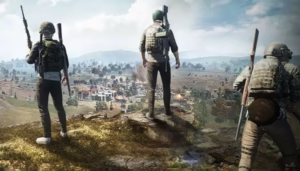
PUBG Survival Tactics: Smart Strategies to Reach the Final Circle and Win More Matches
PUBG is one of the most competitive battle royale games, combining shooting mechanics, survival strategy, movement, teamwork, map awareness, and fast decision-making. Every match begins with a large number of players entering a battlefield where resources are limited and the playable area gradually becomes smaller. The ultimate objective is simple: survive until the end and become the last player or team standing. However, achieving that goal consistently requires much more than simply finding a powerful weapon and eliminating opponents.
Players who want to improve their PUBG performance need to understand how different stages of a match work. The early game is mainly about landing safely, collecting useful equipment, and establishing a strong starting position. The mid-game requires intelligent rotations, awareness of enemy movements, and careful decisions about when to fight. The late game is often dominated by positioning, patience, information, and precise execution.
This guide focuses on practical PUBG survival tactics that can help both new and experienced players. Instead of encouraging players to chase every enemy, the guide explains how to think strategically, manage resources, select weapons, use terrain, communicate with teammates, and prepare for the final circle.
Understanding the Core Objective of PUBG
PUBG is fundamentally a survival game. Eliminations are useful, but they are not the only measurement of success. A player can achieve many eliminations and still lose because of poor positioning, while another player may achieve fewer eliminations and win by making smarter decisions throughout the match.
The shrinking play zone forces players toward each other as the match progresses. This creates increasingly intense battles and reduces the amount of safe terrain available. Because of this design, players must constantly balance three things: survival, positioning, and combat.
A good PUBG player understands that every action has a potential reward and risk. Moving toward a supply area may provide better equipment, but it can also expose the player to enemies. Taking a long-range shot may eliminate an opponent, but firing can reveal your location. Driving quickly to the next zone can save time, but vehicle noise may attract attention.
Survival Should Be Your First Priority
During the early stages of a match, survival is often more valuable than unnecessary eliminations. If you have limited equipment and poor positioning, fighting an experienced opponent may not be worth the risk. Instead, collect essential supplies and improve your position before looking for combat.
As the match progresses, survival becomes even more important. When only a small number of players remain, one poor decision can end an otherwise successful match. The ability to remain calm and make logical choices is one of the most valuable skills in PUBG.
Choosing the Right Landing Location
Your first major decision happens before you touch the ground. Choosing where to land can have a major impact on the rest of your match. Some areas provide excellent loot but attract many players, while quieter areas may offer safer preparation but fewer opportunities for early eliminations.
There is no universally perfect landing location. Your decision should depend on your skill level, preferred play style, flight path, and desired level of early combat.
| Landing Type | Loot Potential | Enemy Activity | Best Approach |
|---|---|---|---|
| Hot Drop | High | Very High | Prepare for immediate combat |
| Popular Compound | High | High | Loot quickly and secure the area |
| Medium Activity Area | Moderate to High | Moderate | Balance looting and combat |
| Remote Area | Moderate | Low | Focus on preparation and rotation |
| Map Edge | Variable | Low to Moderate | Plan movement toward the zone early |
How Beginners Should Choose a Landing Area
New players should generally avoid extremely crowded areas until they become comfortable with movement, looting, and combat. Landing near a smaller group of buildings can give beginners enough time to find weapons, armor, ammunition, and healing items.
Once you become more confident, you can gradually experiment with busier areas. Hot drops can be excellent for improving combat skills because they force you to make quick decisions. However, they should be treated as training opportunities rather than the only strategy for winning.
Mastering the First Five Minutes
The opening minutes of a PUBG match can determine whether you enter the mid-game prepared or struggling. After landing, your first goal should be to secure a usable weapon. Do not spend too much time searching for perfect equipment while completely defenseless.
After finding a weapon, focus on defensive equipment and ammunition. A helmet and vest can increase your ability to survive incoming attacks, while healing supplies give you the ability to recover after combat.
Listen carefully during the early game. Footsteps, doors, gunshots, and vehicle sounds can indicate that other players are nearby. If you know another player has landed in the same building or compound, avoid making unnecessary noise while searching for them.
Loot Quickly but Carefully
Efficient looting is an important skill. Do not spend several minutes searching every room for minor upgrades. Once you have a practical weapon combination, enough ammunition, basic armor, and healing items, start thinking about your next position.
Inventory management also matters. Carrying excessive ammunition for one weapon may prevent you from carrying enough healing items or tactical equipment. Keep your inventory balanced according to your preferred weapons and the expected combat situation.
Creating a Balanced Weapon Loadout
Weapon selection should match your preferred combat distance. Players who frequently fight inside buildings may prefer weapons designed for close-range encounters, while players who like to control hills and open terrain may benefit from weapons suitable for medium- or long-range engagements.
| Weapon Category | Ideal Range | Main Strength | Potential Weakness |
|---|---|---|---|
| Assault Rifle | Close to Medium | Versatile performance | Recoil management |
| SMG | Close | Fast close-range handling | Reduced effectiveness at distance |
| Shotgun | Very Close | High burst potential | Limited effective range |
| DMR | Medium to Long | Repeated accurate shots | Requires good precision |
| Sniper Rifle | Long | Powerful long-range attacks | Slower follow-up shots |
Use Weapons You Understand
The most popular weapon is not necessarily the best weapon for you. Every player has different recoil control, aiming ability, reaction speed, and preferred engagement distance. Choose weapons that you can consistently control rather than selecting equipment simply because another player recommends it.
Spend time practicing your preferred weapons. Learn their recoil patterns, magazine behavior, reload times, and effective ranges. Familiarity can make a major difference when a fight suddenly begins.
Improving Aim and Recoil Control
Good aim can turn a difficult situation into a winning fight. However, aim is not only about moving your crosshair quickly. It includes crosshair placement, tracking, recoil control, reaction time, and understanding the movement of opponents.
Keep your crosshair around the height where an enemy’s upper body is likely to appear. This reduces the amount of time required to move your aim when an opponent suddenly appears.
Practice Short Bursts
Holding the trigger continuously is not always the best solution, especially at longer distances. Practice controlled bursts and learn how your weapon moves while firing. Recoil becomes easier to manage when you understand how much the weapon moves between shots.
Practice both stationary and moving targets. Real players rarely stand completely still, so your training should include situations where you must track a moving opponent.
Use Cover at Every Opportunity
Cover is one of the most important survival tools in PUBG. Buildings, rocks, trees, walls, ridges, vehicles, and terrain features can protect you from enemy fire. Players who move through open areas without considering cover are much easier to eliminate.
Before moving, identify your next piece of cover. Instead of running randomly across a field, plan a route that takes you from one protected position to another.
Hard Cover and Soft Cover
Hard cover can physically block enemy bullets and is generally more reliable. Buildings, large rocks, and strong structures can provide valuable protection. Trees and certain terrain features can also provide concealment, although they may not offer the same protection from every angle.
Always consider where an enemy might be positioned relative to your cover. A rock can protect you from one direction while leaving you completely exposed from another.
Understanding the Safe Zone
The safe zone is one of the biggest factors controlling the pace of a PUBG match. As the playable area becomes smaller, players are forced into increasingly concentrated areas.
Many beginners make the mistake of waiting until the zone is already closing before deciding where to go. This can force them to cross open terrain or enter areas controlled by other players.
Plan Rotations Early
Check the map regularly and begin thinking about your next destination before you are forced to move. If you have enough time, you can choose a safer route and potentially secure a strong position before other players arrive.
However, moving too early can also create problems. Other players may already be watching common rotation routes. The ideal rotation depends on terrain, zone position, available cover, vehicles, and information about nearby opponents.
Learning to Rotate Safely
Rotation means moving from your current position toward another location, usually because of the safe zone. Good rotations are planned rather than rushed.
Before moving, check your surroundings. Look for buildings, hills, roads, compounds, and other areas where enemies could be waiting. If the route is exposed, consider using a vehicle or finding an alternative path.
Avoid Predictable Movement
If you always take the shortest route between two locations, opponents may be able to predict where you will appear. Sometimes a slightly longer route provides better cover and reduces the number of angles from which you can be attacked.
Good rotation is not necessarily the fastest rotation. It is the rotation that gives you the best combination of safety, timing, and positioning.
Using Vehicles Effectively
Vehicles are valuable tools for crossing large distances, especially when the safe zone is far away. They can also provide temporary protection and allow a squad to rotate together.
However, vehicles create noise and can reveal your approximate location. Driving directly into a crowded area may attract unwanted attention.
Where Should You Stop?
Try to stop near useful cover rather than in the middle of an open road. Before leaving a vehicle, think about where enemies might be watching from. A vehicle placed near a building can also become a clue that players are nearby.
In some situations, vehicles can also be used as emergency cover. However, do not assume that a vehicle will protect you from every direction.
Winning Close-Range Battles
Close-range combat is fast and unforgiving. Players need quick reactions, accurate aim, efficient movement, and awareness of their surroundings.
When approaching a building, do not automatically rush through the nearest entrance. Listen first. If you hear footsteps, determine whether the opponent is above, below, or in an adjacent room.
Clear Buildings Carefully
Use corners and doorways intelligently. Avoid exposing your entire body when checking a room. If you know an enemy is waiting behind a specific angle, think about how you can change the engagement instead of moving directly into their crosshair.
In squad matches, coordinate building pushes. One player can create pressure while another watches a different angle. This can reduce the number of directions from which enemies can attack.
Long-Range Combat Strategy
Long-range fights require patience. Just because you can see an opponent does not mean you should immediately shoot them. Consider whether you have a clear shot, whether you have enough ammunition, and whether firing will reveal your position.
Terrain elevation can provide an advantage because higher ground often gives better visibility. However, elevated positions can also become obvious targets, so avoid assuming that every hill is automatically safe.
Know When to Stop Shooting
If an enemy moves behind strong cover, continuing to fire may only waste ammunition and reveal your position. Sometimes the better decision is to relocate or wait for them to move.
Always remember that PUBG is a battle royale. You do not need to win every individual engagement to win the overall match.
Using Sound to Track Enemies
Sound is a powerful source of information in PUBG. Footsteps can reveal nearby movement, while gunshots can indicate combat in another area. Vehicle sounds can also provide clues about rotations.
Players should learn to distinguish between different audio cues and connect those sounds with the map. If you hear footsteps above you, for example, you can adjust your positioning before the enemy reaches your room.
Headphones Can Improve Awareness
Using headphones can make directional sounds easier to interpret. However, audio equipment is only useful when combined with good awareness. Do not rely entirely on one sound cue. Combine sound with map information, visual information, and knowledge of common player behavior.
Squad Communication Tips
Squad communication can determine whether a team wins or loses. A team with excellent individual players can still fail if everyone moves independently.
Keep communication short and useful. Instead of giving long explanations during combat, communicate the information your teammates need immediately.
| Information | Useful Callout | Benefit |
|---|---|---|
| Enemy Position | Enemy near the blue building | Gives teammates a clear reference |
| Enemy Direction | Two enemies moving from the right | Helps teammates prepare |
| Rotation | Move now before the zone closes | Prevents late movement |
| Healing | I need cover while healing | Encourages teammates to protect you |
| Loot | Extra ammunition inside this room | Improves resource sharing |
Stay Together Without Standing Together
Squad members should remain close enough to support each other but should avoid standing in exactly the same location. If all four players crowd into one small area, a grenade or concentrated attack can affect everyone.
Maintain useful spacing while keeping enough distance to provide covering fire. This makes it harder for opponents to eliminate the entire team at once.
Mid-Game Strategy
The mid-game is where many matches become more tactical. The number of players has decreased, but opponents are often better equipped and more cautious.
Do not assume that an empty area is safe simply because you cannot see anyone. Other players may be inside buildings, behind terrain, or waiting for you to rotate.
Do Not Chase Every Enemy
If an enemy escapes behind cover, do not automatically chase them. Ask whether the chase improves your position. If you already have the high ground and a good zone position, leaving your advantage can be a serious mistake.
Players often lose strong positions because they become focused on securing a single elimination. Keep the larger objective in mind.
Third-Party Opportunities
A third-party engagement happens when one squad attacks another squad while they are already fighting. This can be an effective opportunity because both sides may be distracted or damaged.
However, third-party situations are not automatically safe. After you attack, another nearby team may hear your gunfire and become the new third party.
Evaluate Before Joining a Fight
Before engaging, consider your distance, ammunition, cover, health, zone position, and possible escape route. If the enemy fight is happening far away, rushing toward it may expose you unnecessarily.
Choose engagements where you have a meaningful advantage rather than fighting simply because you hear gunshots.
Preparing for the Final Circle
The final circle changes the way you should play. There is less space, fewer hiding places, and much less room for mistakes.
By the late game, information becomes extremely valuable. Try to determine where remaining enemies are located without exposing yourself. Avoid unnecessary movement and use the terrain carefully.
Position Is More Valuable Than Extra Loot
If you already have enough ammunition and healing supplies, spending additional time searching for better equipment may not be worthwhile. A strong position can be more valuable than another attachment or a small amount of extra ammunition.
Look for locations that provide protection while giving you visibility over likely enemy approaches. Avoid becoming trapped by the zone or surrounded by multiple teams.
How to Handle the Last Few Players
When only a few players remain, patience becomes critical. Shooting immediately can reveal your location to everyone else. Sometimes allowing two opponents to fight each other creates a better opportunity than joining the battle immediately.
Listen carefully, watch the zone, and consider the terrain. If you are forced to move, identify your safest route before leaving cover.
Do Not Panic
Many players make poor decisions when they realize they are close to winning. They rush opponents, move unnecessarily, or fire without thinking.
Stay calm and return to the same principles that helped you reach the final circle: cover, information, positioning, patience, and controlled combat.
Common PUBG Mistakes That Reduce Your Win Rate
Improving your gameplay often starts by removing bad habits. Players sometimes focus too much on advanced techniques while ignoring simple mistakes.
Landing Without a Plan
Jumping into a crowded location without understanding your objective can lead to quick elimination. Know whether you are landing for practice, early combat, or safe preparation.
Looting Too Long
Perfect equipment is not necessary. Once your loadout is functional, start rotating and positioning.
Ignoring the Map
Failing to monitor the zone can force dangerous late rotations.
Standing in Open Areas
Open terrain increases exposure. Always consider nearby cover before stopping.
Taking Unnecessary Fights
Not every enemy needs to be eliminated. Choose battles that provide a reasonable strategic advantage.
Ignoring Teammates
In squad matches, playing alone can make you vulnerable. Stay within supporting distance and communicate important information.
Developing Better PUBG Game Sense
Game sense develops through experience. It includes predicting enemy movement, understanding zone behavior, recognizing dangerous locations, and choosing the right time to fight.
One effective way to improve game sense is to analyze your own deaths. Instead of simply saying that an enemy had better aim, ask what happened before the fight. Did you move through an open area? Did you fail to check your surroundings? Did you rotate too late? Did you push without enough information?
Review Your Decisions
Every elimination can teach you something. If you repeatedly lose close-range battles, work on movement and weapon control. If you die during rotations, improve your zone timing and route selection. If enemies frequently surprise you, focus on audio awareness and map scanning.
Small improvements made consistently can produce significant results over time.
PUBG Tips for Mobile Players
PUBG mobile players have additional considerations because controls are performed through a touchscreen. Sensitivity, button layout, frame rate, and device performance can affect gameplay.
Customize your controls according to your preferred finger placement. Important actions should be easy to reach without interfering with movement or aiming.
Keep Controls Consistent
Changing your layout every few matches can make it harder to build muscle memory. Once you find a comfortable setup, practice with it consistently.
Graphics settings should also be balanced according to your device. A stable experience can be more useful for competitive play than unnecessarily demanding visual settings.
PUBG Tips for PC Players
PC players benefit from keyboard and mouse controls, but consistency remains important. Choose a comfortable mouse sensitivity and avoid changing it constantly.
Practice both large and small mouse movements. Large movements help with turning and tracking, while small movements are important for precise aiming.
Improve Keyboard Efficiency
Learn the locations of important keys for movement, crouching, jumping, healing, reloading, and weapon switching. Efficient controls allow you to react quickly without looking away from the action.
Maintaining the Right Gaming Mindset
PUBG can become frustrating because every match can end unexpectedly. Maintaining a calm mindset helps you make better decisions.
If you lose several matches, avoid immediately changing every setting or strategy. Instead, identify the common reason behind your losses. Improvement is easier when you solve one problem at a time.
Focus on Progress
Winning is important, but improvement should not be measured only by the number of chicken dinners. Better rotations, stronger positioning, improved aim, better communication, and longer survival are all signs of progress.
Practical PUBG Improvement Routine
| Practice Area | Suggested Focus | Expected Improvement |
|---|---|---|
| Aim | Tracking and precision | More accurate shots |
| Recoil | Controlled bursts | Better weapon control |
| Movement | Cover-to-cover movement | Better survivability |
| Map Awareness | Zone and terrain analysis | Smarter rotations |
| Audio | Footsteps and gunshots | Better enemy awareness |
| Communication | Short and clear callouts | Stronger squad coordination |
| Decision-Making | Fight versus avoid | Fewer unnecessary deaths |
Final PUBG Survival Checklist
Before each match, remember the basic principles that can help you survive longer:
- Choose a landing location that matches your skill level.
- Find a reliable weapon as quickly as possible.
- Collect essential armor, ammunition, and healing items.
- Keep your inventory organized.
- Use weapons that you can control comfortably.
- Practice recoil and aiming regularly.
- Keep your crosshair positioned intelligently.
- Use cover whenever possible.
- Monitor the safe zone frequently.
- Plan rotations before the zone forces you to move.
- Use vehicles strategically rather than automatically.
- Listen for footsteps, gunfire, and vehicles.
- Do not chase every enemy.
- Communicate clearly with squad members.
- Maintain good spacing in team fights.
- Prioritize strong positioning during the late game.
- Stay patient during the final circle.
- Analyze your mistakes after each match.
Conclusion
PUBG is much more than a shooting game. It is a combination of strategy, survival, positioning, movement, resource management, communication, and mechanical skill. Players who understand how these elements work together can consistently perform better, even when they do not have perfect aim.
The most important lesson is to think before acting. Before taking a shot, consider your position. Before pushing an enemy, consider their teammates. Before rotating, examine the terrain. Before entering a building, listen for movement. Before taking unnecessary loot, ask whether it is actually useful.
Winning PUBG matches becomes easier when you stop treating every situation as a direct gunfight and start treating the entire map as a strategic battlefield. Your goal is to survive, gather information, maintain strong positioning, and take favorable engagements.
Whether you play solo, duo, or squad matches, consistent improvement comes from practicing the fundamentals and learning from every match. With better awareness, smarter rotations, stronger communication, and controlled combat decisions, you can increase your chances of reaching the final circle and turning more matches into victories.
PUBG rewards patience as much as aggression. The strongest player is not always the one with the highest elimination count. Often, the strongest player is the one who understands when to attack, when to retreat, when to rotate, and when to wait. Master those decisions, and your overall PUBG performance can improve significantly.