
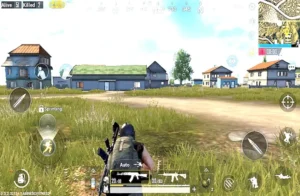
PUBG Tactical Mastery: How to Win More Fights and Survive Until the Final Circle
PUBG is more than a shooting game. It is a battle royale experience where every decision can affect the outcome of a match. From choosing the right landing location to managing weapons, controlling recoil, reading the safe zone, and making smart rotations, players need a combination of mechanical skill and tactical awareness to succeed. A player with excellent aim can still lose a match because of poor positioning, while a player with average aim can reach the final circle by making smarter decisions.
For players who want to improve their PUBG gameplay, understanding the complete flow of a match is extremely important. The early game is about surviving the landing and collecting useful equipment. The mid game focuses on rotations, positioning, information, and carefully selected fights. The late game requires patience, awareness, and precise decision-making because the available space becomes smaller and every movement becomes more dangerous.
This complete PUBG guide focuses on practical strategies that can help beginners and experienced players develop better habits. Instead of concentrating only on eliminations, the guide explains how to approach a match from beginning to end and how to make better decisions under pressure.
Understanding the PUBG Battle Royale Objective
The basic objective of PUBG is simple: survive until you become the last player or team remaining. However, achieving that objective involves many smaller goals. You need to find equipment, maintain your health, manage ammunition, monitor the safe zone, understand enemy locations, and decide which fights are worth taking.
Unlike traditional multiplayer shooters where players may respawn repeatedly, a battle royale match gives every decision more importance. A mistake in the first few minutes can end your game immediately, while a mistake in the final circle can cost you a potential victory.
| Match Stage | Main Focus | Recommended Approach |
|---|---|---|
| Landing | Choose a suitable location | Prioritize survival and immediate equipment |
| Early Game | Loot and prepare | Collect essential supplies quickly |
| Mid Game | Rotate and gather information | Avoid unnecessary fights |
| Late Game | Positioning and survival | Use cover and control movement |
| Final Circle | Eliminate remaining opponents | Stay calm and make calculated decisions |
Choose the Right Landing Strategy
Your landing decision can determine how difficult the first part of the match will be. Some locations are known for high-quality loot and frequent player activity, while other areas are quieter and provide a safer start.
There is no universally perfect landing location. The best location depends on your objective, experience, and preferred playstyle. Aggressive players may enjoy landing in crowded areas where they can practice close-range combat. Players focused on survival may prefer less crowded areas where they can collect equipment before rotating.
Hot Drop Strategy
A hot drop means landing in an area where many players are likely to arrive. This creates immediate combat and can be useful for improving reaction speed, close-range aim, movement, and decision-making.
However, hot drops also carry significant risk. You may land without a weapon, encounter multiple opponents, or become trapped inside a building with limited options. If you choose this strategy, prioritize finding a usable weapon immediately instead of searching for perfect equipment.
Safe Drop Strategy
A safer landing allows you to collect equipment with less immediate pressure. You can organize your inventory, check the safe zone, and prepare a rotation route before engaging enemies.
This strategy is particularly useful for beginners who are still learning the map and developing their combat skills.
Loot Faster and Smarter
Looting is essential, but spending too much time searching for perfect equipment can become a major problem. A good PUBG player learns to identify essential items quickly and move on.
Your first priority should normally be getting a usable weapon. After that, look for ammunition, armor, a helmet, healing supplies, and useful attachments. Once you have enough equipment to fight and survive, continuing to search every building may not be worth the time.
Essential Loot Priorities
| Loot Category | Importance | Reason |
|---|---|---|
| Primary Weapon | Very High | Needed for most engagements |
| Armor | Very High | Improves survivability |
| Helmet | Very High | Provides head protection |
| Ammunition | High | Supports sustained combat |
| Healing Items | High | Allows recovery after fights |
| Attachments | Medium | Can improve weapon handling |
| Throwables | Medium to High | Useful for tactical situations |
Keep your backpack organized. Carry enough ammunition and healing supplies without filling every inventory slot. Having free space can be useful when you find important equipment later.
Build a Weapon Combination for Your Playstyle
There is no single weapon combination that is perfect for every player. Your loadout should match your preferred engagement distance and the situation you expect to encounter.
A balanced loadout gives you options. One weapon can be optimized for medium-range fights while another handles close-range encounters. Alternatively, players who enjoy long-distance engagements may choose a loadout that provides stronger range capability.
Close-Range Players
Players who enjoy aggressive gameplay should focus on weapons and movement techniques that work effectively in close quarters. Quick reactions, hip-fire control where appropriate, and rapid target switching can be important in indoor fights.
Medium-Range Players
Medium-range combat is one of the most common situations in PUBG. Players should learn recoil control, burst management, tracking, and proper use of cover.
Long-Range Players
Long-range combat requires patience. A distant enemy is not automatically a target that needs to be attacked. Consider whether you can secure the elimination and whether firing will reveal your position to another squad.
Improve Your Aim and Recoil Control
Aiming is one of the most important mechanical skills in PUBG. However, simply moving your crosshair toward an enemy is not enough. You also need to understand recoil, target movement, weapon behavior, and your own sensitivity settings.
Spend time practicing with the weapons you use most frequently. Repeating the same weapon patterns can help you develop muscle memory.
Practice Controlled Shooting
Do not always hold the fire button continuously. Depending on the distance and weapon, controlled bursts can make your shots more accurate. Learn how your weapon behaves at different ranges.
Practice tracking moving targets and transitioning between targets. Good aim is not only about hitting stationary targets; real matches involve opponents who move unpredictably.
Use Cover Like a Professional Player
Cover can completely change a gunfight. A player standing behind a tree, rock, wall, or building has more protection than a player standing in an open field.
Before starting a fight, identify the nearest cover. If you need to reload, heal, or change position, you should already know where you can move.
Players sometimes become too focused on an opponent and forget that their own body is exposed. Always consider what parts of your character can be seen by the enemy.
Move Between Cover
When crossing an exposed area, plan your movement before leaving cover. Avoid running in a predictable straight line if you are already under enemy fire. Use terrain and available objects to reduce exposure.
Understand the Safe Zone
The safe zone controls the pace of a PUBG match. As the playable area becomes smaller, players are pushed closer together. This increases the chance of encounters and makes positioning increasingly important.
Always keep an eye on the map. Do not wait until the last possible moment to decide where you are going unless you have a specific tactical reason.
Early Rotation
Moving early can help you secure a strong position before other players arrive. This can be especially useful when the next zone includes valuable buildings, high ground, or strong natural cover.
Late Rotation
Late rotation can allow you to observe other players before moving. However, it carries a greater risk of encountering enemies who have already secured strong positions.
| Rotation Method | Benefit | Risk |
|---|---|---|
| Early | Secure positions before others | May expose your movement |
| Balanced | Good combination of safety and information | Requires awareness |
| Late | More time to observe enemies | Higher zone and positioning risk |
Develop Strong Map Awareness
Map awareness means understanding what is happening around you even when you cannot directly see every opponent. Regularly check the map, listen to sounds, observe the kill feed when relevant, and pay attention to the direction of gunfire.
Try to remember where enemies were last seen. If you see one player moving toward a building, do not assume they are alone. Their teammates may be nearby.
Use Sound as Information
Footsteps can reveal nearby enemies. Gunfire can indicate combat between other players. Vehicle sounds can reveal movement across the map.
Sound should not be treated as an invitation to attack. Instead, use it to build a picture of what is happening around your position.
Know When to Fight
One of the biggest differences between inexperienced and experienced PUBG players is fight selection. Beginners often attack whenever they see an enemy. Experienced players ask whether the fight provides a meaningful advantage.
Before engaging, consider your health, ammunition, position, cover, enemy numbers, and the location of the next zone.
If an opponent is moving through an open area and you have excellent cover, the engagement may be favorable. If you are in the open while the enemy has a strong defensive position, attacking may be a mistake.
When a Fight Is Worth Taking
- You have a strong position.
- The enemy is isolated.
- You have enough ammunition.
- Your health and armor are in good condition.
- The fight will not create a dangerous rotation problem.
- Your team is ready to support you.
Do Not Chase Every Knock
Getting a knock can create excitement, but immediately rushing toward the enemy can be dangerous. Their teammates may be waiting for you.
After securing a knock, gather information. Check your surroundings and consider whether the remaining opponents are vulnerable. Sometimes the best decision is to maintain your position rather than chase the knocked player.
Master Grenade Usage
Throwables are powerful tactical tools. They can help force enemies out of cover, provide temporary protection, or create opportunities to reposition.
Smoke Grenades
Smoke can be used when crossing exposed areas, reviving teammates, healing, or changing position. It can also make enemy information less reliable.
Frag Grenades
Frag grenades are useful for pressuring players inside buildings and behind cover. They can force enemies to move or create opportunities for a coordinated push.
Practice Throw Timing
Effective throwable usage requires practice. Learn how long your chosen throwable takes to reach the target and how opponents may react. Do not throw items randomly; use them with a specific purpose.
Use Vehicles With a Plan
Vehicles are valuable for fast rotations, especially when the safe zone moves far away. However, vehicles can also reveal your position through movement and sound.
Before driving, identify where you want to stop. Avoid driving directly into an area controlled by enemies. If possible, choose a route that gives you options for taking cover after leaving the vehicle.
| Vehicle Advantage | Best Use |
|---|---|
| Fast movement | Long rotations |
| Transportation | Moving squads together |
| Temporary protection | Emergency situations |
| Map access | Reaching distant locations |
Teamwork Can Win Difficult Matches
Squad gameplay requires more than individual shooting ability. A coordinated team can share information, cover different angles, revive teammates, and plan rotations together.
Good communication should be short and specific. Tell your teammates the direction of an enemy, approximate location, number of opponents, and their movement when possible.
Useful Squad Communication
| Information | Example Purpose |
|---|---|
| Direction | Helps teammates turn toward the threat |
| Distance | Helps determine weapon and engagement choice |
| Enemy count | Shows whether the fight involves a solo player or squad |
| Knock status | Helps decide whether to push |
| Zone position | Coordinates movement |
High Ground and Positioning
High ground can provide better visibility and improved control over surrounding areas. Hills, rooftops, ridges, and elevated terrain may help players identify enemy movement.
However, high ground should not be treated as automatic safety. A position with excellent visibility but no cover can still be dangerous. Look for a balance between visibility, protection, and escape options.
How to Survive the Final Circle
The final circle is where patience becomes extremely valuable. With fewer players remaining, every sound and movement can provide important information.
Avoid unnecessary exposure. If you have a strong position inside the playable area, do not move without a reason. Watch for enemy movement and listen carefully.
Control Your Panic
Many players make poor decisions when only a few opponents remain. They rush into fights, expose themselves while searching for enemies, or move unnecessarily.
Stay calm. Identify the threats you know about and prepare for the zone movement. If you have limited information, gather more before committing to an attack.
Common PUBG Mistakes Players Should Avoid
| Mistake | Problem | Improvement |
|---|---|---|
| Landing without a plan | Creates unpredictable early fights | Choose a location based on your strategy |
| Over-looting | Wastes time | Collect essentials and rotate |
| Ignoring the zone | Creates dangerous rotations | Check the map frequently |
| Open-field fighting | Provides little protection | Use cover and terrain |
| Chasing every enemy | Can lead to traps | Evaluate the situation first |
| Poor communication | Team cannot coordinate | Use clear callouts |
| Ignoring audio | Misses enemy information | Pay attention to sound cues |
A Simple PUBG Improvement Routine
Improving at PUBG does not require playing matches without thinking. A structured practice routine can make your gaming sessions more productive.
Step 1: Practice Aim
Spend time improving basic accuracy and recoil control. Focus on the weapons you use most frequently.
Step 2: Practice Movement
Work on moving while maintaining aim. Learn how to use cover and reposition during fights.
Step 3: Practice Decision-Making
During normal matches, consciously ask whether every fight is worth taking. This helps develop tactical awareness.
Step 4: Review Your Deaths
When you lose a fight, identify the actual reason. Avoid simply saying that the opponent was better. Determine whether your positioning, aim, timing, rotation, or decision-making caused the problem.
Solo, Duo, and Squad Strategies
PUBG requires different strategies depending on the mode you are playing. Solo players have nobody to revive them, so positioning and patience become particularly important.
Duo players need strong communication because each teammate has a significant role. Squads can cover multiple angles but also need better coordination to avoid splitting too far apart.
| Mode | Main Challenge | Key Strategy |
|---|---|---|
| Solo | No teammate support | Prioritize information and positioning |
| Duo | Limited team size | Stay coordinated and support each other |
| Squad | Multiple players and angles | Communicate and maintain formation |
How to Become More Consistent in PUBG
Consistency is more valuable than one impressive match. A player who regularly reaches strong placements is developing better habits than someone who occasionally gets many eliminations but frequently dies early.
Focus on repeatable decisions. Land in locations you understand, use weapons you are comfortable with, rotate intelligently, and avoid fights that provide little benefit.
As your confidence improves, gradually introduce more aggressive strategies. This approach allows you to develop both survival skills and combat ability.
Final Thoughts on PUBG Tactical Gameplay
PUBG is a game of choices. Every match begins with a landing decision and continues through looting, combat, movement, rotation, positioning, and final-circle strategy. The best players understand that winning does not require fighting every opponent.
Strong PUBG gameplay comes from combining aim with awareness. You need to know when to attack, when to wait, when to rotate, when to use cover, and when to retreat. You also need to understand that one good decision can prevent a situation that would otherwise become a difficult fight.
If you are a beginner, start with the fundamentals. Learn the maps, practice a small selection of weapons, improve your recoil control, and develop better awareness. If you are already experienced, focus on decision-making, positioning, timing, and consistency.
The most important lesson is to learn from every match. Your elimination count is only one part of your performance. Think about where you landed, how efficiently you looted, whether your rotations were safe, why you lost fights, and whether you made unnecessary decisions under pressure.
With regular practice and better tactical awareness, PUBG can become much more enjoyable and rewarding. Keep experimenting with different strategies, learn from your mistakes, and build a playstyle that fits your strengths.
For more gaming guides, PUBG tips, game strategies, updates, beginner tutorials, and gaming news, keep visiting GameReal.online.
“`