
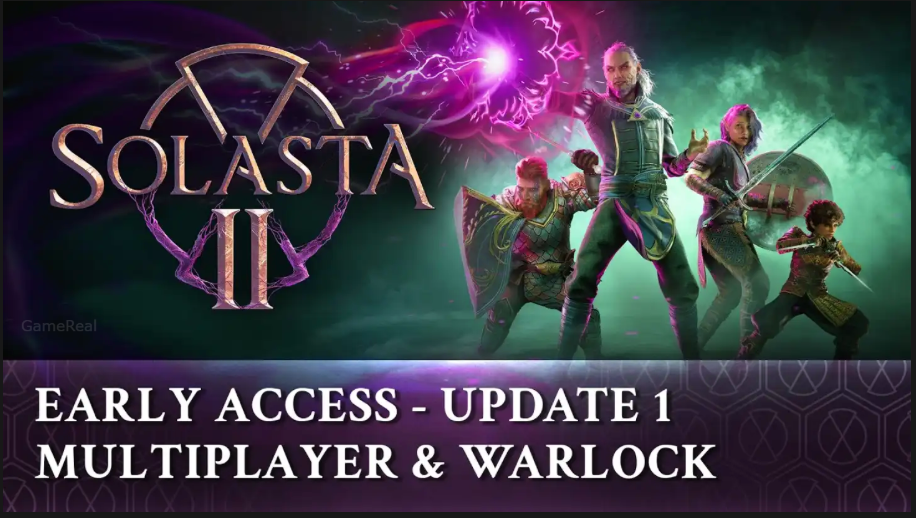
Solasta 2: Warlock Class & Multiplayer Update Guide
Solasta II finally delivered on one of its biggest Early Access promises on September 10, 2026. Update 1 brought full online co-op multiplayer for up to four players and introduced the Warlock as the seventh playable class. A quick clarification right at the start: there is no “Occultist” class in this update. The new class is the Warlock, and it arrives with two distinct subclasses that feel meaningfully different from each other. This guide walks through everything the update actually added, how the multiplayer systems work in practice, what the Warlock brings to a party, and the smaller but welcome quality-of-life changes that came along for the ride.
Why This Update Matters
Solasta has always tried to capture the feeling of sitting around a table with friends, rolling dice, arguing about dialogue choices, and surviving tough tactical combats. The first game eventually added multiplayer, but it arrived late. For Solasta II the developers made co-op a priority during Early Access instead of waiting until full release. That decision shows. The systems feel designed from the ground up rather than bolted on.
At the same time, adding a new class gives solo players something fresh to experiment with while groups get a new role to fill. The combination makes Update 1 feel substantial rather than a pure multiplayer patch.
How Multiplayer Actually Works
One player acts as the host. They can start a brand-new campaign or load an existing save. Once the session is running, up to three other players can join. The multiplayer interface shows public sessions with names and status, or you can join through a direct invitation or session code for private games.
A particularly useful feature is Hot Join. Friends do not have to be present at the exact moment you create the game. They can drop into an adventure that is already underway. The host then assigns them a character. That player can take control of an existing party member, import a character they previously created, or build a completely new one on the spot. Control of companions can also be shared or reassigned as the group prefers.
Outside of combat everyone can move freely around the current area. This keeps exploration feeling natural. You are not locked into a strict turn order while checking rooms or talking to NPCs. When combat starts, each player simply controls their own character on their turn, just as you would expect in a turn-based tactical game.
Group Decisions and Communication
Important dialogue and story choices use a voting system. Every player sees the available options and casts a vote. After a short timer runs out, the choice with the most votes is selected. The timer prevents endless debate while still giving everyone a real say. It is one of the cleaner solutions for shared narrative control in a CRPG.
A new ping system helps with coordination both in and out of combat. You can mark characters, locations, or points of interest so the whole party understands what someone is focused on. It reduces the need for constant voice call-outs and is especially helpful when not everyone is on the same voice channel.
These two tools—voting and pings—go a long way toward making the multiplayer experience feel like a real tabletop session instead of four people independently playing the same single-player game.
The Warlock Class in Detail
The Warlock becomes the seventh class available in character creation. It launches with two subclasses that pull the class in different directions.
Timekeeper
This subclass revolves around manipulating time. Timekeepers can speed up allies, giving them extra actions or better positioning, and can disrupt the flow of time for enemies by removing or hindering their reactions. The kit is strongly supportive and control-oriented. In a coordinated party a Timekeeper can set up powerful turns for martial characters or other casters. It rewards players who like thinking a step or two ahead and enabling the rest of the group.
Dreamer
Dreamers lean into nightmares and mental pressure. They can force enemies into sleep and apply exhaustion effects, creating openings and reducing the threat of key targets. This subclass feels more focused on crowd control and debuffs. It shines when you need to shut down dangerous enemies or create breathing room for the party to reposition.
Both subclasses give the Warlock a clear identity while still leaving room for different invocations, pact choices, and playstyles. Because the class is brand new, the community is still figuring out optimal builds, strong multiclass combinations, and how the subclasses perform at higher levels once the level cap rises in future updates.
Other Improvements in Update 1
The multiplayer systems and Warlock are the headline features, but the update also includes a solid package of supporting content and quality-of-life changes that benefit everyone.
Around thirty new World Events have been added to the exploration layer. These random or semi-random encounters help keep the world feeling alive and give groups more reasons to leave the main path.
Character customization received a noticeable expansion. New hairstyles, beards, tattoos, and warpaints give players more ways to make their characters look distinct—something that matters even more when four people are looking at the same party on screen.
Character creation now includes an optional dice-rolling method for ability scores. You can still use point buy or the standard arrays, but the classic 4d6-drop-lowest option is there for players who prefer the randomness of the tabletop.
Spell component rules are now optional. Groups that want maximum fidelity to the SRD can keep the full requirements. Groups that prefer a smoother experience can simplify or remove them. It is a small toggle that makes a real difference in how approachable the game feels for different tables.
Cloud saves arrived with the update, which is particularly welcome for players who switch between devices or use Steam Deck. A new controller shortcut also makes it easier to enter cautious or stealth mode while exploring.
Practical Advice for Playing Multiplayer
Start with people you already communicate well with. The voting timer and ping system work best when everyone is paying attention and willing to make decisions at a reasonable pace. Long silences or constant second-guessing can slow the game down more than the systems themselves.
When assigning or creating characters, try to cover the usual party roles. A Timekeeper Warlock pairs especially well with martial characters who benefit from extra actions or better positioning. A Dreamer can open fights by locking down priority targets so the rest of the party can focus fire safely.
Hot Join is convenient, but it is still smoother if friends join at natural break points—after a long rest, before a major quest, or while the party is in a safe hub. Dropping into the middle of a complex combat or a multi-stage puzzle can be disorienting for the new player and the existing group.
Use the ping system early and often. It helps newer players understand the group’s focus and reduces the amount of verbal coordination needed. Over time most groups develop a shared language of pings that makes combat and exploration flow more cleanly.
Loot distribution is something groups should discuss early. Because everyone can move freely outside combat, it is easy for one player to vacuum up items if the group is not paying attention. A quick conversation about how you want to handle treasure prevents frustration later.
Solo Players Still Get Value
Even if you never intend to play multiplayer, Update 1 is worth installing. The Warlock adds a new playstyle to experiment with, the extra World Events give the exploration layer more variety, and the character creation and quality-of-life improvements make the single-player experience smoother. Cloud saves and the optional rules toggles are useful regardless of whether you play alone or with others.
Looking Ahead
Tactical Adventures has been clear that multiplayer will continue to evolve based on player feedback throughout Early Access. Future updates are planned to add more classes and ancestries, raise the level cap, introduce the start of Act Two, and bring in a crafting system later in 2026. Update 1 is positioned as the foundation rather than the finished multiplayer experience.
For now, the combination of real co-op tools, a new class with two interesting subclasses, and a batch of supporting improvements makes this an excellent time to gather a group or start a fresh solo run. The systems respect the tactical, rules-driven combat that defines Solasta while finally delivering the shared adventure many players have wanted since the Early Access launch.
Create your characters, invite your friends (or load a solo save), and see how the story of Neokos unfolds when the decisions are no longer made by one person alone. The table is set. The dice are ready. Update 1 gives Solasta II the collaborative heart it always aimed for.