
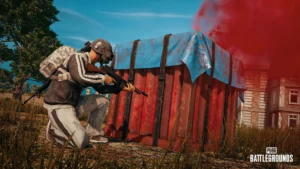
PUBG Survival Blueprint: Smart Landing, Tactical Combat, and the Road to Chicken Dinner
PUBG has become one of the most recognizable names in the battle royale gaming genre. The basic objective sounds simple: enter a battlefield, collect equipment, survive against opponents, and become the final player or team standing. In practice, however, winning a PUBG match requires much more than accurate shooting. Players need to understand movement, positioning, looting, map awareness, rotations, weapons, vehicles, communication, and timing.
Every match can develop differently. One game may begin with an intense hot drop where several players fight within the first minute. Another may start quietly, allowing players to collect supplies before gradually moving toward the center of the map. The shrinking play zone continuously changes the situation, forcing players to make decisions under pressure.
This makes PUBG different from games where the same strategy works every time. A strong PUBG player needs to adapt to the location of enemies, available loot, the direction of the zone, terrain, vehicles, and the behavior of other teams. Good decision-making can turn an average loadout into a winning setup, while poor positioning can eliminate a player carrying excellent equipment.
This PUBG survival blueprint explains how to approach a complete match from landing to the final circle. It covers practical strategies for beginners, returning players, and experienced players who want to improve their consistency.
Why Strategy Matters in PUBG
PUBG combines mechanical skill with tactical decision-making. Aim determines whether you can win a gunfight, but strategy determines which gunfights you should take in the first place.
Imagine two players facing the same opponent. The first player runs directly across an open field and begins shooting. The second player moves behind a rock, checks the enemy’s position, waits for a better angle, and attacks while protected by cover. Even if both players have similar aiming ability, the second player has created a much better situation.
This is the foundation of PUBG strategy. You should constantly try to improve the situation before starting combat.
| PUBG Skill | Why It Matters | How to Improve |
|---|---|---|
| Aim | Helps win direct gunfights | Practice regularly |
| Positioning | Reduces exposure to enemies | Use cover and elevation |
| Movement | Helps avoid incoming fire | Practice strafing and repositioning |
| Map Awareness | Improves rotations and planning | Watch the zone and terrain |
| Game Sense | Improves decision-making | Review mistakes after matches |
| Communication | Improves squad coordination | Use short and clear callouts |
Start Every Match With a Landing Plan
Your first important decision begins before you land. The place where you choose to enter the battlefield affects your early-game equipment, potential enemies, and rotation options.
Instead of choosing a location randomly, decide what you want from the match. If you want intense combat practice, choose a location that is likely to contain multiple opponents. If you are trying to reach the late game, choose an area where you can collect equipment without immediately fighting several teams.
Hot Drop Strategy
A hot drop places you directly into a high-pressure situation. Several players may land nearby, and weapons can become available within seconds.
The advantage is fast combat experience. You can practice quick looting, close-range movement, reaction speed, and decision-making under pressure.
The disadvantage is that your match may end very early. If you land without a weapon while another player finds one immediately, there may be little opportunity to recover.
Safe Drop Strategy
A quieter landing area gives you more time to collect equipment and understand the first zone. This is useful when your objective is to survive longer and practice mid-game rotations.
The disadvantage is that you may encounter fewer fights early in the match, meaning your combat skills receive less immediate practice.
Balanced Drop Strategy
A balanced landing location provides a middle ground. You can obtain useful equipment while still having a reasonable chance of encountering opponents.
| Landing Approach | Risk Level | Combat Opportunity | Best Objective |
|---|---|---|---|
| Hot Drop | Very High | Very High | Combat practice |
| Balanced Drop | Medium | Moderate | General improvement |
| Safe Drop | Low | Low | Long-term survival |
Win the Early Looting Battle
Once you land, your first goal should not be collecting every item available. Your priority should be getting enough equipment to survive.
Find a usable weapon as quickly as possible. After obtaining a weapon, look for ammunition, armor, a helmet, healing supplies, and useful attachments. You do not need a perfect loadout during the first minute.
Many players waste valuable time searching for a specific scope or attachment while another team is already rotating toward them. Once your basic equipment is ready, think about positioning.
Early Looting Priority
| Priority | Equipment | Reason |
|---|---|---|
| 1 | Primary Weapon | Provides immediate combat ability |
| 2 | Ammunition | Allows sustained fighting |
| 3 | Helmet and Armor | Improves survivability |
| 4 | Healing Items | Allows recovery after damage |
| 5 | Secondary Weapon | Provides flexibility |
| 6 | Attachments | Improves weapon handling |
| 7 | Throwables | Provides tactical options |
Choose Weapons Based on Your Playstyle
There is no universal weapon combination that every PUBG player must use. Your choice should depend on how you prefer to fight.
Players who like aggressive close-range combat may prefer combinations that allow rapid damage at short distances. Players who prefer controlling areas from farther away may choose a combination involving an assault rifle and a long-range weapon.
Assault Rifle and SMG
This is a flexible combination for players who frequently enter buildings and medium-distance fights. The assault rifle can handle general combat while the SMG provides an option for close engagements.
Assault Rifle and Sniper
This setup is useful for players who enjoy long-range engagements. The assault rifle remains useful when enemies move closer, while the sniper can apply pressure at distance.
Assault Rifle and DMR
A DMR provides another way to pressure enemies at medium and longer distances. It can be useful for players who prefer controlled shots rather than continuous close-range spraying.
| Weapon Combination | Strength | Potential Weakness |
|---|---|---|
| AR + SMG | Strong close and medium combat | Less effective at extreme range |
| AR + Sniper | Excellent range flexibility | Requires accurate aiming |
| AR + DMR | Strong medium-range pressure | Requires controlled shooting |
| AR + Shotgun | Powerful close-range option | Limited long-range flexibility |
Improve Crosshair Placement
Crosshair placement is one of the simplest ways to improve your gunfights. Instead of pointing your crosshair toward the ground while moving, keep it near the height where an enemy’s upper body is likely to appear.
Good crosshair placement reduces the amount of movement required when an opponent appears. This can make your first shots faster and more accurate.
Practice Before Matches
Use training areas or practice sessions to become familiar with your preferred weapons. Work on tracking targets, controlling recoil, switching weapons, and aiming quickly.
Do not change your settings every few minutes because another player recommends a different configuration. Consistency is important for developing muscle memory.
Learn Recoil Control
Weapon recoil can make sustained firing difficult, particularly at longer distances. Rather than simply holding the fire button and hoping every bullet connects, learn how your preferred weapons behave.
Start with controlled bursts at medium and long distances. As you become comfortable, practice longer sprays. The objective is not to eliminate recoil completely but to learn how to compensate for it.
Use Cover Whenever Possible
Cover is one of the most important defensive resources in PUBG. A player standing behind solid protection can survive situations that would be impossible in open terrain.
Buildings, walls, rocks, trees, ridges, and other objects can reduce enemy firing angles and give you time to react.
Hard Cover
Hard cover provides strong physical protection and is generally preferable during firefights. Large rocks, solid walls, and substantial structures can give you a safe position from which to return fire.
Soft Cover
Soft cover may help hide your position but should not always be treated as complete protection. Vegetation and similar objects can conceal movement while still leaving you vulnerable to enemy fire.
Master the Art of Positioning
Positioning can determine the result of a fight before shooting begins. A strong position usually provides cover, visibility, access to the zone, and multiple options for movement.
A weak position may leave you trapped between several teams, exposed on a hilltop, or forced to cross open ground.
Ask Yourself Three Questions
- Where can the enemy attack me from?
- Where can I move if my position becomes unsafe?
- Can I reach the next zone without crossing dangerous open ground?
If you cannot answer these questions, spend more time gathering information before committing to the position.
High Ground Can Create a Major Advantage
Elevated positions can provide excellent visibility. From a hill or elevated building, you may be able to observe enemy movement and identify potential rotation routes.
However, high ground is not automatically the best position. A hilltop with no cover can make you visible from several directions. The strongest positions usually combine elevation with protection.
Understand the Safe Zone
The shrinking zone is one of the central mechanics of PUBG. As the playable area becomes smaller, surviving players are forced closer together.
Do not treat the zone as something you only need to react to when it starts moving. Instead, plan your movement in advance.
Early Rotation
Rotating early can give you more choices. You may reach a useful compound or ridge before other teams and establish a defensive position.
Late Rotation
Late rotation can sometimes work when you have a strong position and information about surrounding players. However, it can become dangerous when the available routes are limited.
| Rotation Timing | Main Advantage | Main Risk |
|---|---|---|
| Early | More position choices | May move before information develops |
| Mid | Balanced approach | Moderate enemy activity |
| Late | Can avoid some early encounters | Limited routes and heavy pressure |
Use Vehicles Intelligently
Vehicles can completely change your rotation strategy. They allow players to cross large distances quickly and can provide an escape route when the zone is far away.
However, vehicles also create sound and can reveal your movement to nearby enemies.
Good Reasons to Use a Vehicle
- The next zone is far away.
- You need to cross open terrain quickly.
- Your team needs to rotate together.
- You need to escape an unfavorable location.
- You want to reach a strong compound before another team.
Parking Strategy
Consider parking slightly away from your intended fighting position. Leaving a vehicle directly outside a compound may reveal that someone is inside or nearby.
Use Sound as a Source of Information
Audio awareness is extremely valuable in PUBG. Footsteps can reveal nearby movement, while gunfire can provide clues about enemy locations and ongoing fights.
Instead of simply hearing a sound, try to interpret it. Ask whether the enemy is moving toward you, away from you, above you, below you, inside a building, or outside.
Do Not Shoot Immediately
If you hear an opponent nearby, avoid exposing yourself without first understanding the situation. Sometimes waiting a few seconds gives you enough information to identify the enemy’s route.
Use Throwables Strategically
Throwables are not simply extra damage tools. They can influence enemy movement, provide protection, and create opportunities for your team.
Smoke Grenades
Smoke can help you cross dangerous terrain, revive teammates, escape an unfavorable position, or create visual separation during a fight.
Frag Grenades
Frag grenades can pressure enemies hiding behind cover. They can also force opponents to move from strong defensive positions.
Utility Before Engagement
When an enemy has a strong position, consider using utility before directly exposing yourself. Creating a tactical advantage can make the following gunfight much easier.
Know When to Fight
One of the most important PUBG lessons is that not every enemy needs to be attacked.
If an opponent is in an exposed location and you have good cover, the fight may be favorable. If the enemy has strong elevation, solid cover, and additional teammates nearby, attacking immediately may be a poor decision.
Before Taking a Fight
- Check whether you have cover.
- Identify possible enemy teammates.
- Consider your ammunition.
- Check your health and armor.
- Think about the next zone.
- Identify an escape route.
These simple checks can prevent many unnecessary eliminations.
Third-Party Fights
A third-party situation happens when you attack two players or teams that are already fighting each other. These situations can create strong opportunities because the original opponents may be damaged or distracted.
However, do not rush blindly toward every gunfight. First determine where the fighting teams are located. Listen for weapons, identify likely cover positions, and choose an approach that limits your exposure.
Squad Communication Can Win Matches
In squad gameplay, communication is one of the most valuable skills. A team that shares accurate information can coordinate attacks and rotations much more effectively than four players acting independently.
Keep Callouts Short
During combat, long explanations are difficult for teammates to process. Use simple information such as direction, distance, enemy count, and movement.
Good communication should answer questions such as where the enemy is, how many opponents are present, whether they are moving, and whether your squad should push or reposition.
| Communication | Useful Information |
|---|---|
| Enemy Callout | Direction and approximate location |
| Movement Callout | Enemy approaching or rotating |
| Loot Callout | Important equipment location |
| Zone Callout | Recommended rotation direction |
| Attack Callout | When the squad should push |
| Retreat Callout | When the position becomes dangerous |
Understand Squad Roles
A coordinated squad can benefit from different players performing different roles. One player may be confident entering fights, another may be better at long-range support, while another may have excellent map awareness.
Entry Player
The entry player usually starts an aggressive push and attempts to create an opening.
Support Player
The support player provides cover, utility, and assistance during engagements.
Scout
The scout focuses on gathering information and identifying enemy positions before the squad commits.
Long-Range Player
A player comfortable with long-range weapons can pressure enemies and prevent them from moving freely.
Shot Caller
The shot caller helps coordinate movement, rotations, and major decisions. This does not necessarily mean the player with the best aim should lead.
Do Not Over-Loot
One of the most common PUBG mistakes is spending too much time looting. Players sometimes search every building for the perfect combination of weapons, attachments, ammunition, and healing supplies.
Once you have enough equipment to fight, move. Positioning often becomes more valuable than one additional attachment.
A player with average equipment in a strong position can defeat a heavily equipped player who is trapped in an exposed location.
Manage Your Inventory
Inventory management becomes more important as the match progresses. You need enough ammunition and healing items, but carrying excessive amounts of one category can reduce your tactical flexibility.
Maintain a useful balance between ammunition, healing items, boosters, and throwables. Adjust your inventory depending on the weapons you are using and the stage of the match.
Mid-Game Strategy
The mid game is often where players begin making serious strategic mistakes. The early chaos has decreased, but enough opponents remain to make every rotation dangerous.
Use this phase to gather information. Listen for nearby gunfire, watch vehicle movement, monitor the zone, and identify compounds that may already be occupied.
Do Not Rotate Blindly
Before moving, check your route. A direct path may be shorter but could place you in the middle of another team. A slightly longer route using terrain and cover may be much safer.
Late-Game Strategy
When the player count becomes low, every action has greater consequences. A single unnecessary gunshot can reveal your location to several opponents.
At this stage, information and patience become extremely important. You do not have to engage every enemy you see.
Protect Your Position
Once you find a strong late-game position, avoid unnecessary movement. Use available cover and keep track of possible enemy approaches.
Prepare Before the Zone Moves
Do not wait until the final seconds to decide where to go. Identify potential cover positions before movement becomes mandatory.
Winning the Final Circle
The final circle is often a test of everything you have learned throughout the match. Positioning, aim, utility, patience, and timing all become important.
Keep your weapon ready and avoid unnecessary exposure. If you know where another opponent is located, think about whether you need to attack them immediately or whether it is better to wait.
When the final area becomes extremely small, throwables can become especially valuable because opponents have fewer places to escape.
Common PUBG Mistakes
| Mistake | Problem | Better Habit |
|---|---|---|
| Looting Too Long | Wastes time and delays rotation | Stop once essentials are collected |
| Running in Open Areas | Creates easy targets | Move through cover |
| Solo Pushing a Squad | Creates a numerical disadvantage | Coordinate with teammates |
| Ignoring Audio | Allows surprise attacks | Listen before moving |
| Random Shooting | Reveals your position | Fire with a purpose |
| Late Rotation | Reduces safe movement options | Plan rotations earlier |
| Ignoring Utility | Limits tactical options | Carry and use useful throwables |
How to Improve Your PUBG Skills
Improvement requires more than playing hundreds of matches without analyzing your mistakes. After each elimination, think about what actually happened.
Was your aim inaccurate? Did you expose yourself? Did you push without knowing how many enemies were present? Did you rotate too late? Did you ignore an audio cue?
Finding the reason for the mistake gives you something specific to improve.
Practice One Skill at a Time
Trying to improve aim, movement, positioning, rotations, communication, and game sense simultaneously can become overwhelming. Instead, choose one focus area for several matches.
For example, you might spend one session practicing recoil control and another focusing on zone rotations. Over time, these individual skills combine into stronger overall gameplay.
Build a Daily Practice Routine
| Practice Area | Focus | Expected Benefit |
|---|---|---|
| Aim | Tracking and target accuracy | Better gunfights |
| Recoil | Controlled firing | More consistent damage |
| Movement | Strafing and repositioning | Better survivability |
| Utility | Smoke and grenade practice | Better tactical options |
| Rotations | Zone and terrain awareness | Stronger positioning |
| Communication | Clear squad callouts | Better teamwork |
Develop Better Game Sense
Game sense is the ability to understand what is happening around you and predict what may happen next. It develops naturally through experience, but you can improve it deliberately.
Start noticing patterns. If you hear gunfire from one direction, think about where those players might rotate next. If the zone closes around a particular compound, consider whether other teams are likely to occupy it.
Game sense does not mean predicting everything perfectly. It means making better guesses based on available information.
Play According to Your Strengths
Some players are naturally aggressive, while others are more comfortable playing tactically. Understanding your strengths can help you build a better strategy.
Aggressive Style
Aggressive players should focus on close-range combat, movement, fast decision-making, and squad coordination. However, aggression should be controlled rather than reckless.
Defensive Style
Defensive players can focus on strong positions, zone management, information gathering, and late-game survival. They should still practice combat because defensive play eventually leads to direct engagements.
Balanced Style
A balanced player takes fights when an advantage exists but is willing to disengage when the situation becomes unfavorable.
Technical Performance and Comfortable Controls
Your gameplay experience is also affected by device performance, controls, responsiveness, and audio clarity. Stable performance can make it easier to react to enemies and maintain consistent aim.
Choose controls that feel comfortable instead of copying another player’s configuration without testing it. Settings should support your natural movement and aiming habits.
Keep Important Controls Accessible
Frequently used actions should be easy to reach. Movement, aiming, shooting, crouching, jumping, reloading, healing, and other essential actions should not require unnecessary delays.
Solo Strategy
Solo matches require greater independence because there is no teammate to revive you or provide additional information.
Always consider your escape route before taking a fight. Avoid situations where multiple enemies can attack from different directions.
When possible, use terrain to create situations where you can fight one opponent at a time. If the enemy has multiple firing angles against you, reposition rather than relying only on mechanical skill.
Duo Strategy
Duo matches require strong coordination between two players. Stay close enough to support each other while avoiding unnecessary clustering.
One player can apply pressure while the other searches for an angle. If one teammate is knocked, the remaining player should first determine whether a rescue is realistically possible.
Squad Strategy
Squad matches offer greater firepower but require more communication. Avoid splitting too far from your teammates unless there is a specific tactical purpose.
If one player enters a compound while the rest of the squad is too far away, the attacking player may be eliminated before receiving support.
Control Your Emotions
PUBG can become frustrating, especially after losing several matches. Emotional decisions often lead to unnecessary pushes, poor rotations, and reckless fights.
If you notice that you are becoming frustrated, taking a short break can help reset your focus.
Avoid Revenge Attacks
If an enemy eliminates your teammate, immediately rushing toward them without information may make the situation worse. Instead, gather information and choose the safest response.
Learn From Unavoidable Losses
Not every elimination is caused by a mistake. Sometimes an opponent gets a better position, the zone creates an unfavorable situation, or an unexpected event changes the fight.
Focus on the decisions you could control instead of becoming frustrated by factors you could not control.
The Power of Information
Information can be one of the most valuable resources in PUBG. Knowing an enemy’s approximate position while keeping your own position hidden creates a major tactical advantage.
You can collect information through footsteps, gunfire, vehicles, visual movement, previous enemy positions, zone behavior, and teammate callouts.
Before attacking, ask yourself what you actually know. If you have limited information, consider scouting or repositioning before committing.
Use the Kill Feed as a Strategic Clue
The elimination feed can sometimes provide useful information about ongoing fights. It may indicate that players are being eliminated in a particular area or that a team is actively fighting.
Do not rely on the feed alone, but combine it with sound, map information, and visual clues.
Smart Rotation Routes
The shortest route is not always the safest route. Terrain, buildings, ridges, roads, bridges, and open fields can change the danger level of a rotation.
A longer route that keeps you behind cover may be preferable to a direct route through an exposed area.
Check the Route Before Moving
Before leaving your current position, identify where you can stop for cover. If your planned route has no protection, consider an alternative.
Survival Versus Eliminations
Eliminations are exciting, but PUBG is fundamentally a survival game. A player who collects many early eliminations and then gets eliminated in the middle of the match may have less success than a player who reaches the final circle consistently.
This does not mean avoiding combat completely. Instead, learn to balance survival with opportunities to fight.
| Playing Objective | Recommended Approach |
|---|---|
| Improve Aim | Take more controlled fights |
| Improve Survival | Prioritize positioning and rotations |
| Improve Squad Play | Focus on communication |
| Improve Game Sense | Analyze zones and enemy movement |
| Win More Matches | Combine all major skills |
A Complete Match Strategy
A practical PUBG match plan can be divided into several stages.
During the landing phase, choose a location according to your objective. During the early game, collect essential equipment and avoid wasting time. During the mid game, gather information and rotate intelligently. During the late game, protect your position and reduce unnecessary exposure. In the final circle, focus on timing, cover, utility, and precise engagements.
| Match Phase | Main Objective | Important Decision |
|---|---|---|
| Landing | Secure a starting position | Where should I land? |
| Early Game | Collect essentials | Do I have enough equipment? |
| Mid Game | Rotate and gather information | Where should I position? |
| Late Game | Control the area | Which enemies should I engage? |
| Final Circle | Win the match | When should I move or attack? |
Final Tips for Becoming a Better PUBG Player
If you want to improve consistently, focus on making better decisions rather than simply chasing more kills. Learn your preferred weapons, improve your aim, use cover intelligently, and pay attention to audio.
Plan rotations before the zone forces you to move. Use vehicles when they provide a meaningful advantage. Carry useful utility and understand how to use it. In squad matches, communicate clearly and stay close enough to support teammates.
Most importantly, review your mistakes. Every elimination can teach you something. If you repeatedly die while rotating through open terrain, improve your rotation planning. If you lose close-range fights, practice movement and aiming. If you get surprised by enemies, work on audio and map awareness.
Conclusion
PUBG rewards players who can combine mechanical skill with intelligent decision-making. Winning does not depend on one perfect weapon, one landing location, or one secret trick. Instead, successful matches are built from dozens of small decisions made throughout the game.
Start with a sensible landing plan. Collect essential equipment without wasting too much time. Choose weapons that fit your playstyle. Keep your crosshair ready, practice recoil control, and use cover whenever possible. Pay attention to the zone and rotate before your options disappear.
When combat begins, think before you push. Determine where the enemy is, identify their teammates, evaluate your cover, and decide whether the fight actually benefits you. Use grenades and smoke to create advantages rather than relying entirely on gun skill.
As the match progresses, become more patient. The late game is about information, positioning, timing, and controlled movement. Do not reveal your position unnecessarily, and prepare for the next zone before you are forced to move.
Whether you play solo, duo, or squad matches, the same fundamental principle remains important: create an advantage before taking a risk. With consistent practice, better awareness, smarter rotations, and stronger communication, you can turn more matches into strong finishes and increase your chances of earning the Chicken Dinner.
Frequently Asked Questions About PUBG
What should I focus on first as a new PUBG player?
New players should focus on basic movement, aiming, weapon handling, looting, and understanding the safe zone. Once these fundamentals become comfortable, begin working on rotations and advanced positioning.
Is hot dropping good for improving?
Hot dropping can provide rapid combat practice, especially for close-range fights. However, combining hot drops with normal matches is useful because PUBG requires both combat skill and survival strategy.
How can I survive longer in PUBG?
Use cover, avoid unnecessary fights, rotate intelligently, monitor the zone, listen for enemies, and maintain a safe position. Survival improves when you reduce situations where multiple opponents can attack you.
What is more important, aim or positioning?
Both are important. Aim helps you win fights, while positioning can determine whether a fight is favorable before it starts. Developing both skills produces more consistent results.
Should I always move toward the center of the zone?
Not necessarily. The exact center is not automatically the best position. A location with cover, elevation, visibility, and multiple movement options may be better than an exposed central location.
How can I improve squad communication?
Use short and specific callouts. Tell teammates the enemy direction, approximate location, number of opponents, and whether they are moving. Avoid long explanations during active combat.
Why do I keep losing late-game fights?
Late-game losses can result from poor positioning, unnecessary movement, weak zone planning, or revealing your location too early. Review your final few decisions after each match and identify recurring mistakes.
How often should I practice aim?
Regular short practice sessions can be more useful than occasional long sessions. Focus on consistency, recoil control, tracking, and crosshair placement rather than simply spending hours firing at targets.
Should I chase every enemy I knock?
No. A knock does not automatically mean you should push. Consider enemy teammates, your position, the zone, available cover, and your health before committing to a finishing push.
What is the biggest PUBG strategy mistake?
One of the biggest mistakes is making decisions without enough information. Rushing into fights, rotating blindly, and pushing unknown positions can create unnecessary risks. Try to gather information before committing whenever possible.